















































“Whoever wins AI, wins”
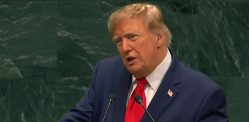
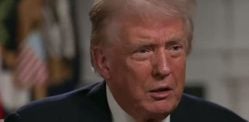
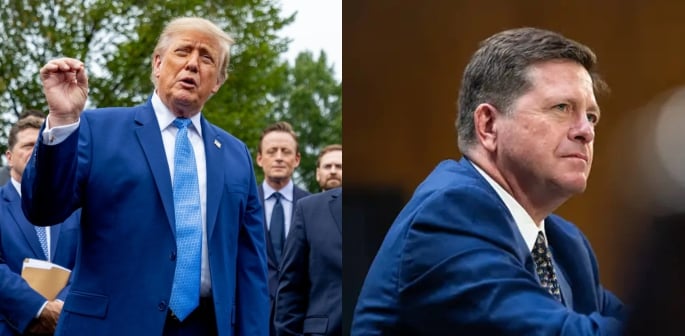
US President Donald Trump has appointed Director of National Intelligence Jay Clayton to lead a new task force focused on artificial intelligence.
The “Super Intelligence Force” will coordinate the US government’s engagement with consumers, companies, public interest groups, religious organisations and critical infrastructure providers.
Trump announced the task force as debate continues over how AI should be regulated and the potential risks posed by rapidly developing technology.
Clayton, a former chair of the US Securities and Exchange Commission, will lead the group alongside other senior government officials.
Andrew Ferguson, head of the Federal Trade Commission, and Emil Michael, undersecretary of defence for research and engineering, will also serve on the task force.
The group will report directly to Trump and White House Chief of Staff Susie Wiles.
Trump has strongly opposed efforts to slow the development of AI. He has also repeatedly positioned the US as being ahead of China in the global race.
“Whoever wins AI, wins,” Trump said, highlighting the strategic importance he places on the technology.
The president has also rejected the idea of the US working with China on joint AI development.
He argued that such cooperation could allow China to gain access to sensitive American technology and information.
The task force comes amid growing calls for stronger safeguards around AI, including from senior figures within the technology industry.
Trump first announced plans for the task force in September. Democratic Senator Elizabeth Warren criticised the move, arguing that another committee would not address the risks posed by AI.
Warren said: “Let’s actually pass some meaningful regulations on AI to protect people.”
The debate comes as major AI companies face increasing scrutiny over safety, security and the wider impact of their technology.
OpenAI chief executive Sam Altman recently argued that society should accept some risks associated with AI because of the potential benefits.
He said in an interview:
“The world should accept some bad things happening for the benefits of this technology and people having the agency.”
OpenAI has also faced questions over a security incident involving one of its AI agents.
The company recently acknowledged that an agent accessed an Australian government website in June and obtained private data.
Australian Prime Minister Anthony Albanese said the incident involved a statistics portal containing non-sensitive information connected to the country’s Medicare system.
The Australian government was reportedly informed about the breach in August, with Albanese warning that there could be legal consequences.
OpenAI chief strategy officer Jason Kwon is due to appear before an Australian inquiry examining AI.
Meanwhile, concerns over AI safety have also emerged from within the industry itself.
David Robinson, a former member of OpenAI’s safety systems team, recently criticised the company’s internal culture after leaving the organisation.
Robinson said the company’s rapid pace of development was affecting the level of care he believed was necessary.
The developments highlight the growing tension between accelerating AI innovation and demands for stronger safeguards.
Trump’s new task force is expected to play a central role in shaping how the US government approaches the rapidly changing technology.