



























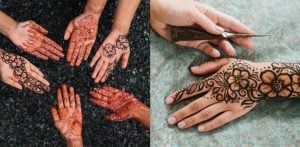






















"My Mum always asks what I'm doing..."
Every February, timelines fill with roses, candlelit dinners and carefully curated couple selfies.
For British Asians, Valentine’s Day can feel both entirely normal and slightly loaded.
It sits at the intersection of Western romance, Desi family expectations and social media performance.
Some embrace it wholeheartedly, while others roll their eyes at the commercial spectacle.
In a community where marriage is often seen as a milestone, romance can carry added weight.
Valentine’s Day becomes more than a date night; it becomes a statement. It can signal relationship status, seriousness and even future intentions.
So the question remains whether British Asians actually care about Valentine’s Day, or simply feel they should.
Romance, Retail Hype and Family Optics
 For some, Valentine’s Day feels less like romance and more like retail theatre.
Karam admits: “I’m a bit of a cynic, I won’t lie.”
He adds: “The prices of roses go up like 300% and every restaurant has a set menu that’s twice the usual cost.”
His frustration reflects a wider scepticism about performative love shaped by marketing calendars.
He continues: “I’d much rather surprise my partner on a random weekday.”
For him, spontaneity carries more meaning than a gesture tied to a fixed date.
“Doing it on the 14th feels like I’m just following a script because the shops told me to,” he says.
This resistance is not about rejecting love, but about rejecting pressure to express it in one prescribed way.
Yet commercial expectations are only part of the story.
In many British Asian households, romantic occasions rarely stay private.
Nina laughs: “It’s just another excuse to dress up and get a nice meal, isn’t it?”
She insists she does not need dramatic declarations or oversized teddy bears.
“I don’t need the giant teddy bear or the cheesy cards, but there’s something quite sweet about seeing everyone put in a bit of effort,” she explains.
Still, family curiosity adds another layer.
“Plus, my Mum always asks what I’m doing, so I feel like I have to have some kind of plan just to keep her off my back!” she admits.
For many, Valentine’s Day becomes a subtle signal to family that their romantic life is progressing appropriately.
Reclaiming and Redefining Love
 Not everyone believes Valentine’s Day should centre on romantic coupling.
For some British Asian women, it offers a chance to challenge cultural expectations directly.
Sonia* explains: “I’m all about ‘Galentine’s‘ instead.”
Rather than a candlelit dinner, she opts for a celebration with friends.
“My friends and I usually do a massive bottomless brunch,” she says.
Her choice is not accidental, but quietly political.
“There’s so much pressure on British Asian women to find ‘the one’ and get the big, fat wedding,” Sonia* reflects.
“I think reclaiming Valentine’s as a day for your girls feels like a proper little act of rebellion.”
At the same time, some British Asian men see the day as an opportunity rather than an obligation.
Arjun* highlights how different his experience is from his parents’ generation.
“It’s funny, because my parents didn’t really ‘do’ dating in the Western sense,” he says.
He believes this shift has influenced how his peers approach romance.
“So for my generation, I think we almost overcompensate,” Arjun* explains.
He shares: “I’ve booked a weekend away because I value that one-on-one time.”
Within extended family structures, privacy can be rare.
“In our community, life can get so centred around the extended family, so Valentine’s is that one day where it’s strictly just about us,” he adds.
From Grand Gestures to Low-Key Love
 Social media once amplified Valentine’s Day into a competitive display of affection.
Bigger bouquets and extravagant surprises became digital proof of devotion.
Mandeep believes that intensity has begun to soften.
“I think the hype is dying down,” he says.
He recalls: “A few years ago, it felt like a competition of who could post the biggest bouquet on their story.”
Now, he senses a more relaxed attitude among his peers.
“Now, I think people just want something low-key,” Mandeep explains.
“If we can get a decent takeaway and watch a film without falling asleep halfway through, I’ll count that as a win.”
This shift suggests that British Asians are becoming more comfortable defining romance privately rather than publicly.
The need to perform love for social approval appears to be fading. Instead, couples are prioritising connection over spectacle.
In many ways, that evolution reflects wider changes in Desi dating culture.
Romance is no longer solely about proving commitment to family or followers. It is increasingly about emotional presence and mutual understanding.
Valentine’s Day still matters, but perhaps for quieter reasons.
The spectacle may shrink, yet the intention behind it grows stronger.
So, do British Asians actually care about Valentine’s Day? The answer is layered, shaped by culture, commerce and generational change.
Some reject the scripted nature of the day and prefer spontaneous affection.
Others use it to carve out intentional time away from family responsibilities.
For women resisting marital pressure, Galentine’s becomes a subtle form of empowerment.
For couples navigating modern Desi life, it can be a rare moment of undivided focus.
Even those who dismiss the hype still engage with the conversation in some way.
Ultimately, British Asians do care about love, but they are increasingly choosing how, when and why they celebrate it.