

















































“We’re going to have to balance the books.”
Manchester United’s summer rebuild is already underway, but not in the way many fans might expect.
For a club with a history of bold, early signings, the early focus on outgoings marks a major shift in strategy.
In fact, it’s been more than a decade since United offloaded a senior player this early in the summer – when Alexander Büttner left for Dynamo Moscow in 2014.
But this year, things are different.
The transfer window opened earlier than usual, and United’s need to raise funds through sales is more urgent than ever. Selling before buying isn’t just a tactic; it’s fast becoming a necessity.
This change in approach raises serious questions about whether United can pull it off.
After years of poor selling habits and bloated wage bills, the club is attempting to fund a squad rebuild while offloading some of its most high-profile flops. That’s a tough sell, quite literally and timing is everything.
A Summer Unlike Any Other
The 2025 summer transfer window has already seen a notable shift.
Thanks to the earlier opening date, June 16, as opposed to the traditional July 1, there’s more time for business, but also more urgency. United aren’t just managing a squad; they’re managing a balancing act.
Chief executive Omar Berrada made it clear: “We’re going to have to balance the books.”
His comments underscore how far the club has drifted from its old financial model, where overspending was common and selling well was an afterthought.
There’s no longer a bottomless pit of Champions League cash.
And the club’s cash reserves, £73.2 million at last count, are already stretched. Add the £195.2 million still owed on past transfers, and the picture becomes even clearer: United must sell before they spend.
Selling Isn’t United’s Strong Suit

In the last five years, Manchester United have made just £105.5 million from player sales.
For comparison, Chelsea raked in £508.6 million and Manchester City made £435.8 million during the same period.
Why the gap?
Insiders say United have long treated outgoings as a secondary concern.
While other clubs maximised profit on unwanted players, United typically moved them on late in the window or settled for loan deals.
Financial data shows the club’s best year for sales profit, excluding the Cristiano Ronaldo sale, was last season’s £38.7 million, and even that came with a caveat: it took nine months to get there.
United are playing catch-up in a market they’ve rarely mastered.
And if they want to fund more than just the Matheus Cunha and Bryan Mbeumo deals, that must rapidly change.
The Big-Name Dilemma
The idea of selling before buying works in theory, but in practice, the process is fraught with difficulty, especially when it involves high-profile players on massive wages.
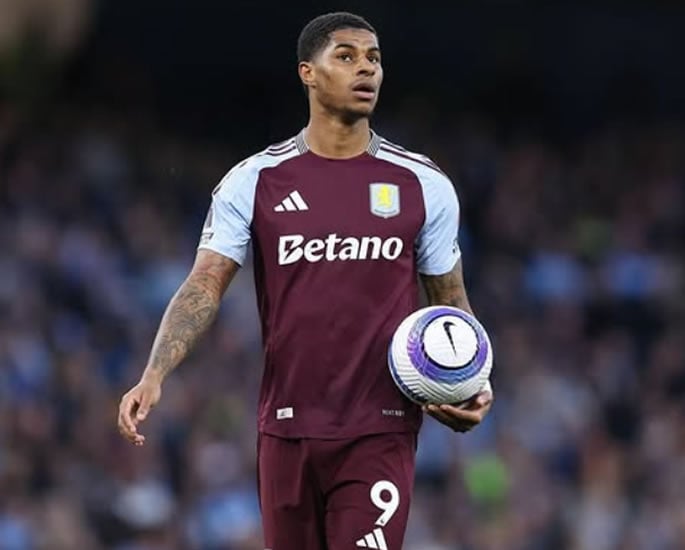
Take Marcus Rashford. Once the poster boy for the club, he’s now on the fringes under Rúben Amorim, having been loaned to Aston Villa for the second half of the 2024-25 season.
Rashford is keen on Champions League football and has long admired Barcelona. But Barca have other priorities, namely Athletic Club winger Nico Williams.
Until that deal is resolved, Rashford’s future will likely remain in limbo.
Meanwhile, Jadon Sancho is in a worse position.
With one year left on his contract and wages too high for most suitors, United may be forced into another loan deal, something that won’t help their balance sheet.
Antony could yet fetch a decent fee, but only if Real Betis stretch their financial limits. And with Denilson still their record signing at £21.5 million from 1998, that’s far from guaranteed.
Even Alejandro Garnacho, whose potential could fetch around £70 million, may prove difficult to move on.
Clubs know United want to sell and are unlikely to pay top price without pressure.
Jason Wilcox’s Balancing Act

Sporting director Jason Wilcox has experience selling well, most notably at Southampton, where he helped secure top dollar for Romeo Lavia and Tino Livramento.
But that was a different environment, one that favoured young, hungry players with Premier League minutes and long-term contracts.
Manchester United’s current situation is far more complex.
Many of the players they want to shift are older, on high wages, or returning from underwhelming loans. Some are clearly not part of Amorim’s plans.
That makes it harder to drum up competition and even harder to start a bidding war.
Wilcox faces a market that knows United are under pressure.
That’s never a good place to negotiate from, especially when the club is trying to raise cash to fund further signings. The longer these deals take, the more difficult it becomes to plan the season ahead.
Time Is Already Running Out
The idea that United have six more weeks to complete their transfer business is technically true but misleading.
As past windows have shown, deadlines force movement.
Jadon Sancho’s loan to Chelsea and Rashford’s move to Aston Villa both came down to the wire. These aren’t ideal conditions for planning a long-term rebuild.
If United wait too long to sell, they risk starting the season with an incomplete squad and unfinished business.
Worse still, if buyers know United are desperate, they’ll offer lower fees and demand better terms.
Sir Jim Ratcliffe and Berrada may want discipline and balance, but they also need decisiveness.
The club can access a £140 million credit facility to buy time, but that would go against their stated goals.
If sales must come first, then they need to happen quickly and cleanly.
Manchester United’s plan to sell before buying is bold and necessary. But boldness is not the same as brilliance.
The club is betting on its ability to shift high-profile players in a market that isn’t biting yet.
For this to work, everything must fall into place: early exits, strong interest, and acceptable fees.
United may well raise the cash they need to pursue a wider rebuild, but the cost could be high, not just financially, but strategically.
If key players leave too late, or not at all, United risk falling behind once again. Selling before buying can work, but only if the club gets ruthless, fast.
Because in football, as in finance, time waits for no one, not even Manchester United.