
















































"I like to think things have changed significantly"
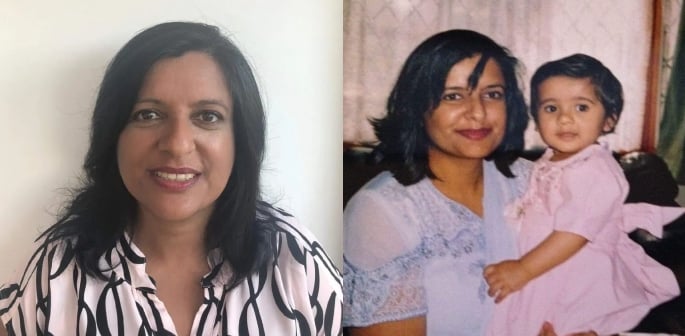
Aruna Bansal is a passionate and determined advocate for British Asian single parents and women’s rights.
Having experienced two arranged marriages and divorces, she understands the struggles and barriers South Asian women and single parents face.
Moreover, Aruna is a vocal advocate for gender equality and mental health and well-being support in British Asian communities.
Her work and advocacy highlight the challenges of cultural traditions, gendered norms, and expectations in everyday life.
Aruna’s career trajectory and focus have been compellingly shaped by her life experiences. She is determined to help facilitate change.
In this exclusive DESIblitz interview, she shares insights into her life, including growing up in Britain, the challenges she has overcome, and her work.
Growing Up as a Second-Generation British Asian

Aruna is a second-generation British Indian who grew up with only immediate family and not within a large Brit-Asian community.
She revealed: “I grew up in a predominately White area, Kent.
“I was the only South Asian girl in my secondary school growing up. I didn’t feel any different to my friends.
“There were occasions when the P word was thrown at me by a passer-by in the street. But very rarely, those were the times I felt different. Otherwise, no.
“My parents made sure we celebrated things like Christmas so we didn’t feel different. We had a tree at home, presents, and celebrated our festivals, such as Diwali.
“But we didn’t have the huge family gatherings as we had no relatives here.
“I will say when I did feel different, it was when I wasn’t allowed to go out with my friends outside secondary school. My parents were very strict.
“My parents’ focus was on us getting a good education. They were first-generation Asians, having come to the UK in the 60s.
“They had worked really hard for everything; they came to the UK with only a few pounds.”
“They instilled a really hard work ethic into us. So, I wasn’t allowed to socialise, but when I did go to university, I more than made up for it.
“I think there has to be a balance, so that’s what I worked to ensure my daughter had.”
Growing up, Aruna did not have “much interaction with other South Asians” and she does feel she “missed out”.
Therefore, during university, she gravitated towards students from Desi backgrounds. Moreover, in adulthood, she has attempted to embrace more of her Indian culture.
Aruna’s experience highlights the complexities of identity for second-generation British Asians.
Growing up in a predominantly White environment, she rarely felt different or othered.
Yet differences became evident in moments of restriction due to her parents’ cultural values and work focus. She was also marked as different when “P**i” was hurled at her on the street.
Traditional Gendered Expectations and Work
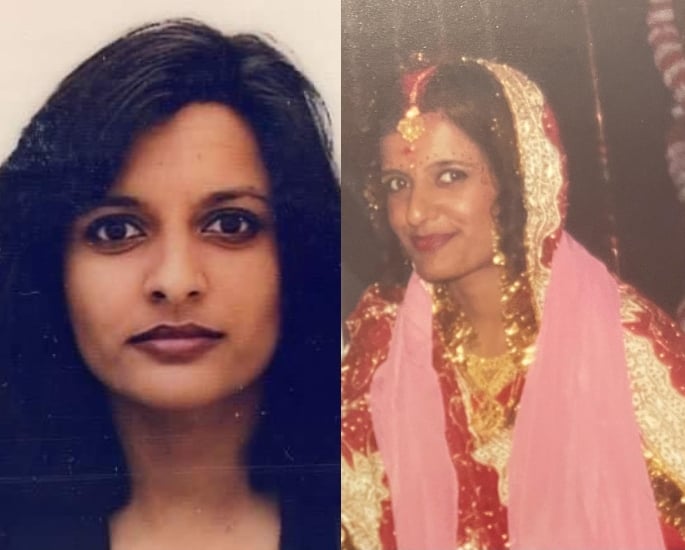
Growing up and as an adult, Aruna saw differences in gendered expectations to varying degrees. For example, her brother was not expected to be in the kitchen, unlike Aruna.
Aruna married for the first time at the age of 21, just after leaving university and compellingly saw gendered inequality through dowry demands.
Marrying for the second time at 26, she faced gendered socio-cultural expectations in her role as a wife:
“I was first living in London when I started my career, as work started at eight in the morning.
“So I couldn’t commute from Kent to London that early.
“I was working at Saatchi & Saatchi, the ad agency when I was introduced to my second ex-husband.
“It was naturally assumed I would move back to Kent, as that was the way things were done.”
“The girl is expected to move. So I had to give up my flat. I was still working in London but had to commute every day.”
Aruna found herself challenging assumptions her in-laws had about her role and actions:
“I had to challenge their expectations; it wasn’t feasible for me to do it all.
“At the time, it was expected that my husband wouldn’t set foot in the kitchen, even to wash up, by the elders in his family.
“And it was slightly frowned upon, as he now had a wife, but he didn’t mind as he did it before marriage, so continued.”
Faced with exhausting daily demands, Aruna navigated traditional socio-cultural expectations while asserting her own needs.
She found herself challenging the notion that domestic labour was solely a woman’s responsibility. For her, change has occurred:
“I like to think things have changed significantly since then.
“I think as women are becoming more educated, they’re not putting up with what they may have done in previous generations.
“It’s why I’ve been a pushy parent with my daughter’s education. I want her to be able to stand on her own two feet.”
For Aruna, education is a vital mechanism of empowerment and independence for British South Asian women.
Dowry Discrimination and Single-Parenthood

Aruna’s experiences and challenges also steered her towards her current advocacy work and career. Today, she challenges problematic and unequal cultural traditions and ideals.
Aruna’s first marriage ended because her in-laws demanded more and more dowry.
When she put her “foot down” only three months into the marriage, they “threw” her out.
With the support of her family, she ended her first marriage.
After two years, she faced a court battle to get her “things back”, as her in-laws and spouse would not return them.
The trauma stayed with her for years and meant she required counselling to deal with what had occurred.
Aruna stresses that counselling and mental health support should be considered a normal and necessary part of everyday life.
She was introduced to her second husband, her brother’s best friend, approximately five years after her first marriage.
The end of her second marriage left her navigating new terrain again—this time as a single parent and co-parent.
Reflecting on co-parenting with her ex-husband, Aruna stated:
“The co-parenting with [my daughter’s] dad, after we divorced, has been very important.
“Where possible, co-parenting amicably is important. She wouldn’t be the person she is today if she didn’t have the input from her dad that she did.”
For Aruna, Desi men as single parents cannot be forgotten and require support.
Aruna asserted that even today, single parents can be pushed into the shadows and isolated. Resulting in a lack of structured support.
The Creation of the Asian Single Parents Network
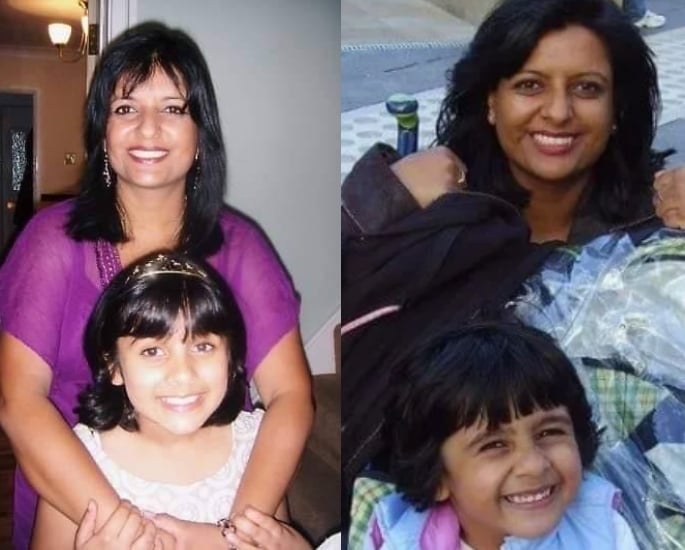
Aruna founded the Asian Single Parent Network (ASPN) CIC in 2011 after the end of her second arranged marriage.
Recognising the stark gaps in structured and culturally nuanced support for single parents from South Asian backgrounds, she was determined to make a difference.
She also wanted a space where she and her daughter could engage with those with similar life experiences.
Aruna was focused on creating a safe space of belonging and support for Desi single parents, mothers and fathers, and their children.
Thus helping normalise single-parent families as a valuable family unit just like any other.
In public and political discourse, single-parent households have sometimes been framed as “broken homes”. Over the years, Aruna’s work has helped destabilise such stereotyping and negative representation.
Moreover, Aruna has stressed the need to remember the impact on Desi men when it comes to divorce and parenthood. For her, fathers cannot be forgotten and matter in a child’s life:
“I think with dads, where there is no abuse taking place and no threat to the child, dads should be equally able to parent.”
“Co-parenting is important; as I said, in my case, my daughter has benefited greatly from having her father around.
“Women are often the primary caregivers, but men are also important in that equation. It needs to be highlighted more than it is.”
Through ASPN, she provides vital support, hosting events like therapy sessions, networking meetups, and social gatherings.
She works tirelessly to challenge and reduce the stigma and isolation South Asian single-parent families can face.
Aruna also provides her expertise to support other community organisations so they can deliver culturally nuanced support.
Accordingly, she has helped raise awareness of how socio-cultural norms and tensions shape the lives of British Asians and the support they need.
Looking to the Future
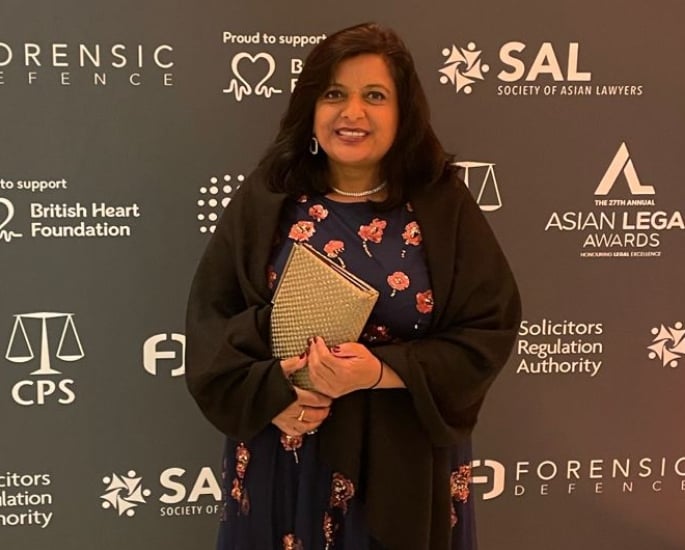
When asked what changes she hopes to see for British Asian women in the next decade, Aruna asserted:
“Women becoming more educated, independent and able to stand on their own two feet and not rely on anyone else.”
Aruna emphasised the need for women to: “Learn new skills, get as much experience as possible, work or undertake voluntary work.
“I want to see Asian women putting their own best interests first, rather than what society expects of them.”
Aruna Bansal’s journey embodies the complexities of British Asian life, from cultural expectations to personal resilience. She has used her personal struggles and experiences to work towards facilitating meaningful change.
Her experiences with marriage, challenging gender roles, and single parenthood shaped who she is today. It makes her a leading voice for South Asian single parents and women’s rights in the community.
Through ASPN, she has created a vital support system, challenging stigma and ensuring that Brit-Asian single parents are seen and supported.
She stresses the need for continued structural changes within Brit-Asian communities and culturally nuanced support and awareness in wider society.
Aruna is pleased to see significant changes have occurred since her childhood in the 70s and when she married, though more needs to be done.
For Aruna, the “hard work ethic” instilled by her first-generation British Asian parents “has really made a difference” in her life and career.
It instilled in her the belief that through hard work, anything can be achieved.
Indeed, for Aruna, this is something we should not forget, even when cultural or structural barriers manifest.
Aruna’s parents worked tirelessly to build a life from scratch in a new country, and their sacrifices benefited Aruna and her siblings.
The strong foundations they laid allowed her to develop a strong work ethic. It also enabled her to embrace leisure and enjoy life as an adult.
Aruna stresses that as British Asians navigate life and careers, they should continue to embrace the work ethic of earlier generations but also remember to live.