
























“We wanted to tell the world about it."
Born in Mumbai’s cyphers in 2020, Wild Wild Women is challenging what Indian Hip-Hop can look and sound like.
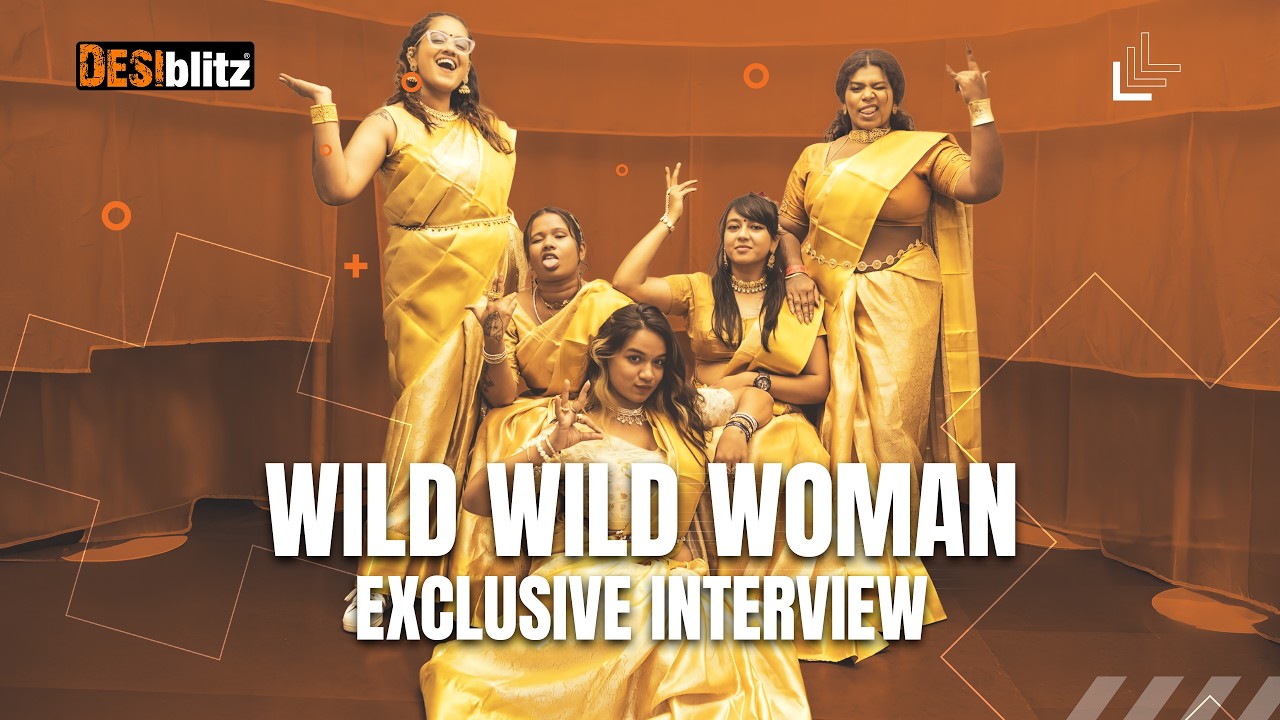
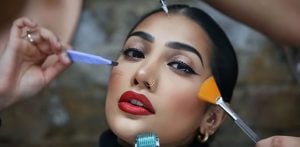
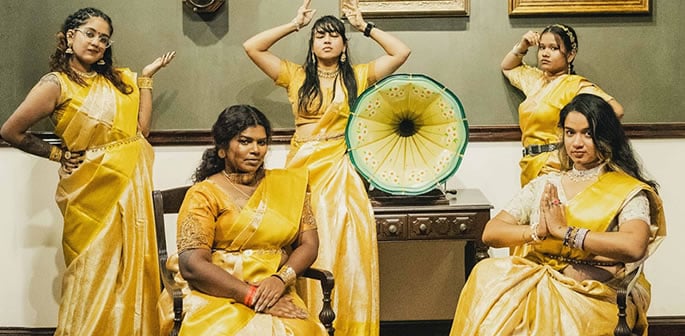
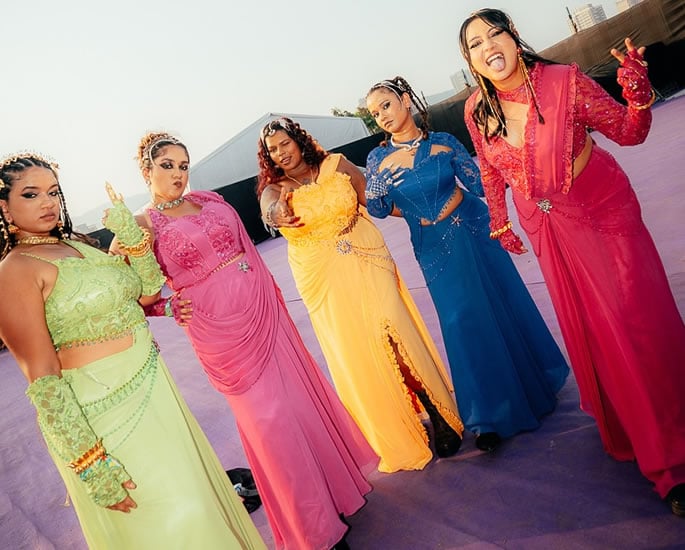
The group brings together five artists, HashtagPreeti, Krantinaari, JQueen, Pratika and MC Mahila, whose work combines rap, movement, visual art and cultural expression.
Their music is multilingual and rooted in the cultures they grew up with, while addressing women’s experiences, identity, empowerment and mental health.
With members including bgirls, a mural artist and an internationally recognised skater, Wild Wild Women reflects how Indian Hip-Hop extends beyond the microphone and into wider creative communities.
Their approach also challenges assumptions about who belongs on stage and what women wearing traditional clothing are expected to do.
In an interview with DESIblitz, Wild Wild Women discuss breaking barriers in Indian Hip-Hop, reclaiming language and culture, building community and taking their movement to a global audience.
Breaking Barriers in Indian Hip-Hop
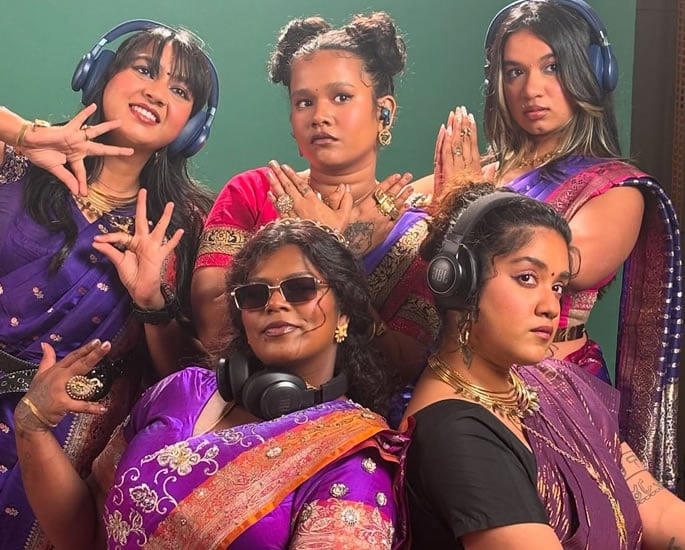
Wild Wild Women formed after experiencing similar barriers within India’s predominantly male Hip-Hop scene.
Although they were developing their skills alongside male artists, they were often treated as temporary participants:
“They would always look at us as people who were just there to learn.
“They would think, ‘Oh, this is just a hobby. You’re going to do this for a few years and then you’ll get married, or you’ll be cooking in the kitchen at some point’.
“Because of how they looked at us, they would never give us a chance to actually join the crew or even just be on stage with them.
“That itself was a very big block, because we were equally enthusiastic about learning.
“We were equally committed to strengthening our skills and doing everything necessary to be on the same stage.”
Those shared experiences led to the creation of the collective and a space where the women could discuss their frustrations and ambitions.
“We had bigger dreams and so much to say. We didn’t want to contain it among ourselves, in our bedrooms or just in notebooks.”
As more female artists began discussing their experiences, Wild Wild Women became part of a wider movement:
“We wanted to tell the world about it.
“Then the movement came. Female artists were coming forward and speaking about their experiences, and that’s how we joined forces together to actually stand for a cause and represent ourselves as something that represents the rest of the country.
“It’s like a voice and an echo for the rest of the country.”
Their music reflects that purpose, addressing subjects including women’s experiences, identity and mental health as it is “the truest expression” for the group.
Their approach is influenced by the old-school and conscious Hip-Hop they grew up listening to, particularly music that explored social issues.
“These are also problems that a lot of the more modern themes in Hip-Hop probably don’t address.
“This comes from a place where we have also grown up listening to a lot of old-school Hip-Hop and conscious music that talks about us as women, our place in society, and how that connects to our mental health and everything else that comes with our identities.
“It’s about how we, as people, used to feel a lack of empowerment and how we are now becoming that driving force for so many women, wherever we go, whether it’s within our country or across the world.”
Language, Culture & Identity
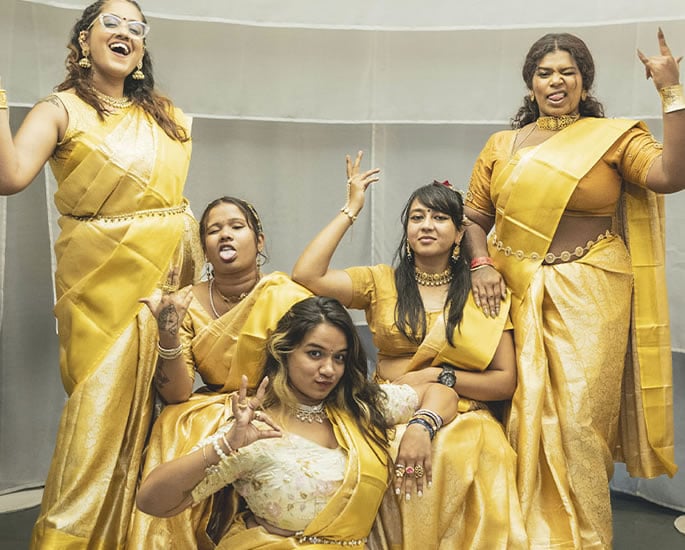
Wild Wild Women’s five members bring different languages, cultures and musical influences to the collective. That diversity has become an important part of their identity and how they communicate with audiences.
Rapping in regional languages gives their music a different connection with audiences:
“In each language that we speak, we can rap in English, but when you rap in your own language, that has a different power. You really feel very different.
“You see here, we are five different girls with five different flavours. You’ll find all kinds of flavours. There is metal, Hip-Hop, Pop, Reggae, Afro, everything.”
That cultural identity is equally visible in their clothing:
“We are also all sticking to our roots. We’re not forgetting our culture either.
“We wore saris and performed because people think that if you wear traditional clothes, that means you’ll only be dancing or singing classical songs. But here we are, wearing saris, rapping and doing our moves.”
Speaking in their own languages also allows the group to connect more directly with their communities, calling it a “power”.
The response to hearing familiar languages can be immediate, as they say:
“When you speak in your language and deliver that one punchline, people go crazy. We have our own slang too.
“I think a lot of people feel represented when they hear a person on stage rapping in their language.”
The same assumptions about culture follow them into their performances.
“I remember this moment in Chennai at my sister’s wedding. People thought we were wearing saris and ghagras, so they assumed we were going to dance. I was just like, ‘DJ, play the beat’.
“People were like, ‘What?’ And they were moving. It wasn’t just young people. There were older aunties and uncles and everyone.”
Those assumptions are not limited to India:
“We were at an event recently and there was a DJ from New York who came up to us and said, ‘You guys are in saris. What did you do? Were you dancing? When are you dancing?’
“The direct question, or the direct assumption, that we face is: ‘Are you dancers?’ And then we’re like, ‘No, we’re rappers’.
“Then the second question is, ‘Are you guys dancing with the rappers?’ And we’re like, ‘No, we’re rappers!’”
For Wild Wild Women, reclaiming those perceptions is part of the point.
Building a Global Indian Hip-Hop Community
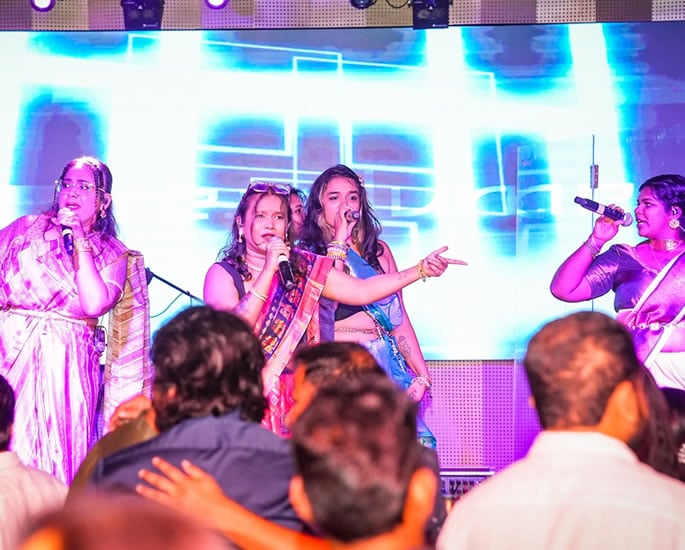
The group’s earliest creative period remains important because it was created without expectations around social media, audiences or public perception.
The first song and early writing sessions were particularly significant:
“For me, and I think collectively, our best moments have been shooting the first song and the writing sessions we shared in one room at Pratika’s home.
“Those were the most beautiful moments. We knew nothing, but that was everything for us.
“It felt so empowering and so liberating to just do the art form without caring or giving too much to the world.”
“I think that was the real beauty. That’s when we created real magic.”
Wild Wild Women began as something personal before developing into an international project.
Travelling has also strengthened the group’s connection with the South Asian diaspora, particularly through shared experiences of identity and belonging.
“Usually, when we are in India, we look at each other and say, ‘This is what India is’.
“But now that we’re travelling, when we look at the South Asian community and they’re like, ‘Oh, you’re just like us’, there’s a community that automatically forms itself.
“We feel foreign in all kinds of contexts. So we relate to the South Asian community and the diaspora equally because we have faced that too at some point.”
That has reinforced their belief in the importance of collective action:
“I think now we realise that building a community is the powerhouse for actually bringing in change.
“Rather than just catering our resources individually, I think we know the power of unity and the power of people.
“So we come together and bring in the change we desire for a better world.”
They also see the growing international success of Indian artists as evidence of what is possible for the next generation:
“I also think that over the next five years, obviously with the success of so many incredible artists coming from India, it makes the space wider.
“It makes us feel like, ‘You know what? It’s possible’.
“Something that comes out of India, especially if it’s multilingual, can actually make it to the biggest stages and biggest screens all across the world.
“We don’t feel anymore that it’s going to be a very tough thing to do because we can see some of our peers and friends actually going out there and doing cool things.
“So it’s going to be a really exciting journey.”
The rap group also see each other as inspiration:
“We’ve all been through a lot in the hip-hop scene, as well as in our personal lives. So whenever we come together, we share our stories. That’s how we get inspired and get information too.
“When I see Kranti Nari travelling abroad, I see that she has her own voice. Pratika has her own crew called PXP. She is with Wild Wild Women. Preeti has her own things, and myself too.
“So I think Wild Wild Women is really a strong inspiration for me in my personal life, and I feel the same for all of us.
“It’s Wild Wild Women. We all look up to each other.”
Fearless Creativity
For young people entering Hip-Hop and the creative industries, Wild Wild Women emphasise:
“I think the greatest power of an artist is to be fearless.
“When you are fearless, you can conquer bigger dreams and just think loud, big and clear.
“Fear actually fogs you. It brings in the ego that talks to you with the whole point of view that you are bigger than everything.
“When you remove that ‘I’ from yourself and look at the world from a perspective of ‘we’, you then see the world as a larger place to play around in.
“It becomes a playground for you to collaborate, build together and innovate to solve real problems.
“So I think being fearless and creating without fear is the most powerful thing an artist or any young person can have.”
That approach is reflected in the group’s upcoming singles and album:
“We do have a lot of songs coming up. We’ve been working on a few singles ourselves. We’re also working towards releasing an album, which will be titled Diary of Dreams.
“Probably in the future, there will be an opportunity for us to press these on vinyl, so that will be amazing.
“We’re taking our merchandise around Europe right now.
“We have a few exciting collaborations coming up with artists from the diaspora, as well as artists across the world.”
The group sees these projects as part of a journey that is still developing:
“We’re super excited for what this journey has in store for us because I feel like we’re just getting warmed up.
“The next journey and plethora of releases will say more about our definitive sound, and we’re really excited.”
On their live shows, they say:
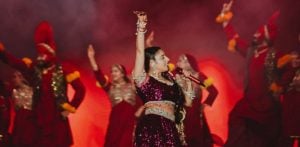
“I think audiences can expect a power-packed, incredible one-hour performance.
“A whole 60-minute performance of chest-thumping girls, MCs and rappers going back-to-back on the mic, sharing who we are, expressing where we come from and just moving forward in this journey as women and as artists.”
The response from UK audiences is expected to be varied, much like the reactions they have received elsewhere:
“I think it will be similar in some ways.
“There will always be a group of people who are either uncomfortable or weirded out, and maybe at the same time, a group of women who are just losing their minds because they’re like, ‘Wow, what a set!’”
The UK’s large Indian diaspora gives the group another opportunity to connect with people who may recognise the cultural references within their work.
“I think it’s going to be the same for audiences all over the world. Wherever we travel, there are always going to be two reactions.
“But I’m hoping, and all of us are hoping, that the reaction in the UK is just going to be lit because we have a massive Indian diaspora here as well, all across the country.
“I’m sure a lot of those people will be coming. So, excited. Very excited.”
Wild Wild Women has seen first-hand how representation can influence younger people, with women approaching them after shows to share how their performances have inspired their daughters.
“When we perform and get down from the stage, I’ve seen many women come and tell us, ‘You have inspired my daughter and she wants to be a rapper’.
“So I’m sure maybe your mum, your sister, your father or your brother wants to become something, and it is still there in them, but they’re not able to get it out.
“So make sure you help them and let their dreams come true.”
“Support each other, so we all grow together.”
Wild Wild Women’s journey reflects a wider shift in Indian Hip-Hop, where women are not simply seeking space within the culture but actively shaping it.
Their music, multilingual approach and visual identity allow them to challenge expectations while staying connected to their roots and the communities that inspire them.
As they prepare new singles, Diary of Dreams and international collaborations, the collective is continuing to expand its sound and reach.
At the same time, their emphasis on fearlessness, creativity and supporting others keeps the original spirit of Wild Wild Women at the centre of what they do.
Their message is ultimately about creating space for people to pursue the ambitions they have often been encouraged to keep to themselves and making sure those voices are heard.
Watch the Full Interview