









































"He has used these documents to create a fake or sham will"
A disinherited daughter has taken her late father’s lodger to court for allegedly making a fake will to get his £900,000 fortune.
East London solicitor Monir Shaikh died of Covid-19 in April 2020, leaving behind his daughter Mosammat Khatun.
But in May 2020, she was shocked to discover she had been cut out of his will, with everything going to his lodger Shamim Hasan.
Mrs Khatun has now claimed Mr Hasan snuck into her dead father’s room to get his documents before getting a struck-off solicitor to help him “forge” a fake will.
Mr Hasan and former solicitor Rajesh Pathania deny the allegations.
The lodger insisted that Mr Shaikh had treated him “like a son” and wanted him to inherit his estate.
The High Court heard Mr Shaikh owned numerous properties, including a hotel in Blackpool, with his estate valued at approximately £900,000.
Mrs Khatun told Judge Caroline Shea KC that she first discovered she had been cut out of her father’s will a month after his death.
Former solicitor Mr Pathania was named as the sole executor and lodger Mr Hasan as the beneficiary, with the document stating that Mrs Khatun was excluded.
Her barrister Dilan Deeljur told the judge she believes Mr Hasan and Mr Pathania produced a fake will and forged Mr Shaikh’s signature.
Mr Deeljur said: “Mrs Khatun’s claim is that Mr Hasan has used his position as a short-term lodger at the deceased’s property to infiltrate a store of documents that the deceased kept there.
“He has used these documents to create a fake or sham will to his benefit.”
But Mr Hasan told the court that he and Mr Shaikh grew close after he began helping him with financial, business and personal matters in 2016.
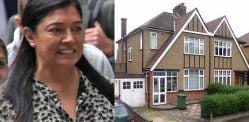
Mr Hasan eventually moved into Mr Shaikh’s house in Newham, East London, living on the ground floor with his wife.
Mr Deeljur disputed Mr Hasan’s claim of a “long-standing close relationship” with Mr Shaikh, saying he was only a paying lodger who did odd jobs for him.
The barrister said: “Mrs Khatun’s claim is there was no real long-standing relationship or one that would warrant a bequest of his whole estate of at least four properties and further assets.
Turning to Mr Hasan, he said: “After he died, you stayed in his house and you had access to his rooms upstairs.
“The first time you mentioned a will was May 2020. After Mr Shaikh died, you contacted Mr Pathania to help you create this will.
“You had access to Mr Shaikh’s papers in his room upstairs. You shared that information with Mr Pathania. Then you and he made a will.”
Mr Hasan replied: “He didn’t leave any papers upstairs.”
According to Mr Deeljur, Mr Shaikh had a good relationship with his daughter.
He asked Mr Hasan: “There isn’t any way Mr Shaikh would have left you all his assets, is there?”
Mr Hasan responded: “It was his wish.”
The barrister continued: “You suggest Mr Shaikh treated you like a son, but there’s evidence that shows you paying rent. He wasn’t going to let you live there for free, was he?”
Mr Hasan replied: “He did.”
The barrister also wondered why Mr Shaikh would have hired Mr Pathania – who was struck off as a solicitor in 2010 for a “conflict of interest” – as his sole executor when there was scant evidence they shared a close relationship.
Cross-examining Mr Pathania, Mr Deeljur said: “We say that the will is fake and that there’s no way you would be asked to be the executor.
“I am going to suggest to you that you have planned this with Mr Hasan.
“You planned this after Mr Shaikh died and you have done this to make money.”
Mr Pathania replied: “No, sir. This will is real.”
He stated that he had known Mr Shaikh since 2008 and was present when the will was signed, claiming it took place one evening in September 2019.
However, Mr Deeljur countered by mentioning another witness who recalled being out for dinner with Mr Shaikh that evening, making it unlikely that the will was signed at that time.
Following a three-day trial at the High Court this week, Judge Shea postponed her decision, which will be delivered at a later date.