
















































Supporters say the move could make Birmingham’s streets safer
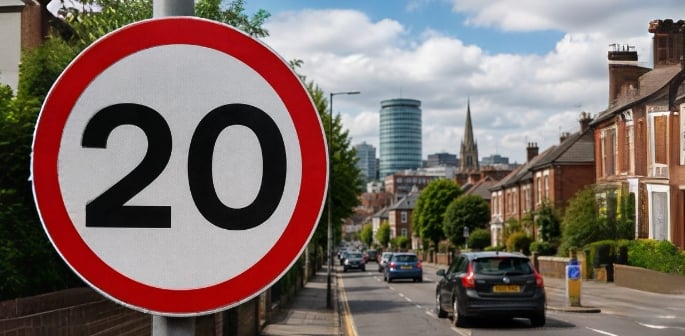
Birmingham could become England’s first “20mph city” under plans to reduce speed limits across most local roads.
The proposals have sparked debate among residents, politicians and road safety campaigners across the city.
West Midlands road safety commissioner Mat MacDonald described the plans as a potential “life saver”.
He highlighted the case of six-year-old Bobby Colleran, who was killed after being struck by a van in Liverpool.
MacDonald said the child would have had a significantly lower risk of dying if the vehicle had been travelling at 20mph.
Supporters say the move could make Birmingham’s streets safer for pedestrians, cyclists and other road users.
However, Reform UK’s Birmingham councillor Jex Parkin has criticised the proposed blanket restrictions.
Parkin described the plans as a potential “war on cars” and argued that motorists already face several challenges.
These include potholes, Birmingham’s Clean Air Zone and existing restrictions affecting drivers.
He said the council should instead focus on drivers who break speed limits or drive dangerously.
Parkin also raised concerns about businesses that rely on cars, vans and lorries to transport goods.
He argued that making driving more difficult could affect businesses and the wider local economy.
Meanwhile, MacDonald pointed to research suggesting safer and more pleasant streets can encourage people to spend more in local areas.
He also highlighted figures from Wales, where 20mph restrictions were introduced nationally in 2023.
Professor Charles Musselwhite of Aberystwyth University said the reduction had been a major success.
He said lower speeds give drivers more time to react and improve their field of vision.
However, the policy has also faced opposition in Wales.
Residents in Birmingham have also expressed mixed views about the proposed changes.
Others said drivers would simply ignore the restrictions if enforcement was limited.
In Kings Heath, residents have already experienced changes through a Low Traffic Neighbourhood.
Some residents said traffic had become safer, while others complained that congestion had moved onto surrounding roads.
The Birmingham proposals are part of a wider plan to reduce the dominance of cars across the city.
The debate is likely to continue as residents consider how the changes could affect commuting, businesses and everyday journeys.
For Birmingham’s diverse communities, including its large British Asian population, the proposals could affect people travelling to work, school, shops and community spaces.
The council’s plans will therefore remain closely watched as Birmingham considers whether to become England’s first 20mph city.