






































Here, he became a legend, scoring a hat-trick
The Olympics showcase remarkable athleticism, and India has enjoyed some fantastic moments.
Not only do the Games display athletic ability, but they also signify dreams coming true and history being made.
These Olympic moments have brought glory to the nation and inspired millions.
India’s Olympic journey has been full of trials and tribulations and has seen extraordinary achievements in history.
These achievements mark India’s emergence on the global sporting stage and its growing prowess.
Join DESIblitz as we explore 10 of India’s most memorable moments in Olympic history.
Balbir Singh Dosanjh’s Hockey Successes (1948-1956)

The 1948 London Olympics were the first for India as an independent nation.
During these Games, the Indian hockey team was a force to be reckoned with. It returned with its fourth Olympic gold medal and unveiled a new star, Balbir Singh Sr.
The athlete faced many obstacles in getting to London 1948. He was omitted from the original squad because the authorities “forgot” about him.
He eventually made it onto the team, but only with the insistence of Dickie Carr, a member of India’s 1932-winning Olympic hockey team.
Once in the team, Singh made it into the final 20-man squad.
However, the obstacles didn’t stop there. He was not in the first game’s starting 11 and only played against Argentina because of team injuries.
He scored six goals during this game, securing India a 9-1 victory. He was left out again during the third game and pulled out of the semi-final moments before playing.
This caused some students to protest at the Indian High Commissioner’s office in London, which secured him a place in the team for the Olympic final.
India defeated Great Britain 4-0, with Singh scoring twice.
By the time the next Olympics came around, Balbir Singh had become an integral part of India’s hockey team and Vice-Captain.
He was also the flag-bearer for India in the 1952 Helsinki Olympics.
Here, he became a legend, scoring a hat-trick in the semi-final and five goals in the final against the Netherlands.
His five goals were the most scored in an Olympic final, and this record still stands as of 2024.
This gave the Indian hockey team back-to-back gold medals as an independent nation.
The following Olympics in Melbourne had Balbir Singh as the captain.
He was less impactful than before, with his teammate Udham Singh becoming the top scorer, with 15 goals during the tournament.
Despite this, the captain soldiered through with a fractured right hand to help India win another Olympic final and secure a sixth Olympic gold.
Although Singh did not compete in another Olympic Games, he competed in the Asian Games, where India won silver.
Later in his life, he helped coach the Indian hockey team to achieve success in the Olympics and other international tournaments.
KD Jadhav wins India’s 1st individual medal (1952)

In the modern era, wrestler KD Jadhav won India’s first individual Olympic medal but he was not initially picked for the 1952 Games.
He had beaten the flyweight champion Niranjan Das twice, but Das was still favoured for the Olympic spot.
Jadhav wrote to the Maharaja of Patiala, who arranged a third match between the two.
In this rematch, Jadhav had Das pinned down in seconds, allowing him to return to the Olympics.
However, Jadhav needed more funding, so he went around his village to get money from locals.
The largest donation came from his former school principal, who re-mortgaged his house to lend Jadhav Rs 7,000 (£65).
Just like he fought for his place in the Olympics, he continued this determination throughout the Games, competing in bantamweight.
Some notable matches were against Canada’s Adrien Poliquin and Mexico’s Leonardo Basurto.
He suffered a fall in the following round and was not given any time to rest.
He conceded the match against Shohachi Ishii out of sheer exhaustion. Ishii went on to win gold.
However, Jadhav had still made history. He became the first individual Olympic medalist of independent India.
His bronze medal symbolised his determination and work over the previous four years; in the last Olympics, he came in sixth place.
Jadhav returned home as a hero. There was a procession, including over 100 bullock carts, and his usual 15-minute journey from the train station to his house took seven hours that day.
‘The Flying Sikh’ Milkha Singh (1960)

In this era of Indian sport, Milkha Singh was among the most famous names.
Athletics were not India’s strongest suit, but Singh had the whole nation behind him.
As India’s first Commonwealth Games gold medallist, he triumphed in the 200m and 400m races. He also won three Asian Games gold medals.
Milkha Singh gained the nickname ‘Flying Sikh’ after winning the 200-metre race in the Asian Games against Pakistan’s Khaliq, the 100-metre champion.
This was noticed by General Ayub Khan of Pakistan, who then gave him the nickname.
Khan famously said:
“Milkha ji, you didn’t run in Pakistan, you flew. We would like to give you the title of Flying Sikh.”
Milkha Singh famously finished fourth in 400m at the 1960 Rome Olympics. He finished 0.13 seconds behind bronze medallist Malcolm Spence of South Africa.
Although he did not bring back a medal for India at these games, his 45.6 time in Rome became the national record in the 400m event.
This record stood for 38 years before being beaten by Paramjit Singh at the 2000 Olympics.
India’s Golden Girl PT Usha (1984)

Born in Kerala, Pilavullakandi Thekkeraparambil Usha (PT Usha) is known as the ‘Golden Girl’ of Indian athletics.
Although most athletes are remembered for their medals and achievements, PT Usha is remembered for the ones she did not win.
At the 1984 Olympics, Usha clocked a time of 55.42 seconds in the women’s 400m hurdles but sadly finished fourth, missing out on a bronze medal by just 1/100th of a second.
Though she narrowly missed out on the bronze medal, her time at these games is, as of 2024, India’s record in the women’s 400m hurdles.
Her performance is often cited as one of the closest finishes in Olympic history.
Although Usha did not have much Olympic success, she is one of India’s most significant and well-known athletes.
Her contribution to athletics has inspired generations of athletes, and she continues to shape the future of women’s athletics in India.
Leander Paes ends Medal Drought (1996)

Leander Paes is one of Indian tennis’ most prolific names.
Born in Kolkata on June 17, 1973, to athletic parents, Paes was destined for the Olympics.
His father won a bronze medal at the 1972 Olympics as part of the Indian men’s hockey team, and his mother led India’s 1980 Asian Basketball Championship team.
Paes made his first appearance at the 1992 Barcelona Olympics at 18.
He was eliminated in the first round of the singles event but reached the quarterfinals of the men’s doubles alongside partner Ramesh Krishnan.
Building on his debut performance, Paes worked diligently for four years in preparation for the 1996 Atlanta Olympics.
He faced some gruelling opponents, being matched up against the then-world number one Pete Sampras in the first round.
Sampras was forced to withdraw due to injury and Paes managed to fight his way to the semi-finals, beating all his opponents in straight sets.
In the semi-finals against Andre Agassi, the eventual gold medallist, Paes put on a brave performance. Although inexperienced against his opponent, he left a lasting impression.
Unfortunately, his strenuous efforts also ruptured tendons in his wrists, resulting in a loss.
In the bronze medal match against Brazil’s Fernando Meligeni, Paes lost the first set 6-3 but pushed through the pain to win the next two sets and bring home the bronze medal.
This bronze medal ended India’s 44-year individual medal drought and propelled Paes’ tennis career to the world stage.
Paes competed in every Olympic Games between 1992 and 2016, making him the only Indian tennis player and athlete to do so.
Abhinav Bindra – India’s 1st individual Gold (2008)

Abhinav Bindra made his Olympic debut at the age of 17 at the 2000 Sydney Olympics.
Bindra competed in the Men’s 10m Air Rifle event in the 2000 and 2004 Olympics but did not return with a medal.
He set an Olympic record in the qualifying round of the 2004 Olympics but could not find his form in the finals and did not achieve a podium place.
His trip to the 2008 Beijing Olympics was much more successful. In the qualification round, he achieved a near-perfect score of 596 out of 600.
This was followed by a steady performance in the finals, with a score of 700.5, which led him to become the first Indian to win an individual gold medal.
This historic win ended India’s long-awaited aspirations for an individual gold medal and made Bindra a national hero.
His win was seen as a huge stepping stone in Indian sports and has inspired countless athletes nationwide.
It also brought significant attention to shooting as a sport in India and set the foundation for further shooting success.
Sushil Kumar’s history-making Silver (2012)

The 2012 London Olympics was one of India’s most successful outings at the Games. India won a total of six medals – two silver and four bronze.
Sushil Kumar was told to “retire on a high” after winning a bronze medal at Beijing 2008.
However, his dreams had yet to be fulfilled. The wrestler’s determination drove him to stand on the podium again in a higher position.
Ten days before the 2012 Games, Kumar was six kilos overweight.
To lose weight, he had to push his body to the limit, starving himself, doing heavy cardio, and wearing heavy clothes.
This led to him throwing up, having muscle spasms, cramps and being sleep-deprived.
Despite all this, he won the first round, using all his experience to beat his opponent.
After the match, he collapsed in the changing room out of sheer exhaustion.
He managed to fight to the finals but contracted a stomach bug, which weakened his body again.
His body gave up in the final against Japan’s Tatuhiro Yonemitsu, but he achieved his silver medal and became a two-time Olympic medallist.
Saina Nehwal makes Women’s Badminton History (2012)

Another of India’s memorable medals at London 2012 was badminton player Saina Nehwal.
Nehwal’s first Olympic experience was in 2008.
She reached the quarterfinals, making history as the first Indian woman to do so.
Over the next four years, she won many national and international accolades, including a gold at the 2010 Commonwealth Games.
However, a week before the 2012 Olympics, Nehwal contracted a severe viral fever, affecting her performance.
Despite this, she reached the semi-finals and lost out to eventual silver medallist Wang Yihan from China.
Although she lost this match, she went on to win the bronze medal match against another Chinese player, Wang Xin.
Her win in the singles bronze made her the first Indian woman to win an Olympic medal in badminton.
Her success laid the foundations for more success for India’s women’s badminton in the following Olympics.
Neeraj Chopra’s Gold Medal (2020)

Tokyo 2020 was India’s most successful Olympics to date.
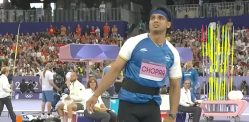
One athlete who stood out was Neeraj Chopra, an Indian javelin thrower participating in his first Olympic Games.
Chopra himself is an inspiration, using sports to overcome insecurities about his weight and to gain confidence.
He quickly burst onto the world stage, winning gold at the IAAF World U20 in 2016 with a record-breaking throw of 86.48m.
He then went on to win gold in the 2018 Commonwealth Games and the 2018 Asian Games.
After all this success, he entered his first Olympics in Tokyo as a top contender.
He led the qualifying round after throwing 86.65m and dominated the final with a throw of 87.58.
Chopra’s throw won him an Olympic gold medal, making him the first Indian Olympian to win a gold medal in athletics.
PV Sindhu’s Multiple Medals (2016-2020)

Another history maker from Tokyo 2020 was PV Sindhu.
Carrying on Saina Nehwal’s badminton success, Sindhu entered the Rio 2016 and reached the final where she lost to Spain’s Carolina Marin.
However, she made history by becoming the first Indian woman to win an Olympic silver in badminton.
Her success continued at the World Championships, where she claimed a silver medal in the singles, and at the 2018 Commonwealth Games, where she won gold in mixed team badminton.
In 2019, she added to her contributions to history by becoming the first Indian woman to top the podium at the World Championships in any sport.
Her success continued at Tokyo 2020, where she was seeded sixth and dominated the group stages.
She lost in the semi-finals but made a comeback to win the bronze medal and make history by becoming the first Indian woman to win multiple individual Olympic medals.
Her career is still ongoing, and it will be great to see if she can continue to make history in the 2024 Paris Olympics.
India’s success in the Olympics is a testament to its evolving sporting excellence.
Each memorable moment, from their dominance in hockey to their individual achievements in more recent years, shows the diversity and resilience of Indian athletes.
As we celebrate India’s milestones, we look forward to India’s future presence on the Olympic stage.
With Paris 2024 currently ongoing, it will be interesting to see what new milestones and records the Indian Olympic team sets.