


















































The conversation around younger star kids is often different.
Nepotism has been part of Bollywood for decades, with influential film families helping shape the Hindi film industry.
Yet the conversation around nepotism has changed. It is no longer simply about who gets opportunities, but whether the system is holding Bollywood back.
In recent years, Bollywood has struggled to consistently match its previous box office dominance. Meanwhile, Telugu, Tamil and Malayalam cinema have gained significant international attention.
Several major releases highlight this shift. Baahubali 2: The Conclusion (2017) grossed more than Rs. 1,000 crore worldwide.
RRR (2022) took Indian cinema’s global recognition further. It won the Golden Globe and Academy Award for Best Original Song for ‘Naatu Naatu‘.
These successes have intensified discussions about Bollywood’s changing fortunes and what may be driving them.
For many audiences, one issue repeatedly enters the conversation: nepotism.
So, if nepotism has existed in Bollywood for generations, why has the backlash against it become so intense now?
How Nepotism Became Embedded in Bollywood
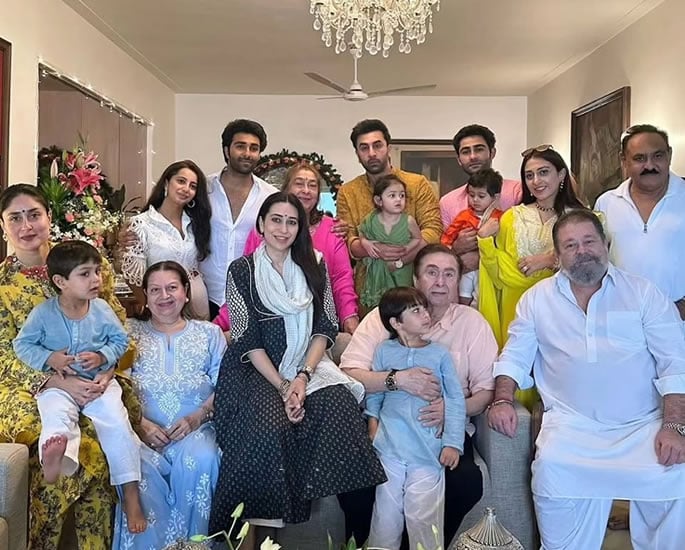
Nepotism has been part of Bollywood for generations, long before social media turned it into a major public debate.
Like many family businesses in India, the film industry developed strong professional networks that could be passed from one generation to the next.
Children of actors, directors and producers often grew up around film sets. They were familiar with the industry and had access to people who could help launch their careers.
That did not guarantee success. It did, however, give some star kids an advantage over aspiring actors without industry connections.
Few families demonstrate this better than the Kapoors.
Often described as Indian cinema’s “First Family”, the Kapoor dynasty has remained a prominent force in Hindi cinema for almost a century.
Prithviraj Kapoor established the family’s presence in the 1940s. His sons Raj, Shammi and Shashi Kapoor became major stars during the following decades.
The family’s influence continued through Raj Kapoor’s sons Rishi, Randhir and Rajiv. Kareena Kapoor later became one of the most recognisable members of the fourth generation.
Kareena’s career is particularly interesting because audiences did not always discuss her primarily through the lens of nepotism.
She made her Bollywood debut in 2000, when the industry was producing a growing number of youth-focused romances and coming-of-age films.
Her performance as Poo in Kabhi Khushi Kabhie Gham became one of the era’s most recognisable characters. Her acting has since attracted both praise and criticism.
Director Hansal Mehta, who worked with Kareena on The Buckingham Murders, has described her as an “underutilised” actress with more to offer.
Others have criticised her performances and questioned her range. Yet even these debates have generally centred on her abilities as an actress.
The conversation around younger star kids is often different.
Today, audiences frequently question their family connections before judging their performances. Their access to major productions, prominent directors and high-profile roles can become part of the criticism itself.
Social media has made these conversations far more visible. Casting decisions and industry connections can now be dissected publicly within minutes.
Kareena Kapoor’s career therefore offers an interesting comparison. She benefited from a powerful film dynasty, but her legacy is now debated largely around the work she produced.
Younger star kids such as Janhvi Kapoor often face a different question from the outset: did they earn their opportunity, or did their surname open the door?
That shift helps explain why Bollywood’s long-standing relationship with nepotism has become such a contentious issue today.
When Outsiders Could Still Succeed

The backlash against nepotism is also tied to how visible successful outsiders once were in Bollywood.
In the Hindi film industry, an “outsider” generally refers to someone who enters without an established film family or significant industry connections.
Bollywood has produced generations of outsiders who reached the highest levels of stardom.
Dilip Kumar and Dev Anand became major figures from the 1940s onwards, while Amitabh Bachchan rose to prominence in the 1970s.
Kareena Kapoor herself once pointed to this contrast when discussing nepotism. She stated that “for every Ranbir Kapoor, there is Ranveer Singh” and “for every Alia Bhatt, there was a Kangana Ranaut”.
Her argument was that talented outsiders could still succeed alongside actors from established film families.
Shah Rukh Khan remains one of the most prominent examples. He entered the industry without a film family behind him, moving from television into Hindi cinema before becoming one of its biggest stars.
His success showed that an outsider could build extraordinary fame without inheriting an established Bollywood surname.
Priyanka Chopra and Deepika Padukone provide further examples of actors who built major careers without being born into Bollywood dynasties.
Both later expanded their careers internationally, strengthening their profiles through Hollywood projects and global brand partnerships.
However, their journeys also highlight the difficulties outsiders can face when entering an industry built around established relationships.
Priyanka has spoken about feeling “lost” and isolated during her early years in Bollywood. Without family connections, she had to navigate an industry where established networks could provide valuable support.
Other outsiders, including Ayushmann Khurrana, Vidya Balan and Kangana Ranaut, have also built successful careers and led commercially successful films.
Their success made it harder to argue that family connections were the only route to stardom.
For audiences, the visibility of these careers may have softened concerns about nepotism. If outsiders could still become leading stars, family connections could be seen as an advantage rather than an absolute barrier.
That dynamic has become more complicated in the social media era.
Previous generations largely had to establish their public profiles through films, television, magazines, interviews and promotional campaigns.
Today, aspiring actors can build substantial audiences before their first major film is released.
For star kids, an established surname can combine with an existing social media following. This can create public recognition before audiences have seen them perform.
A large following does not necessarily indicate acting ability. It can, however, make a new actor more commercially attractive to producers and advertisers.
This has changed how audiences assess opportunities within Bollywood. The debate is no longer only about whether outsiders can eventually succeed.
It is also about who receives the opportunity to prove themselves in the first place.
That distinction helps explain why nepotism has become more contentious. When audiences believe family connections can influence access to high-profile roles, the success of individual outsiders becomes less reassuring.
Shahbaz Khan has similarly argued that the industry has shifted “from creativity to commercialism”, adding another dimension to the debate over how Bollywood decides which performers and projects receive backing.
A Growing Relatability Gap
The success of outsider actors may have softened criticism of nepotism in the past. However, that does not mean Bollywood was ever free from entrenched family networks.
Another factor has since intensified the backlash: the way some members of Bollywood’s established elite have discussed nepotism publicly.
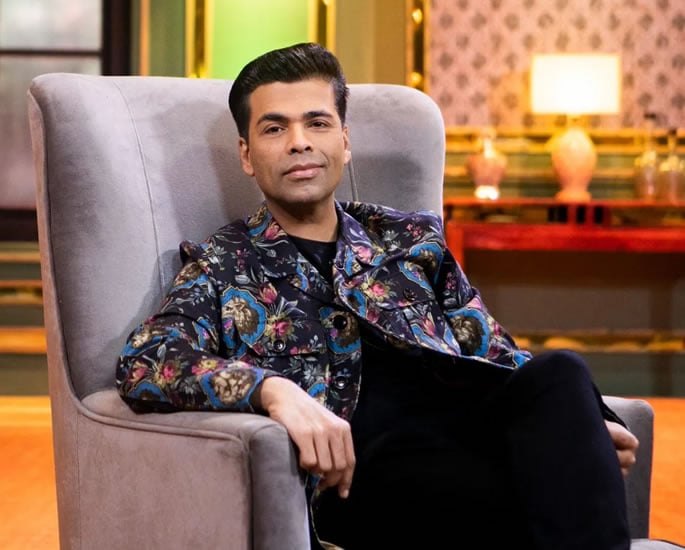
Karan Johar has become one of the most recognisable figures in this debate.
As the son of producer Yash Johar, he inherited an established connection to Dharma Productions, the company founded by his father.
The production house became associated with major Bollywood films, including Kuch Kuch Hota Hai and Kabhi Khushi Kabhie Gham.
Outsider Shah Rukh Khan played a central role in both films. However, Karan Johar has also helped launch the careers of several actors from established industry families, including Alia Bhatt and Janhvi Kapoor.
His position within Bollywood has therefore made him a prominent figure in conversations about nepotism.
The debate intensified in 2017, when Kangana Ranaut described Karan as the “flag bearer of nepotism” during an appearance on Koffee with Karan.
The comments sparked a wider public conversation about how opportunities were distributed within the Hindi film industry.
The controversy reached another level at the 2017 IIFA Awards, when Karan appeared on stage alongside Saif Ali Khan and Varun Dhawan.
The trio responded to Kangana’s comments by jokingly chanting “nepotism rocks”.
What was intended as humour did not land that way with everyone watching.
The incident triggered criticism online, particularly on X. Some users viewed the response as dismissive rather than humorous.
One reaction described the moment as a “tacky display of how shamelessly nepotistic Bollywood is”.
The controversy was significant because the criticism extended beyond who received film roles. It also focused on how Bollywood’s established figures responded when their privilege was challenged.
For some audiences, the incident reinforced the perception of an industry elite that was comfortable with its advantages.
The IIFA controversy therefore became an early example of a wider problem that would grow considerably with social media: the widening gap between Bollywood’s established figures and the audiences judging them.
Sushant Singh Rajput and the Nepotism Backlash

The 2017 IIFA controversy helped bring nepotism into mainstream discussion, but the death of Sushant Singh Rajput three years later intensified it considerably.
On June 14, 2020, the actor was found dead in Mumbai at the age of 34.
Sushant had entered Bollywood without a film family behind him. His journey from television actor to leading man made him an important example of an outsider succeeding in Hindi cinema.
For many young audiences, his career represented the possibility of building a successful acting career without an established Bollywood surname.
Following his death, social media was flooded with speculation about Bollywood’s power structures and the treatment of outsiders.
Some online claims suggested that industry exclusion or nepotism had contributed to his struggles. These claims were widely debated but were not established by official investigations into his death.
The tragedy nevertheless became a catalyst for renewed scrutiny of Bollywood’s relationship with outsiders and its established film families.
The timing also mattered.
Sushant’s death came during the Covid-19 lockdown, when conversations about celebrity privilege, wealth and inequality were taking place far beyond India.
Celebrities were sharing aspects of their lives online while millions of people faced financial uncertainty, isolation and restrictions on everyday life.
Some celebrity posts attracted criticism for appearing disconnected from those experiences. Farah Khan, for example, criticised the tone of some celebrity lockdown content and questioned its sensitivity to wider public struggles.
Against this backdrop, existing frustration with Bollywood’s perceived exclusivity found a much larger audience online.
The debate has since evolved beyond whether star kids receive opportunities. Critics increasingly question what happens when those opportunities continue despite disappointing performances or commercial results.
Veteran actor Seema Pahwa has spoken about being asked to train star kids. She said she refused, arguing that Hindi cinema is “selling faces, not story”.
Her comments reflect a wider criticism of an industry that some believe places greater emphasis on recognisable names than acting ability or storytelling.
Janhvi Kapoor has frequently become a target of this online debate.
Critics have questioned the commercial performance of some of her films while pointing to her continued involvement in high-profile productions.
That criticism is not evidence that her roles were secured solely because of her family connections. However, her status as the daughter of producer Boney Kapoor and the late Sridevi inevitably makes her career part of wider discussions about nepotism.
Online commentary has been particularly blunt.
One Reddit user wrote: “Watching her feels like a first-time actor in a workshop in their first class.”
Another commented: “Not one memorable role. Yet she keeps getting movies.”
Although the comments are subjective, they illustrate how quickly criticism of individual performances can become linked to the wider nepotism debate.
For audiences increasingly questioning who gets opportunities in Bollywood, talent alone is no longer the only issue. They are also asking who gets the chance to demonstrate that talent in the first place.
Why South Indian Cinema Is Winning Audiences

Bollywood’s struggles have coincided with the growing popularity of Tamil, Telugu and other South Indian film industries.
Some audience surveys and industry commentary suggest viewers are increasingly turning to South Indian cinema, particularly for films with strong regional identities and stories that travel beyond their original markets.
The shift is also visible within the industry itself.
Bollywood actors are increasingly taking roles in South Indian films, reversing an older pattern in which regional actors often sought opportunities in Hindi cinema.
The growing popularity of pan-Indian films has made South Indian productions increasingly important to the wider Indian film market.
Filmmaker Neeraj Ghaywan argued that South Indian films can feel “more real”, while suggesting Bollywood has become increasingly disconnected from that quality.
This perceived difference in relatability has deeper roots.
Hindi cinema was not always dominated by the aspirational stories associated with its modern image. Earlier films often reflected the social and economic realities of their audiences.
Research into Bollywood’s history shows how the expanding Indian middle class influenced the themes and stories that became popular.
As India’s economy changed during the 1990s, Bollywood increasingly embraced more aspirational stories, including lavish romances, consumer lifestyles and overseas settings.
That evolution reflected changing audience aspirations. However, it also created a distance between some Bollywood stories and everyday experiences.
South Indian cinema has taken a different path across several major industries, often combining commercial filmmaking with strong regional identities and stories rooted in local culture.
That does not mean South Indian cinema is free from nepotism.
Tamil and Telugu cinema both have prominent film families and star children.
But the difference lies partly in how audiences and industry professionals perceive the balance between connections, performance and commercial success.
Actor Yashpal Sharma, who has worked across Indian cinema, has described South Indian film industries as more professional than Bollywood.
He has also said he felt more “looked after” while working on South Indian productions than on some Bollywood sets.
Kangana Ranaut has made a similar distinction when discussing nepotism outside Bollywood, acknowledging its presence in South Indian cinema while arguing that outsiders are not subjected to the same level of bullying.
These add to a wider conversation about what audiences increasingly expect from Indian cinema.
South Indian cinema’s rise suggests that family connections alone do not determine whether a film succeeds. Storytelling, cultural relevance and audience connection remain crucial.
Bollywood’s nepotism problem has never been simply about star kids.
Family connections have always been part of the Hindi film industry. What has changed is how audiences view the advantages that come with them.
Today, viewers can see the networks behind casting decisions, follow celebrities beyond the screen and openly question why some actors continue to receive major opportunities.
That scrutiny has also made other issues harder to ignore.
Bollywood is not going to leave its film dynasties behind. Nor should it necessarily have to.
The real challenge is making sure those connections do not become more important than the stories being told or the talent telling them.
Because audiences ultimately have the final say. They can choose which films to watch, which stars to support and which stories deserve their attention.
And if Bollywood wants to win them back, giving audiences something that feels fresh, relatable and worth watching may matter far more than any surname ever could.