















































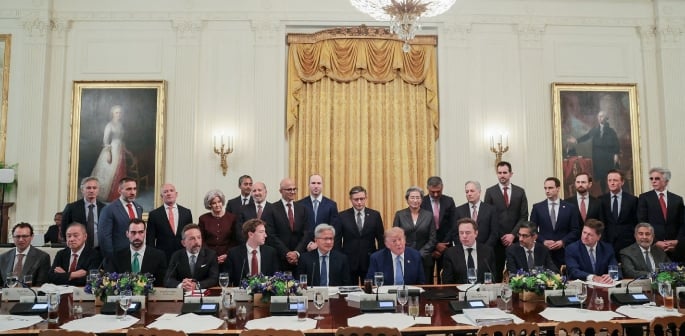
describing the gathering as an “extraordinary” meeting of minds
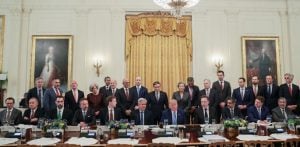
US President Donald Trump hosted leading technology executives at the White House for a meeting focused on artificial intelligence, its development and the potential risks surrounding the rapidly expanding technology.
The summit included senior figures from OpenAI, Anthropic, Nvidia, Meta, Google and SpaceX, with Trump describing the gathering as an “extraordinary” meeting of minds.
Discussions focused on AI safety, expanding data centres across the US and Trump’s push to replace the term “artificial intelligence” with “Super Intelligence”.
Trump said the technology companies had signed a “morally binding” agreement designed to improve the safety of their AI systems.
The agreement requires companies to introduce safeguards, detect problems quickly and work with independent auditors to assess whether their systems are operating as intended.
It also states that AI systems should not access or interfere with technical systems in unintended ways.
Trump described the agreement as “almost like a constitution”, while Meta CEO Mark Zuckerberg called the meeting a “historic conversation”.
However, some AI experts questioned whether the voluntary agreement goes far enough to address potential risks.
AI governance researcher Jose Miguelito Enriquez said the agreement represented an “emerging consensus”, but questioned whether companies would be held accountable if something went wrong.
University of Sydney law professor Kimberlee Weatherall also criticised the agreement, arguing that companies have significant control over how AI safety is defined.
Trump also reaffirmed his support for expanding data centres across the United States.
These facilities provide the computing power required to develop and operate AI systems, but their construction has faced opposition over electricity consumption and local environmental concerns.
A September survey by Marist Poll found that 65% of registered voters opposed data centres being built in their local areas.
Trump said technology companies would make “massive contributions” to communities where new data centres are developed.
Nvidia CEO Jensen Huang described the facilities as “super intelligence factories”, saying they could create jobs and support US manufacturing.
Trump also ordered US government departments and agencies to use “SI” and “Super Intelligence” instead of “artificial intelligence” in official communications.
The executive order said technological advances represented “a new era of Super Intelligence”.
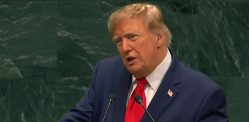
Trump previously argued that the word “artificial” made the technology sound “fake” during his address to the United Nations General Assembly.
Some technology leaders, including Mark Zuckerberg and Elon Musk, have already adopted the terminology.
However, experts have questioned whether “Super Intelligence” will become widely used, as the term traditionally refers to AI systems that surpass human capabilities across multiple areas.
The White House summit comes as governments and technology companies continue debating how quickly AI should develop and what safeguards should be introduced around the technology.