

































"We have a beautiful culture that I want to promote."
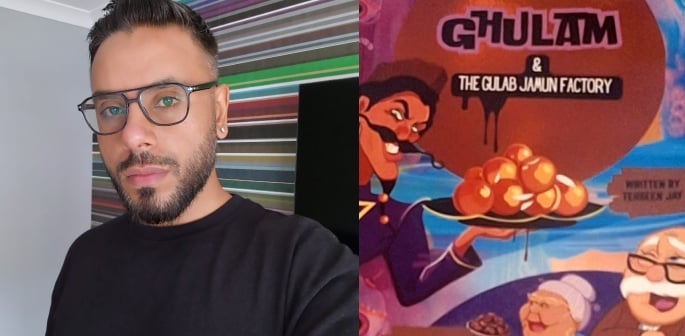
Tehseen Jay, born and raised in Bradford, is known for his quick wit and engaging comedic style.
He is making a name for himself as a children’s author and comedian who tirelessly promotes and preserves the Pahari-Pathwari language.
He highlights the magic and richness of the language and Pakistani culture in a manner that entertains and ensures laughter.
Indeed, this is reflected in his new self-published children’s book, Ghulam & the Gulab Jamun Factory.
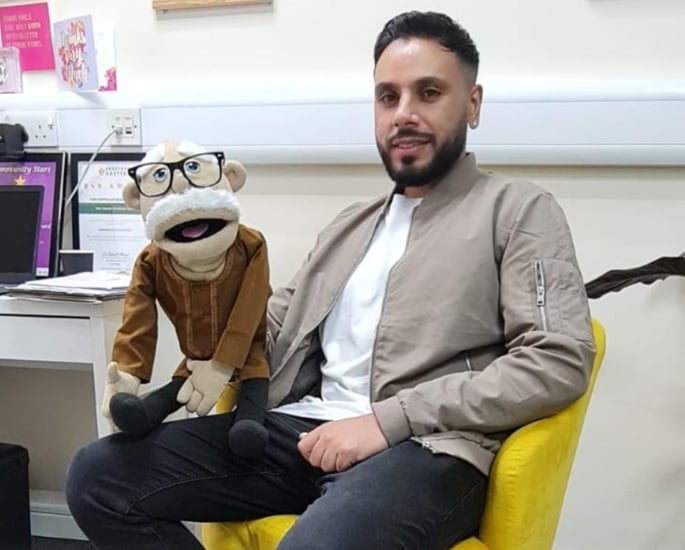
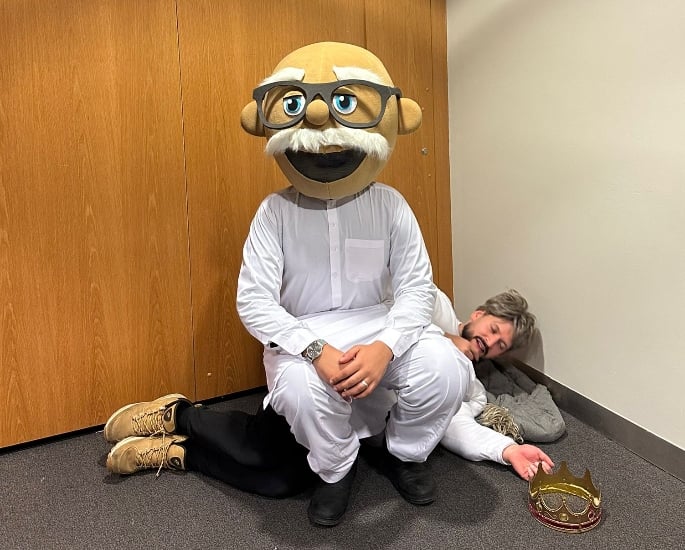
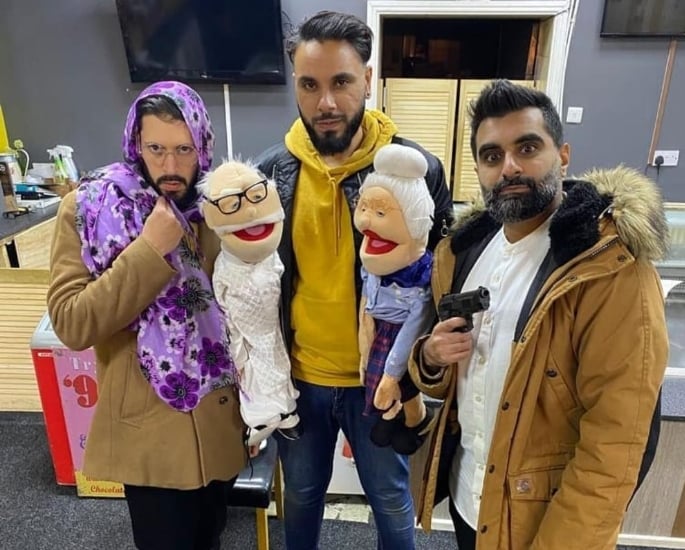
Moreover, Tehseen’s viral comedic show, ‘The Nana G Show’, has delighted audiences of all ages on platforms including TikTok and YouTube.
His contributions to the entertainment industry are also seen in his work on the Amazon Prime series ‘Green Fingers’ and the South Asian pantomime ‘Cinder Aaliyah’ with Penny Appeal.
With a budding career marked by viral comedy shows, engaging children’s books, and a unique ability to connect with audiences, Tehseen Jay is not just entertaining but also inspiring.
Join us as we explore Tehseen Jay’s exciting journey from comedian to children’s author and discover what drives him.
In our exclusive chat, he discusses his new children’s book, South Asian representation and much more.
Can you tell us about the new book Ghulam & the Gulab Jamun Factory? What is the story?
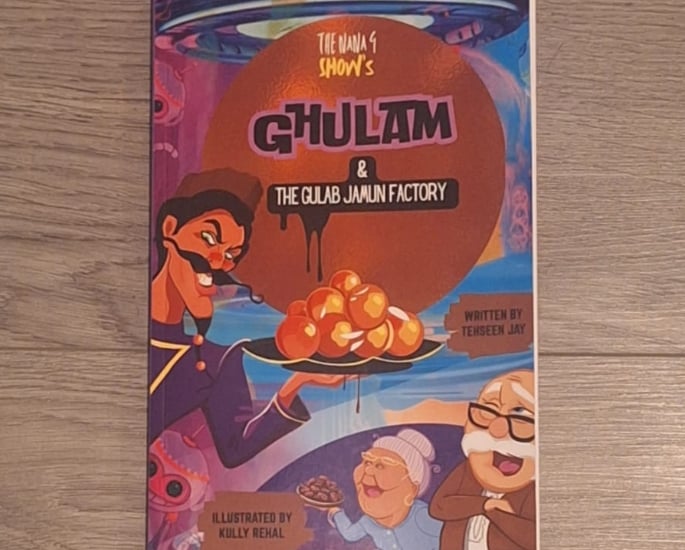 Ghulam & the Gulab Jamun Factory is about a guy named Ghulam who is obsessed with Gulab Jamun. He’s called himself the best in the world at making Gulab Jamun.
Ghulam built this factory with his friend Sikander. Then, this family came, ‘The Nana G Show’ family, and they accidentally created their own Gulab Jamun, which was better than Ghulam’s.
Ghulam will do pretty much anything to keep his title as the best.
But Nana G’s Gulab Jamun are the talk of the town, and Ghulam is determined no one will take his title away.
So Ghulam invites Nana G and his family to the factory, and when they arrive, all sorts of crazy stuff happens.
There’s a big adventure for the family to enjoy as they read.
What made you want to write this specific children’s book?
First, I wrote this book because I wanted to pass down the culture and heritage I grew up with to my son and today’s youngsters.
I feel like the youngsters have lost their identity a little bit.
We have a beautiful culture that I want to promote. I want the kids to know where they are from.
At the same time, there’s not enough representation of South Asian culture in books today.
There’s not enough South Asian representation anywhere, to be honest.
One of the reasons I wrote this is to promote South Asian culture and show it to people who are unaware of it.
Also, I wanted to help keep the Pahari-Pathwari language alive and promote it.
My culture—I’m not Mirpuri, but we’re from the northern area of Pakistan, the Gujar Khan area in Punjab. We can be looked down upon a lot, and I want to change how some see us.
Some who speak Urdu look down on us, who speak the Pahari-Pathwari language and dialect, and see us as uncivilised village folk.
I want to change those perspectives – we are hard-working and innovative.
What were your inspirations for the Ghulam & the Gulab Jamun Factory story?
 I’ve always liked Gulab Jamun growing up, and I wanted to do something around Mitai and Asian sweets.
Again, no one really talks about Mitai in books or what we see and watch. I thought I’d do something completely different.
That was one of my inspirations, and my son was one of my inspirations as well.
I wanted to create something he could pick up one day and say, ‘Ok, that’s my culture, where my parents and grandparents came from.’
I also have my puppet family from ‘The Nana G Show’, and I wanted to give them a little bit of an adventure.
Illustrations can be invaluable in adding a rich layer to a children’s book. How did you find the process of adding this element to the book?
 I spoke to a friend of mine, Kully Rehal, who lives in India. She was a fan of mine when I first started out, and she also designed my logo.
When I saw her artwork, I was drawn in. Her artwork is very unique, very Desi, and I wanted to work with her, and she said: “Cool.”
When Kully and I started working together, I told her what I was going for, and she did everything exactly how I wanted it.
Illustrations are important. I see a lot of books that are in black and white, and I wanted them to be in colour.
It cost me more money, but it’s worth it. Kids need something to look at visually, too. It’s all worth it.
What challenges, if any, did you face as you created the children’s book, and how did you overcome them?
 There were loads of challenges. I do not have any formal writing background, and I initially wanted to collaborate with someone, but it was very hard to find somebody.
Some I spoke to didn’t believe in it; they couldn’t see it.
So I thought, regardless of what people think, I’m going to do it. I want to do this, and I won’t stop.
I watched YouTube tutorials and everything else on how to write it and what to do.
I did my own thing and just sat down and put it together. It was a struggle finding an editor and getting it edited.
It was challenging because not many people understand South Asian culture and humour, so I ended up editing myself.
Certain family members were not supportive, and a lot of people messed me around as I tried to get this book out there.
It was a difficult journey, but I was and remain resilient. I completed the book and will carry on.
A book can be however you want it to be, and there are so many ways of writing books today.
The best thing is that you don’t need a publisher; you can self-publish. I’ve self-published both books.
When people turned me away, I was like: “Ok, sod you, I’ll do it myself.”
This is where we are at an advantage. People need to stop being shy and just write books.
We need more South Asian writers. They need to be confident and do what I’m doing.
Through your work, you’ve engaged with Khidmat Centres, the Leap, and the Arts Council. What role have they played in your career development and work as an author?
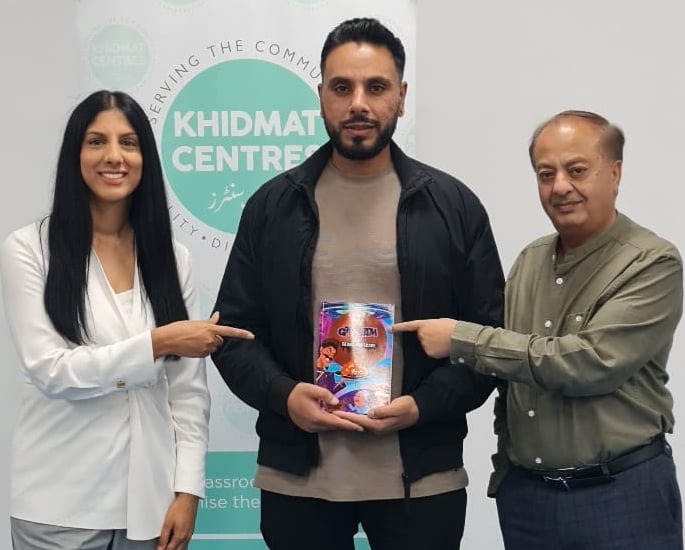 I did get let down a lot and learnt lessons, but Sofia Buncy and Khidmat centres helped me a lot.
Sofia has given me space to do my work, and she also supported me in getting the funding as well. She’s been really good.
Sofia had belief in me and supported me from day one.
The Leap partnered with the Khidmat centres to give me the funding, and the Arts Council also supported me.
I had to pitch my idea, and it was accepted. They were all great.
In your writing and comedy, you focus on the Pahari-Pathwari language. What made you decide to do this?
It’s what I know. I grew up with my grandparents.
My grandparents, from my mum’s side, are from Gujar Khan, Bewal, in the northern part of Pakistan, and my Daadi is from Rawalpindi.
My great-great grandparents are from Dadyal in Mirpur, Azad Kashmir, but I’ve never been there.
Growing up, I spoke Urdu and Pahari-Pathwari. I think Pahari is a funnier language.
It’s easy to make people laugh with it.
I released my first-ever children’s book for Pahari-Pathwari-speaking people in 2022.
It’s called Learn Pathwari with the Nana G Show: The Pathwari Alphabet.
We have to keep the language alive.
Why do you think keeping the Pahari-Pathwari language alive for those in Britain is important?
 It’s important because we don’t want to lose our identity.
I feel kids have lost their identity; they don’t know who they are.
There’s a lot of beauty in our culture; we need to promote our culture more and get it out there.
Kids need to know their history and culture.
I feel like if we don’t promote our language and kids learning it, it will be lost in 10 years.
No one will be speaking it at all; we can’t let that happen.
Are there any authors or books that have influenced your writing?
I like authors like Roald Dahl, David Walliams and Dr. Seuss.
I like authors who are not like your average authors but are a bit quirky and outside the box.
Have you had the chance to read your books to children? What has their feedback been?
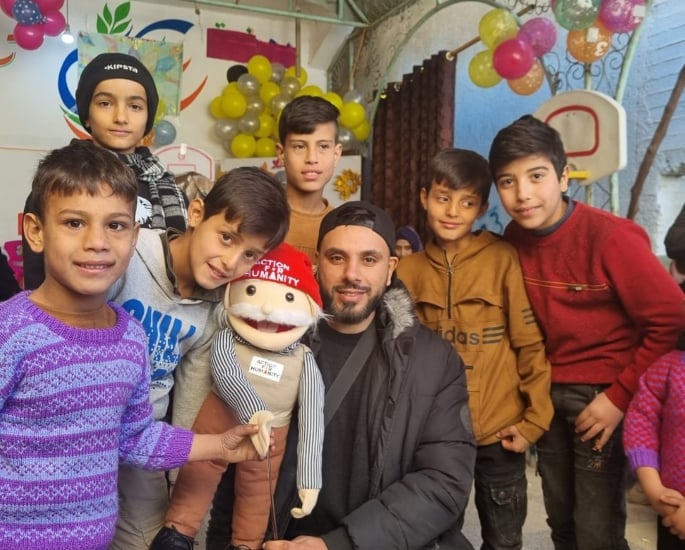
I’ve read the Pathwari alphabet to school children; it was awesome.
Some of the best work I have done is working with kids.
The kids really appreciated it; it was really fun. I’d love to do it again.
What do you hope parents and caregivers will take away from reading your new book with their children?
A better understanding of the South Asian culture.
My book also contains many messages about respecting your parents, ideas of family unity, and never giving up on your dreams.
Hopefully, these messages will be felt, and people will get them from my book as they read it.
Has being a comedian helped you incorporate humour into your writing?
Definitely, it helped me a lot, and I’ve had good feedback.
As I’ve said, I’m not a professional writer and have no training.
But I tried my best. It has been very difficult but worth it. I’ve had good feedback.
What does your creative writing process look like? Do you have any specific routines or rituals?
To be honest, when I write, I don’t plan; I just write. Whatever comes into my head, I put it onto paper.
Sometimes, I brainstorm. Sometimes, whatever comes to me, I put on paper and see what makes sense. That’s how it works for me.
I have to do a lot of research before I write these books, and it’s helped me explore my culture more.
It’s very interesting seeing, for example, how people used to live back in the day.
You have also created the viral hit ‘The Nana G Show’. What inspired you to make the show?
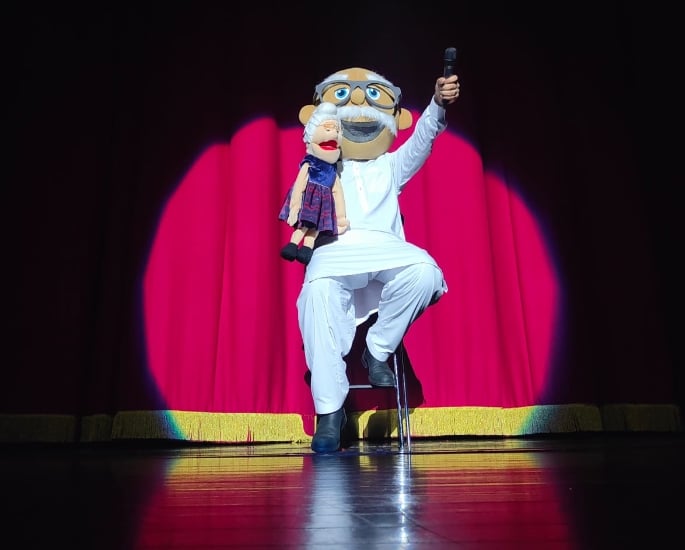 Growing up, I was always into puppets and a big fan of Jim Henson. I wanted to do my own version of what Jim Henson was doing.
I bought a puppet for the first time seven years ago, went on Facebook, and started messing around with it.
Then those videos went viral, and then on Instagram and then on TikTok.
When I went on TikTok, everything really picked up. Everything started going crazy. More people started noticing me and what I was doing.
My inspiration was Jim Henson; he created ‘The Muppets’.
What advice would you give to any South Asian aspiring to be a writer aspiring to undertake a creative career?
Just keep doing what you’re doing; don’t give up.
Regardless of what anyone else says, be different. Be you, and never ever give up.
That’s what I’ve been doing; I keep going no matter what.
Regardless of what anyone says or how many times I’ve heard ‘No,’ I keep going.
A lot of our people look down on creatives, but we are the people they turn to when they are tired or stressed out. We’re the ones who make them laugh and smile.
Can you tell us about your future work and plans?
 I have loads of plans.
I want to make Ghulam & the Gulab Jamun Factory, into a film.
I want to do it, and I am going to do it. I may even do a play; that’s my focus right now.
Tehseen’s personality and energy are wonderfully infused into his writing, comedy and acting.
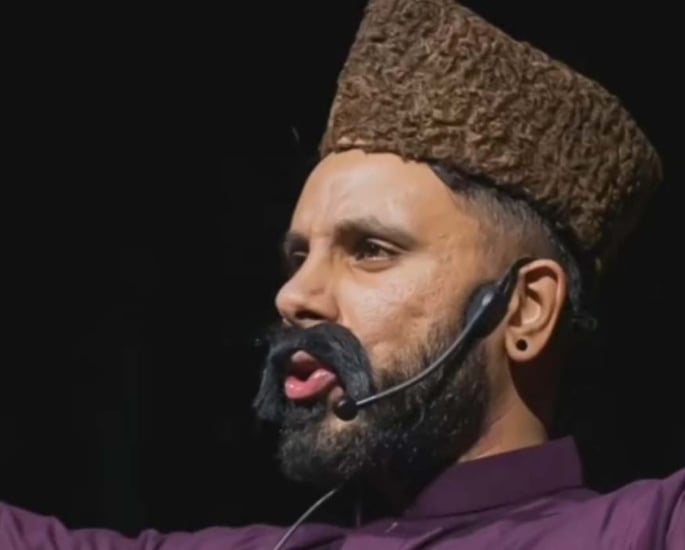
He can be called many things—a comedian, puppeteer, voice actor, performer, and children’s author, to name just a few.
Tehseen wears many hats as he strives to follow his passion, help preserve his culture, and entertain people of all ages.
His focus and determination inspire and show that when dreams are followed, unexpected doors open, and adventures are had.
Tehseen’s unwavering resolve and resilience in the face of numerous challenges inspire and motivate those who have hesitated to pursue their passions to take that bold step forward.
Tehseen Jay is currently travelling across the UK for his second children’s book, Ghulam & the Gulab Jamun Factory.
His TikTok page provides information on events and where he will be found.