















































“How can you call this a samosa salad?"
Comedian Rahul Dua broke down a food content creator’s video, which has stirred the internet.
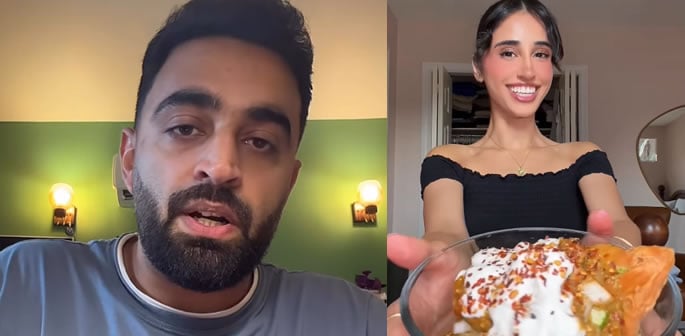
Toronto-based creator Tas Dhaliwal has gone viral for her “Samosa Salad”, a mash-up that’s exactly as wild as it sounds.
The video begins with Tas casually tossing a few samosas into a bowl. What follows is a sensory overload: lime juice, a heavy pour of chickpea curry, cucumbers, onions, yoghurt, green chutney and imli.
She poured herself a grape-flavoured drink.
Then comes the twist: she topped the dish off with ketchup.
Anticipating backlash, Tas offered a disclaimer early: “I know some of y’all will be hating on it.”
She was right. But the roast that really took off wasn’t angry; it was delivered with surgical sarcasm and a deadpan grin.
Enter Rahul Dua. The Indian comic’s reaction to the clip has only amplified the video’s reach.
He started gently: “Honestly, no hate, no hate. This is something I would try as well.”
He gives the yoghurt a pass. He lets the chutney slide.
But he made fun of Tas’ mispronunciation of “imli” as “Emily”, flipping the tone from mild bemusement to full-blown comedy.
What makes his roast memorable is the slow build. His expressions shift gradually, like a judge watching a reality show audition go off the rails.
He continues with mock approval, praising the decision to toss everything into a mixing bowl.
“Good, good,” he says, with the perfect mix of sincerity and satire.
But then, he dropped the final blow.
He asked: “How can you call this a samosa salad?
“It’s not salad. It’s… a chaat vibe.”
With that line, he brought decades of street food tradition to the conversation, reminding everyone that while fusion is fun, some labels matter.
View this post on Instagram
And just when it seemed like he was done, he ended with a wholesome offer to meet Tas when he next visits Toronto.
He added:
“I know, Dhaliwal Saab, you’re based in Toronto. Next time I’m there, we’ll meet. We’ll eat chaat together.”
The viral video highlighted the internet’s ongoing fascination with food experiments, especially those that remix South Asian staples.
While the ‘samosa salad’ may split opinions, it has sparked the kind of viral engagement that platforms crave.
Food content today doesn’t just invite reactions; it demands them. And as this clip proves, sometimes the best response isn’t outrage but dry humour and cultural recall.
In the battle between samosa salad and tradition, comedy wins.