
















































Nepal has recorded 1,003 deaths
The death toll from devastating floods in Nepal and China has surpassed 1,000, with thousands of people still missing as rescue teams continue searching affected areas.
Nepal has recorded 1,003 deaths, according to the country’s National Disaster Risk Reduction and Management Authority.
Chinese authorities have reported 16 deaths and 546 people missing, including 261 foreigners.
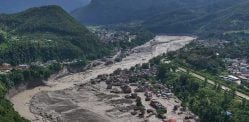
The disaster began on August 26 after a glacial collapse in the Himalayas sent huge amounts of rock, ice and meltwater into valleys.
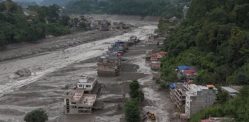
The resulting floods caused widespread destruction across communities in Nepal and areas close to the China border.
Scientists examining satellite imagery believe the collapse may have involved the failure of bedrock beneath a glacier.
Rescue teams are now focusing heavily on hydropower projects in Nepal, where hundreds of workers are feared to remain trapped inside tunnels.
Nepalese Prime Minister Balendra Shah said 279 workers had been rescued from hydropower sites.
Authorities had initially estimated that more than 900 people were missing from these projects.
More than 11,000 people have been rescued across the affected region so far.
Some electricity and communication networks have also been restored, although many communities remain severely affected.
Road access to Nuwakot, one of the worst-hit districts, has also been restored in some areas.
The development has allowed rescue teams to reach communities and deliver essential relief supplies.
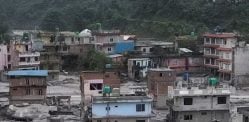
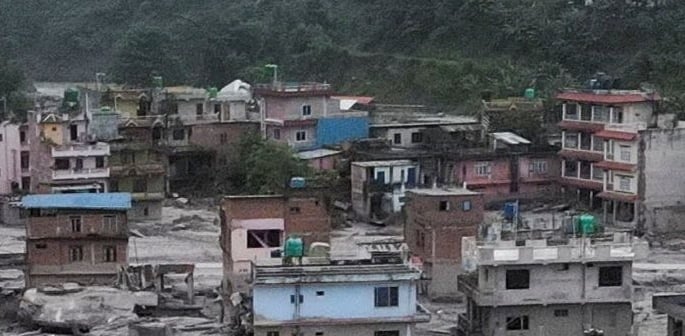
Reports from affected villages have highlighted the scale of destruction caused by the floods.
In the village of Dhunge, residents said hundreds of homes had been swept away by floodwaters.
A rescue team also recovered 24 bodies from a house in Betrabati village in Nuwakot district.
Police official Bipin Regmi said teams were continuing to reach previously inaccessible areas. He said rescuers were recovering bodies as they expanded their search operations.
The disaster has also triggered a major international relief response.
Nepal has received more than $42m in aid following the floods, according to Shah.
India and China are assisting with rescue operations and helping to construct temporary Bailey bridges.
These bridges are being used to improve access to remote areas damaged by the flooding.
Hydropower has expanded significantly in Nepal over recent decades.
The mountainous country has invested heavily in projects using its Himalayan rivers to generate electricity.
Many of these projects depend on tunnels built through steep mountain terrain.
The floods have therefore created major challenges for workers at several hydropower facilities.
Rescue operations are expected to continue as teams search for missing people and assess damage across affected communities.
The number of deaths and missing people could change as rescuers reach more isolated areas and authorities receive further information.