

















































"since the meals have low dietary diversity, the imbalance shows."
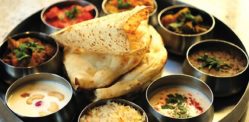
Indian cuisine is loved across the world, especially North Indian food. However, a study has revealed that the diet may not offer enough nutrition.
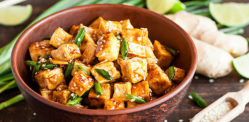
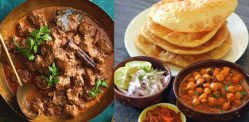
Popular dishes include Chana Masala, Palak Paneer, Daal Makhani and Butter Chicken among many others.
The study was carried out by the Postgraduate Institute of Medical Education and Research (PGIMER), Chandigarh and The George Institute for Global Health.
It tracked the dietary habits of North Indians and found that they consumed a higher-than-recommended intake of salt and phosphorus and were low on protein and potassium.
The study included over 400 subjects, healthy adults and adults with chronic kidney disease (CKD).
It is the first study to provide a comprehensive assessment of the intake of multiple nutrients by the north Indian population.
Dr Ashok Yadav, one of the study’s lead investigators, said they analysed sodium, protein, potassium and phosphorus intakes in urine samples.
The test subjects comprised men and women with varying body mass indices, blood pressure and abdominal obesity.
Dr Yadav said: “WHO guidelines recommend a daily dietary sodium intake of two grams (corresponding to five grams of salt), but 65% consume eight grams daily.”
Excessive salt consumption is said to be a major trigger of hypertension, also known as high blood pressure.
This is something that is common among South Asians.
As sodium levels increase, the body holds on to water to dilute them.
This increases both the amount of fluid surrounding the cells and the volume of blood. Increased blood volume means more work for the heart, leading to high blood pressure.
It also raises the risk of a heart attack and stroke.
This is the reason why cardiologists advise patients to avoid foods high in sodium.
And while the recommended dietary allowance for phosphorus is 7,000 micrograms a day, the study found that the mean intake was above the recommended levels.
Extra phosphorus will draw calcium out of your bones, weakening them.
High phosphorus and calcium levels also lead to dangerous calcium deposits in blood vessels, lungs, eyes and heart. Over time this can lead to an increased risk of heart attack, stroke or death.
Dr Yadav advises opting for foods like fish, pulses and dairy products instead of processed foods that have phosphorus added to them.
According to Dr Yadav, the World Health Organisation recommends at least 3.5 grams of potassium.
However, the study revealed a lack of potassium in North Indian food.
Nuts, green vegetables and fruits like kiwi and banana are the primary sources of potassium in the diet.
But Dr Yadav says: “But since the meals have low dietary diversity, the imbalance shows.”
Another revelation was the low protein intake by healthy individuals considering there are plenty of meat dishes within North Indian cuisine.
The recommended protein intake should be between 0.8g – 1g per kilogram of body weight.
But the study revealed the protein intake was around 0.78g per kg of body weight.
The usual protein intake in predominantly vegetarian homes was found to be around 39g – 57g per day.
Although men had a higher nutrient intake as compared to women, their overall dietary habits were not satisfactory.
Dr Nancy Sahni, of PGIMER, Chandigarh, said:
“Protein is a building block of our bodies.
“If it is not up to the optimum level, sarcopenia (muscle wasting) may set in.”
“The best protein sources are milk and milk products, eggs, fish, pulses, legumes, nuts, and oil seeds.
“For a normal being able to eat everything, judicious food combinations for enhancing the quality and quantity of protein is required rather than supplements.”
The study may have confined itself to assessing protein, sodium, potassium and phosphorus but given their imbalance, it is quite clear that North Indian food makes for quite a lopsided food pyramid.
An unhealthy diet, coupled with a lack of physical activity and consumption of alcohol and smoking, is the reason why health issues among South Asians continue to increase.