














































Every performance unfolds like a visual poem.
Mohiniyattam is a mesmerising classical dance form from Kerala. It combines elegance and storytelling and captures audiences with its gentle, fluid movements.
This dance, predominantly performed by women, showcases refined footwork and graceful gestures.
It thrives on expressions and emotions, drawing viewers into its poetic beauty.
Known for its hypnotic rhythm, Mohiniyattam conveys stories through its delicate hand gestures and soulful expressions.
The performance creates an immersive experience, weaving a visual narrative with finesse.
With origins tracing back centuries, this dance form has evolved while preserving its traditional essence.
It remains a symbol of artistic heritage, expressing both joy and sorrow through refined movements.
DESIblitz takes you on a thrilling journey as we explore the origins and history of Mohiniyattam.
Origins
 Mohiniyattam traces its origins to the temples of Kerala. It is believed to have developed during the 16th century under royal patronage.
The dance was traditionally performed in temple precincts as a form of devotion. Over time, it became an integral part of Kerala’s cultural heritage.
King Swathi Thirunal of Travancore played a key role in refining and popularising Mohiniyattam.
His contributions helped shape the dance into a structured art form.
Mohiniyattam draws influence from Natya Shastra, an ancient treatise on performing arts.
The dance incorporates elements from Bharatanatyam and Kathakali, blending grace with expressiveness.
Colonial rule led to a decline in Mohiniyattam, but it was revived in the 20th century by dedicated artists.
The Dance Form & Movements
 Mohiniyattam relies on graceful, circular movements. The dancer’s eyes, hands and body work in harmony to express emotions vividly.
The movements are slow yet compelling, reflecting the gentle waves of Kerala’s backwaters. Each step synchronises with melodious music, creating a dreamlike aura.
Mohiniyattam follows ‘Lasya’, a soft and feminine style. Every performance is a balance of controlled movements and expressive storytelling.
The dancer glides across the stage, creating seamless transitions. Her steps, known as ‘adavus’, are fluid, making the dance appear effortless.
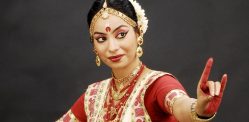
Hand gestures, or ‘mudras’, hold deep meaning. They transform simple movements into expressive storytelling, conveying emotions from love to longing.
Costumes
 The Mohiniyattam costume embodies purity and elegance. Dancers wear a traditional white or off-white saree, often with a golden border.
This attire symbolises grace and simplicity, enhancing the delicate movements.
The saree is pleated in a way that allows ease of movement while maintaining its traditional appeal.
Ornamental jewellery, such as necklaces, bangles and anklets, complements the attire.
Gold accessories add a touch of splendour to the performance.
Hair is styled into a neat bun, often adorned with jasmine flowers. This enhances the dancer’s regal presence while maintaining a natural charm.
The costume’s simplicity ensures that focus remains on the dancer’s expressions and movements.
Every detail, from fabric to adornments, harmonises with the performance.
The Role of Music in Mohiniyattam
 Music breathes life into Mohiniyattam. It blends soothing rhythms with classical melodies, setting the mood for each performance.
The instruments used include the Mridangam (a percussion instrument), drums, and flutes.
Each adds depth to the dance, creating a captivating experience.
Rhythms are slow, allowing the dancer to express emotions with subtlety. The harmonious blend of beats and melody forms the perfect backdrop.
Sanskrit and Malayalam lyrics accompany the music, adding a poetic essence. The verses narrate stories, elevating the emotional depth of the dance.
The interaction between the dancer and music forms the essence of Mohiniyattam. Each movement synchronises with the beats, creating an enchanting visual rhythm.
A Journey Through a Performance
 A Mohiniyattam performance unfolds like a story. It begins with a slow, deliberate entry, drawing the audience into its graceful world.
The dancer initiates with introductory movements, setting the stage for the narrative. Each expression conveys emotions with precision and depth.
As the performance progresses, movements gain rhythm. The dancer’s fluid steps and delicate hand gestures bring the story to life.
Facial expressions, known as ‘abhinaya’, play a crucial role. The dancer’s eyes and subtle smiles communicate emotions more vividly than words.
The performance reaches its peak with a climactic sequence. The dancer’s movements flow seamlessly, leaving the audience spellbound.
The concluding segment is marked by a return to calm, mirroring the beginning. The graceful retreat leaves an unforgettable impression.
Why Mohiniyattam Endures
 Mohiniyattam continues to thrive due to its timeless appeal. Its unique blend of elegance and storytelling ensures its place in the world of classical dance.
Modern artists embrace this art form, preserving its authenticity while infusing contemporary elements. This balance keeps the dance relevant and engaging.
Training in Mohiniyattam requires dedication. Dancers spend years mastering its intricate movements and expressions, refining their craft with perseverance.
The global stage has welcomed Mohiniyattam, with performances enchanting audiences worldwide. Cultural festivals and dance showcases keep its legacy alive.
This dance form represents more than just movement—it embodies tradition, artistry and cultural expression. It connects generations, celebrating heritage through its mesmerising grace.
Mohiniyattam is a poetic dance form, blending elegance with expressive storytelling.
Its graceful movements and soulful expressions captivate audiences, making it an enduring art form.
The combination of delicate footwork, intricate hand gestures and emotive expressions makes Mohiniyattam unique.
Every performance unfolds like a visual poem, leaving a lasting impact.
From its costumes to the music, every element contributes to the dance’s immersive experience. The serene yet powerful movements make Mohiniyattam a true celebration of grace and tradition.
This dance form will continue to enchant generations, preserving its legacy through dedicated practitioners and appreciative audiences.