










































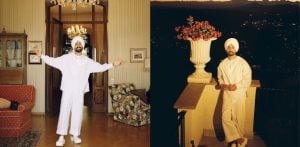


"One of the most emancipated of Indian women"
The late 19th and early 20th centuries witnessed a seismic shift in the fight for women’s rights in the UK and Indian suffragettes were a massive part of this movement.
Frustrated by the systemic denial of their political voice, women across the nation mobilised into a formidable force known as the suffragettes.
Led by dynamic figures such as Emmeline Pankhurst, the suffragettes employed radical tactics, including protests, hunger strikes, and civil disobedience.
The Women’s Social and Political Union (WSPU), a militant suffragette group, emerged as a driving force.
They challenged the deeply ingrained patriarchal structures and societal norms that denied women their democratic rights.
Within this fervent atmosphere, Indian women played a surprisingly active role.
Despite being under colonial rule, these women sought to align themselves with the struggles for suffrage, both in India and abroad.
Their engagement was multifaceted, driven by a desire for justice and equality that extended beyond geographical boundaries.
The reasons behind their involvement are deeply rooted in the complexities of empire and power dynamics.
For the Indian suffragettes, advocating was not merely an act of solidarity with British women but a pursuit of autonomy and empowerment in their own right.
We look at these incredible women who defied the confines of law and society and made history in doing so.
Princess Sophia Duleep Singh
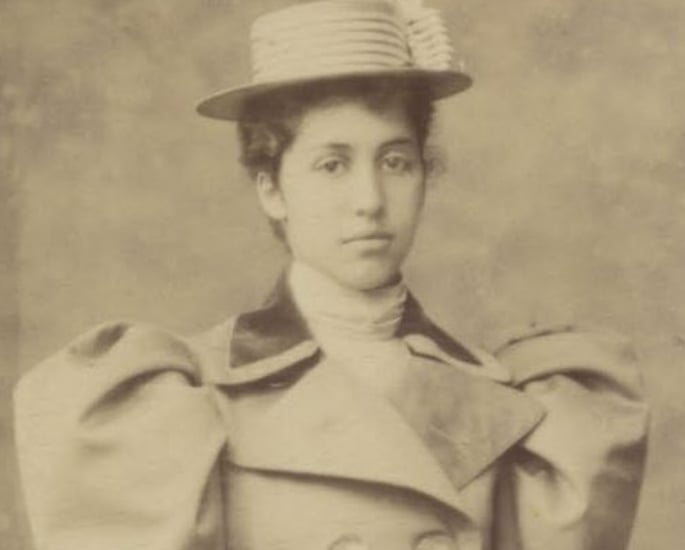
Princess Sophia Duleep Singh is perhaps one of the most famous Indian suffragettes of her time.
Born in 1876, in London, Sophia emerged as a prominent figure in the UK, leaving a lasting mark on the struggle for women’s rights.
Her lineage is traced back to Maharaja Duleep Singh, the last Maharaja of the Sikh Empire, who faced exile to England due to the ramifications of British colonialism.
Sophia’s mother, Bamba Muller, an Egyptian woman of German and Ethiopian descent, added a rich heritage to her identity.
Sophia’s journey into activism commenced in 1907 when a visit to India exposed her to the stark realities of poverty that had befallen her nation under colonial rule.
The injustice deepened as her sister, Princess Bamba, was denied the opportunity to study medicine in Germany simply because of her gender.
Fuelled by a passion for justice and equality, Sophia joined the WSPU in 1909.
Her involvement extended beyond British borders, as Sophia actively funded various suffragette groups while championing women’s rights globally.
Her aristocratic background afforded her privileges such as avoiding taxes.
Despite this, she recognised the disparity faced by other Indian women living in Britain and used her influence to advocate for their cause.
In 1910, Sophia’s leadership alongside Pankhurst in a suffrage demonstration became known as Black Friday.
The suffragettes, including Sophia, marched to the House of Commons, seeking a meeting with the Prime Minister.
However, their expulsion resulted in serious injuries, highlighting the sacrifices made in the pursuit of equality.
Sophia’s commitment to the cause persisted during World War I when she served as a nurse and contributed to the treatment of Sikh soldiers.
Her efforts extended to raising funds for Indian fighters on the front lines.
The post-war period saw Sophia actively involved in the enfranchisement and education of Indian women.
Then in 1918, when the law allowed voting for women over 30 who owned a house or were married to someone who did, Sophia’s interest in women’s rights continued unabated.
Sophia Duleep Singh’s multifaceted activism is a compelling narrative that not only informs but also inspires.
Shrimati Sushama Sen
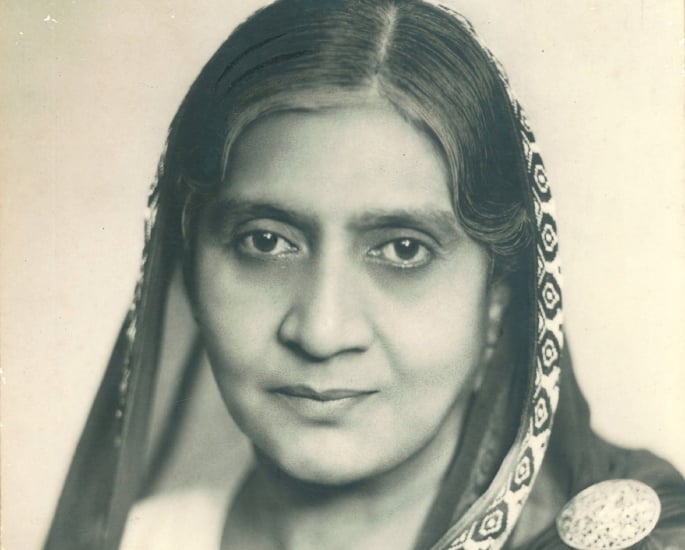
Shrimati Sushama Sen, born in 1889, remains an intriguing figure in history.
Her journey is a testament to the interconnected struggles for equality on different fronts.
In 1910, Sen became a participant in a WSPU demonstration and her presence was particularly unique in the context of the times.
As she notes in her autobiography, Memoirs of an Octogenarian, “there were few Indian women in London” during that era.
Invited to join the demonstration at the Parliament House, Sen found herself under the scrutiny of the public gaze, an Indian woman clad in conventional Edwardian coats and dresses.
The following year, the organisers of a Coronation Procession made a call for Indian women to participate in support of suffrage.
Sen responded to the call, contributing to a spectacle that promised the public the sight of “beautiful dresses”.
The procession, staged just before the coronation of King George V, aimed to showcase the unity of the Empire.
Various contingents, representing different parts of the British Empire, including Australia, Canada, South Africa, India, and the Crown Colonies, were expected to participate.
While the Indian contingent may not have been as large as others, it was, nonetheless, an impressive representation.
Dressed in a traditional sari amid the Edwardian fashion of her fellow suffragettes, Sushama Sen stood out as a symbol of diversity within the movement.
In 1952, she achieved another milestone by being elected as a member of the first Lok Sabha for Bhagalpur South in Bihar, India.
This marked a remarkable transition from her early activism in the UK to a later engagement in the political landscape of independent India.
Sen’s presence as an Indian woman in the WSPU exemplified the global nature of the suffragette movement.
Furthermore, it highlights the huge strides Indian suffragettes were making and how these journeys have been underrepresented in British history.
Bhagmati Bhola Nauth

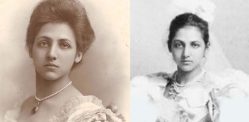
Bhagwati Bhola Nauth (believed to be the woman pictured right), was a woman of substance and commitment.
She entered adulthood during a time of shifting paradigms, both in terms of gender roles and political movements.
In 1911, while her husband was fulfilling his professional duties in India, Bhagwati navigated her path in the heart of England.
Her two sons, boarders at Rugby School, symbolised the complexities of a life straddling different worlds.
Residing in a boarding house in Kensington, Bhagwati’s official occupation was listed as ‘none’.
However, her role as the honorary secretary of the Indian Women’s Educational Fund spoke volumes about her dedication to education and empowerment.
Bhagwati’s association with the ‘Eastern League’, alongside fellow activist Lolita Roy, adds another layer to her career.
The league, a forum for women to engage in discussions and advocacy, was a testament to Bhagwati’s commitment to fostering dialogue among women of diverse backgrounds.
While the 1911 census provides a snapshot of Bhagwati’s life, unfortunately, there is no record of her subsequent endeavours regarding the suffrage campaign.
Although, the lack of concrete evidence does not diminish the significance of her story.
Lolita Roy
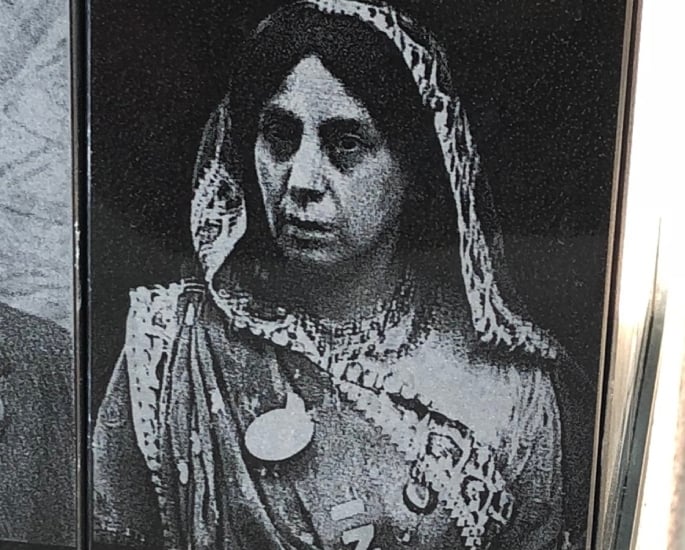
Lolita Roy, a trailblazing social reformer and suffragist, marked her commitment to women’s rights and Indian independence from the get-go.
Around 1900, Lolita moved to London, where her activism for Indian causes found fertile ground.
By 1910, she ascended to the presidency of the London Indian Union Society, positioning herself as a central figure in the suffrage movement’s Indian sector.
Her influence extended beyond borders, and she played a pivotal role in the Women’s Coronation Procession through London in June 1911.
During the iconic event, British suffragettes encouraged Indian women to wear saris, inadvertently subjecting them to objectification.
Lolita’s commitment to the cause was not confined to the streets of London.
She fervently advocated for women’s voting rights in India, petitioning the British government and delivering impassioned public speeches.
Her work with the All-India Women’s Conference, a Delhi-based NGO dedicated to women’s rights and improved education, showcased her impact on multiple fronts.
Additionally, her name stands engraved on the base of the Millicent Garrett Fawcett suffrage statue in London, a lasting tribute to her contributions.
Described as “one of the most emancipated of Indian women” in a 1911 issue of The Vote, a women’s newspaper, shows Lolita’s status as one of the spearheads for women’s rights.
Cornelia Sorabji
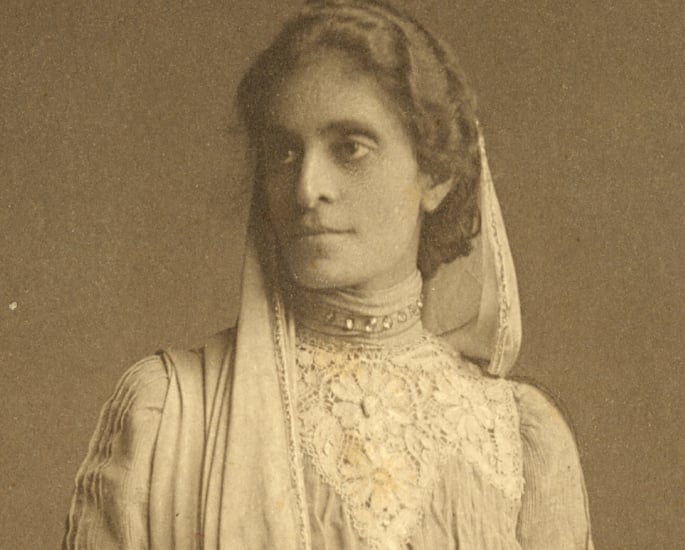
Cornelia Sorabji, a pioneering figure in the realms of law, education, and social reform, was born in Bombay, India.
Her life’s journey, marked by a series of firsts, shattered gender barriers.
The trajectory of Cornelia’s groundbreaking achievements began with her status as the first woman to graduate from Bombay University.
Her pursuit of education did not end there, as she went on to study law at Oxford University, becoming the first woman to do so.
Cornelia’s distinction as the first woman to practice law in both India and Britain showcases the expansiveness of her accomplishments.
Whilst some argue she was not part of the Indian suffragettes, she ardently advocated for women’s rights, including the right to vote.
As early as 1902, she petitioned the India Office, seeking permission for women to practice law and urging for female representation in courts, particularly for women and minors.
1923 was the turning point when women were finally granted the right to practice law in India.
It is said that Cornelia provided legal representation for over 600 women and children, often undertaking these cases pro bono (for free).
Cornelia’s involvement with the Hackney branch of the Women’s Freedom League further attests to her dedication to the cause of women’s suffrage.
Her bust, immortalised in a statue, stands at The Honourable Society of Lincoln’s Inn and is a tangible tribute to her contributions.
Cornelia Sorabji showcases the evolution of women’s suffrage from its nascent stages, reflecting the broader narrative of the Women’s Freedom League.
Bhikaji Cama

Bhikaji Cama stands as a towering figure in the annals of the Indian independence movement and women’s suffrage.
In the early 1900s, Bhikaji found herself in the heart of London, actively participating in nationalist activities.
Her fervour for India’s struggle against British colonial rule led to a decisive moment.
She was informed that returning to her homeland would only be possible if she pledged to cease her activist endeavours.
Unyielding in her principles, she refused this condition and, instead, chose to relocate to Paris.
Here, Bhikaji co-founded the Indian nationalist organisation known as the Paris India Society.
This move marked a pivotal moment in her activism, as she continued to champion the cause of Indian independence from a distance.
Her dedication manifested in various forms, with one notable aspect being her clandestine efforts to support Indian activists.
Bhikaji would smuggle weekly magazines to her compatriots, providing not just financial support but also a lifeline of information and ideas.
Bhikaji’s commitment to gender equality was as steadfast as her dedication to India’s freedom.
In 1910, during her time in Egypt, she raised a powerful voice for the missing half of the population, declaring:
“‘I see here the representatives of only half the population of Egypt. May I ask where is the other half?
“Sons of Egypt, where are the daughters of Egypt?
“Where are your mothers and sisters? Your wives and daughters?.”
This statement echoed her broader advocacy for women’s rights as an integral part of the nation-building process.
Her thoughts, processes, and unyielding defence for women went hand in hand with the suffragette movement.
Many historians and British Asian women see her as an integral part of the life of Indian women, not only in the UK but across the world.
Her defiance of British restrictions on her return to India exemplifies the personal sacrifices made for the larger cause.
Bhikaji’s pivotal moment at the International Socialist Congress in Stuttgart, Germany, in 1907, where she unfurled the tricolour Indian flag, remains an iconic symbol of her commitment to a free India.
Through her journal, Bande Mataram, published in Paris in 1909, Bhikaji continued to inspire and galvanise the Indian masses.
Her writing served as a powerful tool to disseminate revolutionary ideas and foster a sense of unity among those fighting for independence.
Ramdulari Dube

In November 1912, during the Women’s Freedom League’s ‘International Fair’ at Chelsea Town Hall, Ramdhulari Dube emerged as a distinctive voice.
As a member of the league, her presence left an impression.
Contemporaries recalled her as someone who embodied the charm inherent to an Indian woman and the picturesque elegance of traditional attire.
Yet, Ramdhulari Dube is but one among the many names of Indian suffragettes and feminists who are part of a larger narrative undocumented.
Ramdhulari and other women have been erased from history or are yet to be unearthed.
These Indian women, despite living under colonial rule, actively engaged with suffrage movements both within India and overseas.
Their pursuit of empowerment for Indian women was inherently linked to Britain, owing to the dynamics of empire and the associated power politics.
The historical context of Indian suffragettes and feminists, including luminaries like Ramdhulari Dube, goes beyond the visible struggles against colonial oppression.
These Indian suffragettes, with their unyielding determination, pushed against the societal constraints that confined women to the sidelines of political discourse.
Their involvement signifies the diverse voices that converged for a common cause – equality.
Worryingly, the active participation of these Indian women portrays a lack of awareness from history books, popular media, and curriculums.
Whilst some figures here are illuminated, others are overlooked, which results in a call for change.
However, there’s no denying the relentless ethic these women had to build a better future that we see today.