
















































India’s official stance had been made clear
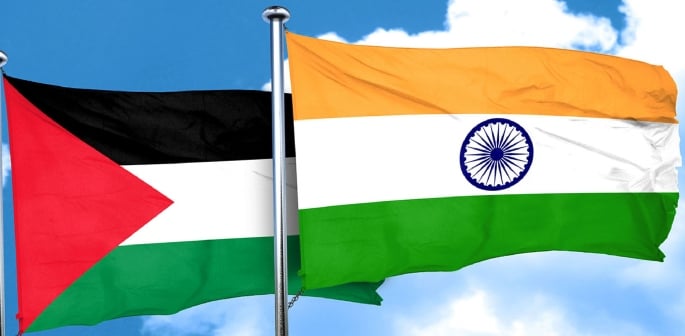
Indian-Palestinian relations are historic and started by some estimations before the formation of India. This was with the Independence movement.
India and Palestine have had continued relations, which have changed over time.
This article will explore the vast history, by discussing India’s recognition of Palestine.
This will include a little on Israel as well, as relations between all three have changed over the years.
Then, there will be an overview of bilateral visits between both nations and India’s relationship with the Palestinian Liberation Organisation (PLO).
The discussion of Indian projects in Palestine and trade between the two is also important to gain an understanding of the link between the nations.
However, the reason for these insights is merely from a historical and factual standpoint and not based on personal opinions or biases.
India’s Recognition of Palestine and Israel
Indian-Palestinian relations cannot be discussed without a short reference to its relationship with Israel.
This is because events involving all three places are related to the ongoing conflict between Israel and Palestine.
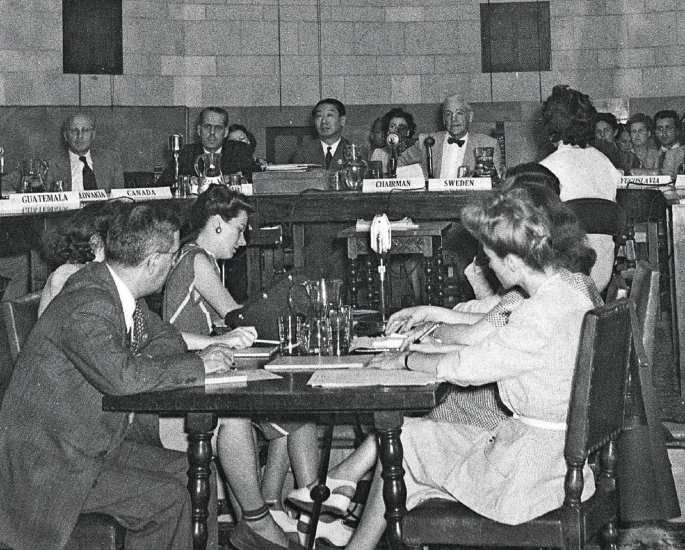
The key moment was in 1947 when the divide of the Levant region came to a vote at the United Nations General Assembly.
There was a UN Special Committee on Palestine, and two different plans emerged.
One, the Majority Plan, suggested dividing the area into one independent Arab state and an independent Jewish state.
The other was the Minority Plan, which India backed alongside Iran and the former Yugoslavia, which suggested one state. This would have been a federal state with autonomy for Arabs and Jews.
But this was unpopular in the special committee and the Majority plan went ahead.
The vote for the majority plan (UN Resolution 181) formally separated the land in the Levant into two areas. The latter of which happened with Israel’s creation in 1948.
India voted against what was seen as the partition of Palestine. They were among the 13 members who voted against the resolution.
The resolution passed with 33 member states for it and 10 other countries deciding not to vote.
It was controversial even then, as Arab nations made their own UN resolution with different borders that failed.
Even though the Majority Plan never came to fruition, India’s official stance had been made clear.
India also recognised Israel as a nation in 1950.
But it would not be until 1992 when “full diplomatic relations were established”, Indian magazine ThePrint said in October 2023.
Just before that in 1949 India had even voted against the entry of Israel into the UN.
Public Figures
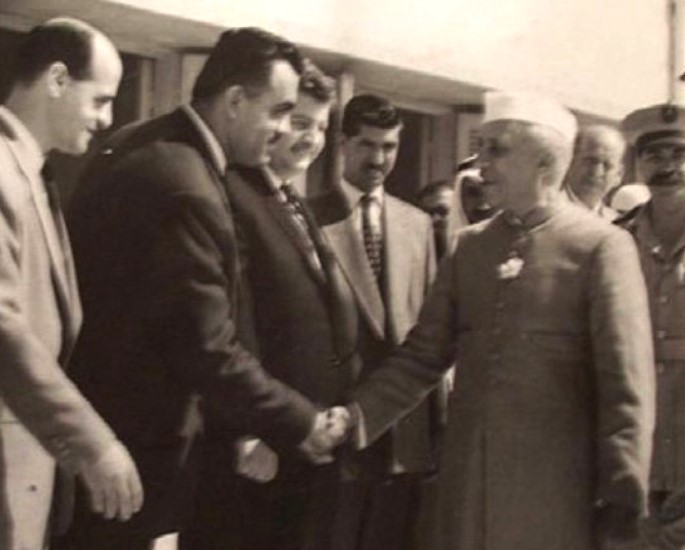
Even before this, recognition of Palestine in India existed in some form. Lead figures such as Gandhi expressed his sympathies towards Palestine.
Whilst in his view he understood the rights of a Jewish state, Gandhi was particularly concerned with the liberty of Arabs in the region.
The first Indian prime minister Jawaharlal Nehru also gave sympathies towards Palestine. In 1927, he stated his support for Arabs in Palestine stood in opposition to British Imperialism.
This was when he was then a part of the Indian independence movement.
Fascinatingly, he was quite diplomatic in his relation to Israel being not entirely against its creation.
There have been reports that in 1962 his administration looked for Israeli help during the Indo-China war. This conflict was over border disputes.
This was amplified in 2017, as archival documents in Jerusalem were released according to The Hindu. They looked at communications between the two then leaders.
But India’s Ministry of External Affairs (MEA) has repeatedly denied this happened in response to an earlier appeal in 2011.
India and the Palestinian Liberation Organisation
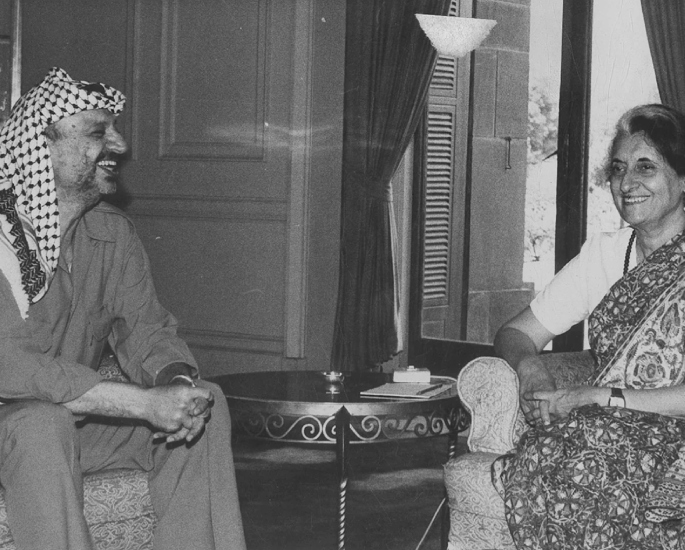
India was also the first non-Arab country to formally recognise the PLO in 1974, according to The Diplomat.
The PLO is seen as “the sole legitimate representative of the Palestinian people”, as set out in both Indian and Palestinian foreign policy documents.
This was quite a significant moment because the PLO has been trying to get statehood for Palestine.
They formed in 1964 and joined many of the different groups which existed together.
The PLO still is a key group in Palestine, though its role and membership have changed over time.
It appears that they remain the main group recognised worldwide, therefore, India still recognises the organisation.
Bilateral Visits of Indian-Palestinian Politicians
Indian-Palestine relations have developed with several bilateral visits happening with various leaders and government ministers. This is either Indian politicians going to Palestinian lands, or vice versa.
This section will touch on a few notable visits from various political figures.
The late Yasser Arafat, who was president of the PLO, visited India many times. One such famous visit was on March 27, 1980, when India gave the PLO full diplomatic status.
Then External Affairs Minister, P. V. Narasimha Rao, announced this.
At the time in Lok Sabha, he said:
“India has all along supported the Palestinian cause in the United Nations, and indeed in every international forum.”
Furthermore, the Late Indian Prime Minister Indira Gandhi visited Palestine in 1984.
PLO President Mahmoud Abbas has had several visits dating back to the 2000s and also visited New Delhi on May 13, 2018.
Interestingly, Narendra Modi met with him in February 2018, being the first Indian Prime Minister to visit the occupied West Bank.
Indian Projects in Palestine

Indian-Palestinian relations go beyond mere diplomatic ties.
India has given Palestine multiple types of “developmental cooperation assistance”, according to the Representative Office of India in Palestine.
This amounts to approximately £111 million (141 million USD) or 11 billion Indian Rupees.
India also has given “budgetary support to the Palestinian Authority” of £30.7 million or 3.2 billion Indian Rupees (39 million USD).
There have been many developmental projects undertaken by India in Palestinian lands.
A couple of examples of these are the Palestine-India Techno-Park and the India-Palestine Centre of Excellence in ICT and Innovation at Al Quds University.
More projects have been completed and eight are still underway.
India maintains trade ties with Palestine as well.
In 2020, the amount of trade between the two was £53 million or 5.64 million Indian Rupees (67.77 million USD).
This is according to the Ministry of External Affairs (MEA) in May 2023.
Indian-Palestinian trade involves a variety of raw materials and medical supplies.
India makes up 0.06% of Palestine’s exports and is the 13th largest country that imports goods into Palestine.
It takes a 1.1% share of Palestine’s entire imports, as reported by the Palestinian Central Bureau of Statistics.
Indian imports into Palestine have increased to £75.3 million or 7.9 billion Indian Rupees (95.7 million USD) in 2021.
This is according to a 2021 database on international trade from the UN Commodity Trade Statistics.
A Modern Look

Indian-Palestinian relations have continued to develop but have become more complicated. This is due to leniency and growing support towards Israel.
It appears that both inside India and Palestine, this has been compounded by both countries’ public opinions.
In Palestine from the early 2000s onwards there has been more criticism internally towards India’s diplomacy with Israel.
India condemned the expansion of Israeli settlements in 2008. The state also supported the change of Palestine’s status in the UN to “non-member observer state” in November 2012.
Despite this, there’s an understanding that Israel’s ties to India from 2014 onwards are unhelpful to Palestine.
Yet Mahmoud Abbas responded to these concerns at the time. This is that Israel and India’s relationship is not harmful to Palestine and is not their issue.
The MEA maintains as of 2018 that:
“India’s support for the Palestinian cause is an integral part of the nation’s foreign policy.”
On October 12 2023, the MEA stated that they very much stand for a “sovereign, independent, and viable state of Palestine.”
They explained that it is India’s longstanding policy, and in their view is not contradicted by India’s open support of Israel.
This support for Israel comes after the start of the fighting between Israel and Hamas on October 7, 2023. Modi tweeted his support on X the same day.
However, it appears India is seeking to develop ties between both Israel and Palestine in their own way. This is the view shared in a Quartz India article from May 2021.
Tarika Khattar in a 2023 article for The Quint shares the view that historic ties between India and Palestine are unlikely to change, despite the recent development of ties with Israel.
But, as of December 22, 2023, India has again voted to protect the right of Palestinians to self-determination at a UN General Assembly.
It joins 171 other nations in voting for this resolution, with only the US and Israel voting against it.
This contrasted with October 27, 2023, when India abstained from a non-binding UN resolution wanting a “humanitarian truce”.
Indian-Palestinian relations continue to develop, especially with the start of an Indian Cultural Week in November 2021.
The history of Indian-Palestinian relations is vast.
It spans almost 100 years factoring in the Indian Independence movements and does not appear to be changing any time soon.