


















































His response challenges a familiar idea about masculinity
Tamil cinema is challenging what audiences have come to expect from their heroes, including toxic masculinity.
This means looking beyond the familiar image of a man who commands respect through power, aggression or authority.
Three recent releases offer very different takes on what it means to be a man.
From an arranged marriage and a friendship tested by prejudice to a feared gangster confronted by a child, each film questions the beliefs that can make masculinity harmful.
More importantly, they explore what happens when men begin to see things differently.
Modha Rathri
In many films, a man discovering that his wife loves someone else would be the start of a confrontation.
In Raja Karuppaswamy’s Modha Rathri, it challenges the idea that love gives anyone ownership over another person.
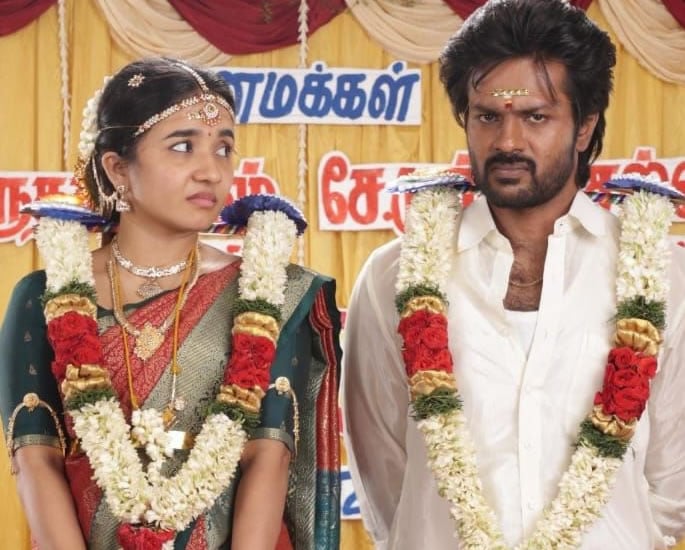
Rishikanth plays Marudhanayagam, known affectionately as Marudhu, who enters an arranged marriage with Muthuselvi (Anishma Anilkumar).
However, the wedding is far from the happy beginning that their families might have hoped for. On their wedding night, Muthuselvi reveals that she is in love with someone else and does not want to be married to him.
Marudhu initially struggles with the revelation, but rather than allowing his wounded pride to dictate his actions, he tries to understand Muthuselvi’s situation.
When it becomes clear that she wants to be with the man she loves, Marudhu even helps her reach him.
His response challenges a familiar idea about masculinity: that a man must protect his honour at all costs, even when doing so means controlling the woman involved.
The pressure surrounding their marriage makes his decision more significant.
Family expectations, gossip and the fear of social embarrassment threaten to turn a private matter into a public battle. Marudhu could easily allow those pressures to determine how he treats Muthuselvi, but he chooses to listen instead.
That does not mean he is unaffected by what happens.
His hurt is real, and the situation is hardly straightforward. Yet Modha Rathri makes an important distinction between experiencing difficult emotions and using them to justify harmful behaviour.
Marudhu’s actions also challenge the notion that a good man must always rescue or protect a woman.
He does not earn respect by persuading Muthuselvi to choose him. Instead, he recognises that her feelings and decisions matter, even when they do not serve his interests.
In a story shaped by an unwanted marriage, that is a refreshing take on masculinity.
Sometimes, strength is not about getting one’s own way. It is about accepting that another person has the right to choose theirs.
Dorothy
Karthik Subbaraj’s Dorothy looks at how deeply social attitudes can influence the way men see others.
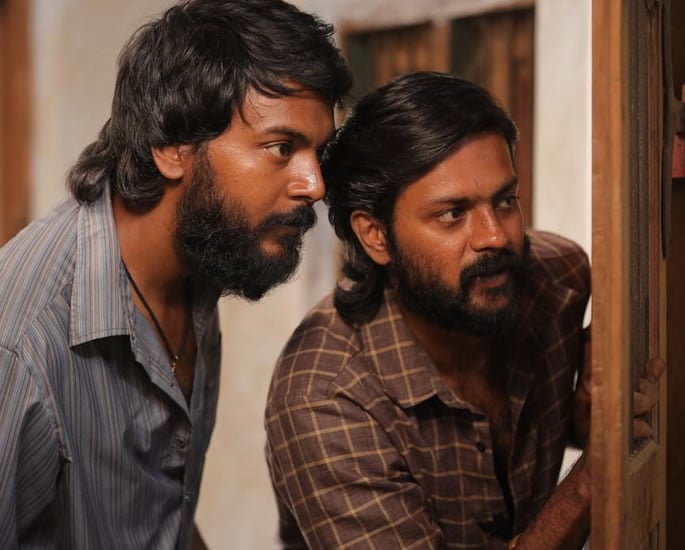
Starring Rishikanth and Sananth, the queer romantic drama centres on Karthi and Subbu, childhood friends whose relationship changes when Subbu comes out as a trans woman.
Karthi immediately reacts with disgust. For much of their road trip, he struggles to look at Subbu, unable to reconcile the person in front of him with the friend he thought he knew.
His response exposes the prejudice he has absorbed, but the film does not make his journey towards acceptance an instant transformation.
Karthi needs time to confront his assumptions and understand why Subbu’s identity challenges the beliefs he has taken for granted.
A heartfelt conversation between the two begins to change that. As Karthi listens to Subbu, his rejection gradually gives way to understanding and acceptance.
Dorothy places their relationship within a wider world shaped by caste and patriarchy.
Many of its male characters are caught in systems of power that allow some people to dominate while leaving others vulnerable.
Women face violence and sexual abuse, while social expectations restrict their freedom to live on their own terms.
These pressures help explain why Dorothy‘s treatment of masculinity extends beyond one man’s reaction to a friend’s identity.
Karthi’s journey is particularly important because changing his mind requires him to question what he has been taught.
His initial reaction reflects the attitudes he has internalised, but those attitudes do not have to define him forever.
That is not to suggest that prejudice should be excused or that acceptance deserves praise simply because it eventually arrives.
Rather, Dorothy shows that meaningful change begins when people are prepared to listen, acknowledge their assumptions and reconsider them.
Baththa
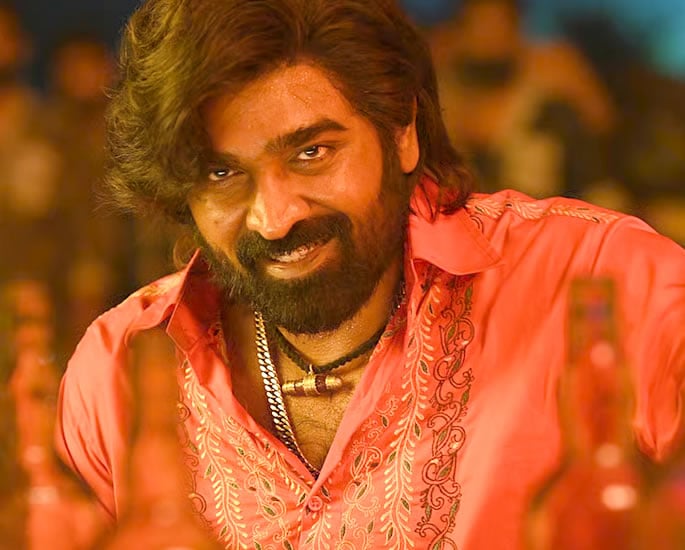
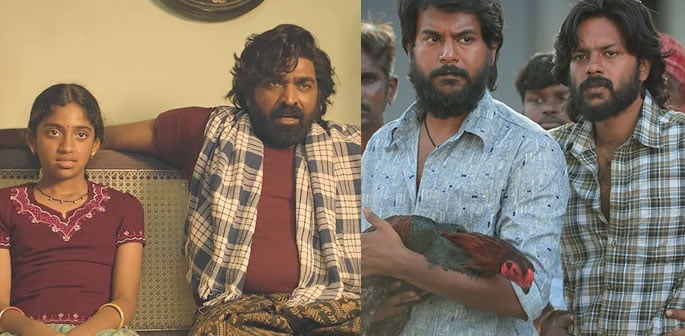
Vijay Sethupathi has built a formidable screen presence across a range of roles, but Baththa offers a different way of looking at a man whose reputation depends on making others afraid.
Directed by Balaji Tharaneetharan, Sethupathi plays Baththa, a feared gangster whose authority rests on violence and intimidation.
He is accustomed to commanding attention, but the arrival of an eight-year-old boy begins to challenge the identity he has built.
Sai Prithvi Raj plays Sabari, whose presence gradually forces Baththa to look beyond his reputation.
The gangster may be able to frighten an entire neighbourhood, but his encounters with a child introduce a different set of expectations, ones that cannot be met through aggression alone.
Sabari becomes an unexpected mirror for Baththa.
Through their relationship, the gangster begins to confront the difference between the man he presents to the world and the person he could be.
His relationships with his wife and daughter also bring that contrast into focus. A reputation for violence might give Baththa power over others, but it cannot guarantee the affection, trust or closeness that family relationships require.
This is where Baththa finds an engaging way to question toxic masculinity.
Rather than having another powerful man defeat the gangster, it places a child at the centre of his transformation.
Baththa’s vulnerability comes from being confronted with a side of himself that intimidation cannot resolve.
The film therefore challenges the assumption that showing emotion or lowering one’s guard makes a man weak.
Baththa’s tough exterior might have helped him establish his position, but it also creates barriers between him and the people closest to him.
His changing relationship with Sabari encourages him to reconsider what strength actually looks like. Being feared may offer a sense of control, but it is not the same as being loved or respected.
By allowing this realisation to emerge through their interactions, Baththa makes its point without turning the story into a lecture.
Sometimes, the person who challenges a man’s understanding of himself is not another man demanding respect, but a child who sees beyond the reputation.
Three Different Ideas of Strength
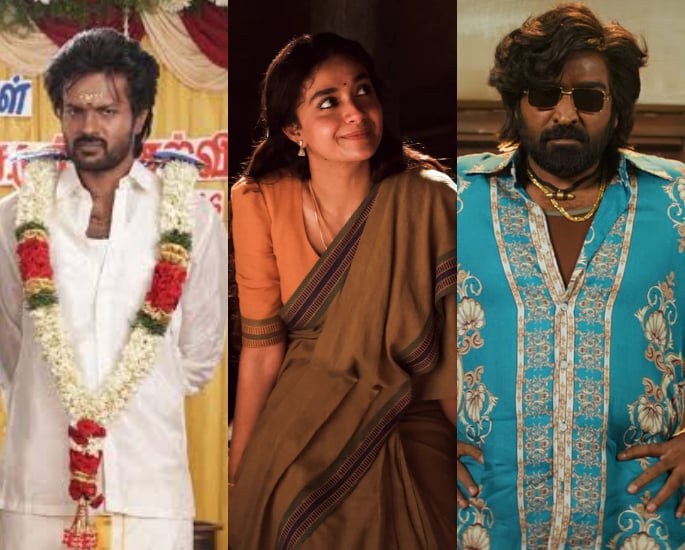
Although Modha Rathri, Dorothy and Baththa take different angles of masculinity, they share an interest in men who must confront the limitations of what they have been taught.
Marudhu has to decide whether his pride matters more than Muthuselvi’s freedom. Karthi must question the prejudice that threatens his friendship with Subbu. Baththa has to consider whether the fear he inspires is worth the distance it creates between him and his family.
None of these stories suggests that men should simply suppress their feelings or that every flawed character deserves an easy path to redemption.
Instead, they explore how men respond when their beliefs are challenged and their behaviour affects the people around them.
Toxic masculinity can appear in different forms, from the belief that a husband is entitled to his wife’s affection to the assumption that a man’s identity must be threatened by someone else’s gender.
It can also emerge through violence, emotional distance and the pressure to appear invulnerable.
These films make those ideas easier to recognise by placing them within familiar human experiences.
Marriage, friendship, parenthood and family relationships become the places where their characters’ beliefs are tested.
They also offer something beyond criticism. Each story leaves room for the possibility that men can change, provided they are willing to listen, reflect and take responsibility for their actions.
Tamil cinema has long featured larger-than-life male heroes, with physical strength, confidence and authority often central to their appeal.
There is nothing inherently wrong with those qualities, but problems arise when dominance becomes the measure of a man’s worth.
Modha Rathri, Dorothy and Baththa offer alternatives. Their characters are not defined solely by how much control they have over others, but by what they do when that control is challenged.
None of these films offers a simple answer to the wider problem of toxic masculinity.
However, their different approaches raise a question worth considering: if strength is measured by a man’s ability to dominate, what happens when he learns to listen instead?
Perhaps the more interesting measure is what he does with that strength, and whether the people around him feel safer, freer and more understood because of it.