












































“It has been an amazing journey so far"
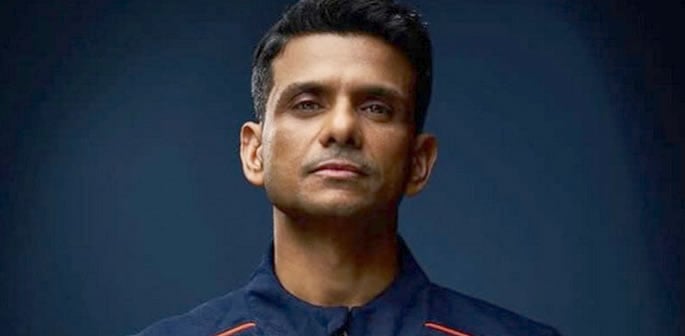
India is celebrating a major milestone in its space journey after astronaut Shubhanshu Shukla was launched into space on the Axiom-4 (Ax-4) mission.
He is now only the second Indian to ever travel to space and the first to visit NASA’s International Space Station (ISS).
The commercial spaceflight, which took off from NASA’s Kennedy Space Centre in Florida at 02:31 EDT (06:31 GMT) on June 25, 2025, is operated by Houston-based company Axiom Space.
It marks a landmark collaboration between NASA, the Indian Space Research Organisation (ISRO), and the European Space Agency (ESA).
Group Captain Shukla is piloting the mission under the command of veteran astronaut Peggy Whitson, who has already spent over 675 days in space.
Also on board are Slawosz Uznanski-Wisniewski from Poland and Tibor Kapu from Hungary, both returning their countries to space after four decades.
When the spacecraft docks at the ISS after its 26-hour journey, Group Captain Shukla will become the first Indian to enter NASA’s orbiting laboratory.
The launch has generated widespread excitement across India.
In Lucknow, Shukla’s home city, his parents joined schoolchildren to watch the live broadcast of the lift-off. A band greeted them on arrival, and applause broke out as the Falcon 9 rocket carrying the SpaceX Crew Dragon capsule soared into the sky.
Shukla was born in Lucknow on October 10, 1985. He joined the Indian Air Force in 2006 and has flown MiGs, Sukhois, Dorniers, Jaguars and Hawks. He has more than 2,000 hours of flying experience.
Describing the last 12 months as “nothing short of transformative”, Group Captain Shukla recently spoke at a press conference about the significance of the moment.
He said: “It has been an amazing journey so far, but the best is yet to come.
“As I go into space, I carry not just instruments and equipment, I carry hopes and dreams of a billion hearts. I request all Indians to pray for the success of our mission.”
India secured Shukla’s seat aboard the Ax-4 with a payment of £43 million, which also covered his training. He was shortlisted in 2024 as one of four Indian Air Force officers for India’s first crewed space mission, scheduled for 2027.
ISRO says his time on the ISS will prove invaluable for its future missions. The organisation plans to establish a space station by 2035 and send an astronaut to the Moon by 2040.
ISRO is also using this opportunity to boost science engagement at home.
While aboard the ISS, Shukla is expected to interact with Indian schoolchildren and possibly hold a live session with Prime Minister Narendra Modi.
The Ax-4 crew will spend two weeks in space conducting 60 scientific experiments. Seven of these come from India and focus on the effects of microgravity on biology and space environments.
Former NASA scientist Mila Mitra says the Indian experiments could offer valuable insights for future long-term space missions.
One of the key studies will assess the impact of spaceflight on six varieties of crop seeds. Another will test how three strains of microalgae perform in microgravity.
The aim is to identify which could be used for food, fuel, or life support systems.
Other ISRO experiments will examine how tardigrades, tiny animals known for surviving extreme conditions, cope in space.
Additional research will explore muscle loss in microgravity, along with the physical and cognitive effects of using digital screens in orbit.
ISRO says these studies will help deepen India’s understanding of life in space while building capabilities for future missions.
The astronauts underwent weeks of quarantine before the launch, ensuring all health protocols were in place. For India, the mission marks a powerful symbol of its growing influence in global space exploration.
Group Captain Shukla’s journey comes 41 years after Rakesh Sharma flew aboard a Russian Soyuz in 1984.
Now, with India looking to play a leading role in commercial and scientific space ventures, this moment is being seen as the start of a new chapter.