























“We have carefully preserved these items for decades"
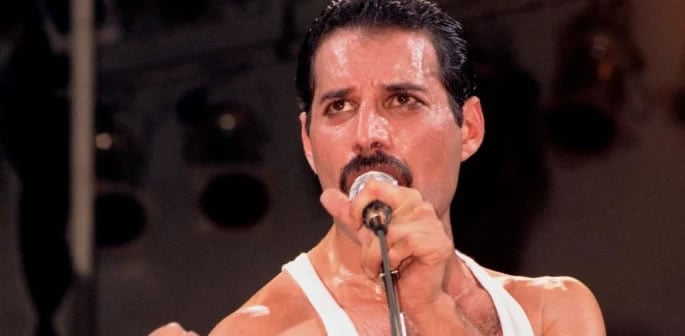
A piano and microphone used by Queen frontman Freddie Mercury, alongside handwritten drafts of his early solo songwriting, are expected to fetch hundreds of thousands of pounds when they go to auction in October 2026.
The items form part of the Reinhold Mack Collection, an 82-lot archive being offered by German producer Reinhold Mack and his son Freddie Mack, Mercury’s only godson.
Among the most significant items is a Yamaha C3 Grand Piano from Munich’s Musicland Studios, where Mercury played extensively while composing solo material and some of Queen’s biggest hits, including ‘Crazy Little Thing Called Love’.
The piano was also used during the recording of The Game, Hot Space and The Works.
It was played at the studios by a host of major artists, including Leonard Cohen, The Rolling Stones, Deep Purple, Black Sabbath, Led Zeppelin, Donna Summer and Bryan Ferry.
With a pre-sale estimate of £200,000 to £400,000, the piano is considered the most significant Freddie Mercury-related artefact to reach the market since the 2023 sale of his personal collection.
Also included is the AKG C414 EB microphone used to record Mercury’s lead and backing vocals at Musicland Studios.
The microphone was favoured by Mack for capturing Mercury’s vocal range and distinctive layered harmonies. It was used throughout the producer’s work with Queen and is being offered with its original Sennheiser bag and the red XLR cable used at Musicland Studios.
It carries a pre-sale estimate of £40,000 to £80,000.
The collection also features handwritten working lyrics by Mercury for ‘My Love Is Dangerous’ and ‘Let’s Turn It On’, both from his 1985 debut solo album, Mr. Bad Guy.
The early drafts contain alternate and unused lines that differ substantially from the finished songs, offering a rare insight into Mercury’s songwriting process.
The ‘My Love Is Dangerous’ lyrics are headed with the earlier title ‘Dangerous’ and feature handwritten chord arrangements on the reverse.
Meanwhile, ‘Let’s Turn It On’ appears under the shortened working title ‘Turn It On’.
The drafts are estimated to sell for £3,000 to £6,000 and £1,500 to £3,000 respectively.
A teddy bear gifted by Freddie Mercury to the Mack family is also going under the hammer, with an estimate of £800 to £1,600.
Reinhold Mack worked frequently with Queen and developed a close friendship with Mercury during their time working together at Musicland Studios.
Mack said: “Freddie was not only a colleague and close friend; in many ways, he was part of our family.
“Away from the countless hours we spent creating music together at Musicland Studios, our home in Munich became a place where he could escape the pressures of fame, relax and simply be himself.
“To us, he was never a celebrity; he was Uncle Freddie, spending time with his godson Freddie Jr, playing table tennis with (his eldest son) Julian and celebrating family birthdays with us.
“We have carefully preserved these items for decades, not because of their value, but because of the memories they hold.
“We now feel the time has come for others to enjoy and appreciate them, and we hope they offer fans a connection not only to Freddie’s extraordinary artistry, but also to the warm, funny and kind-hearted man we were privileged to know.
“The memories we shared can never be auctioned; they will remain with our family forever.”
The items and several other pieces from the collection will go on public display before the auction at a special free-to-enter exhibition at The Cumberland Hotel in London from September 23 to 27, 2026.
The auction will take place on October 1 and 2, giving fans and collectors the opportunity to bid on personal and creative artefacts connected to one of rock music’s most iconic frontmen.
Freddie Mercury remains one of Britain’s most iconic singers.
Born in Zanzibar to Indian parents from the Parsi community, Mercury attended British boarding schools in India from the age of eight.
After secondary school, he returned to Zanzibar.
Mercury and his family moved to Middlesex in 1964 after fleeing the Zanzibar Revolution.