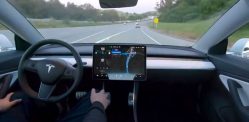

















































At the heart of this is 'Embodied AI'
Uber is bringing driverless cars to London in 2026 as part of a wider UK trial of autonomous transport.
The initiative marks a major shift in the UK’s approach to transport innovation.
As autonomous vehicles edge closer to everyday use, the implications for city life, infrastructure, and public trust are vast.
We delve into the technology behind these cars and the legal framework taking shape around them.
So, is London prepared for this radical change?
The AI Driving your Ride
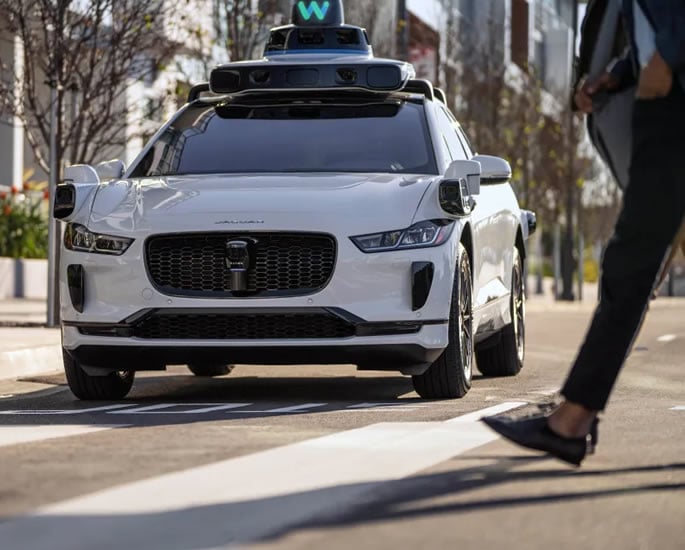
Uber’s plan depends on a crucial partnership.
The company is teaming up with British AI firm Wayve. Their technology will power the new fleet of autonomous vehicles, marking a significant UK-based collaboration.
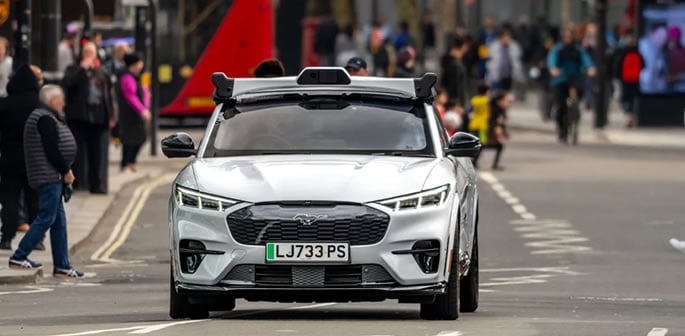
The trial will feature Level 4 autonomous cars. These vehicles can drive themselves without human input, though only within designated areas. They rely on advanced sensors and high-resolution cameras to operate.
At the heart of this is ‘Embodied AI’, a system designed to learn from a vast range of real-world driving situations.
Its goal is to replicate human-like intuition on the road, setting it apart from other autonomous models.
Most rivals depend on detailed 3D maps. Wayve’s approach is different as it uses dynamic learning to adapt in real time.
That makes it well-suited to unpredictable roads. And nowhere tests that better than London.
The capital’s historic, often chaotic road layout presents a serious challenge.
Success here would mark a major breakthrough. It would demonstrate the AI’s flexibility and robustness, exactly what Uber is betting on.
For now, safety drivers will remain in the vehicles and will be ready to step in if necessary.
The Government’s Green Light

This landmark trial has government backing. The Department for Transport is pushing ahead with plans to fast-track commercial self-driving tests.
The move positions the UK as a global leader in autonomous mobility.
At the heart of this effort is the new Automated Vehicles Act.
Expected to become law by late 2027, it will introduce a comprehensive safety framework to ensure all vehicles meet strict regulatory standards.
Transport Secretary Heidi Alexander has expressed strong support for the technology, saying:
“The future of transport is arriving.”
She sees major potential in the sector, not just for innovation, but for jobs and investment.
The government forecasts a major economic impact.
It estimates the autonomous vehicle industry could add £42 billion to the UK economy and generate 38,000 new jobs by 2035.
Safety remains the core justification for the legislation.
With human error linked to most crashes, autonomous vehicles, capable of quicker reactions, could sharply reduce accidents.
Under the new law, vehicles must prove they are “at least as high as competent and careful human drivers”.
A Different Challenge to the USA
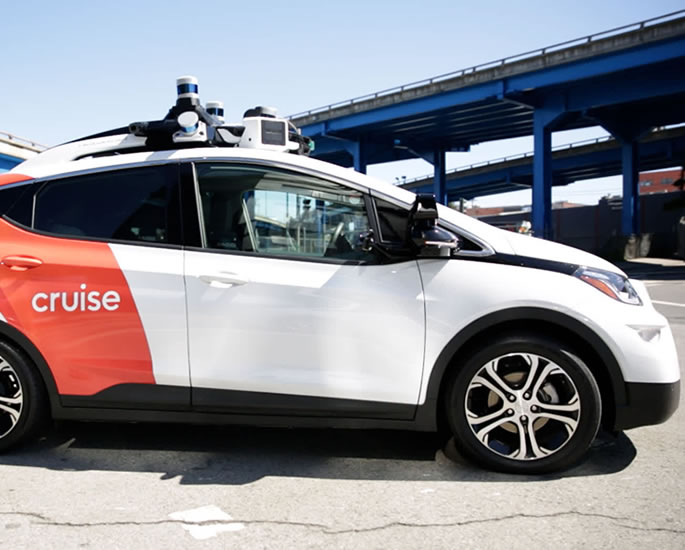
Most autonomous vehicle testing has taken place in the US, with cities like San Francisco serving as key trial locations. But London poses a very different challenge.
The city’s narrow roads, complex junctions, and inconsistent traffic patterns create a far tougher environment.
Driving culture and road rules also differ from the US. That means lessons learned across the Atlantic aren’t always applicable.
There are also cautionary lessons from America. High-profile incidents have exposed the risks.
In late 2023, General Motors’ subsidiary Cruise was forced to suspend operations after one of its driverless taxis ran over a pedestrian, someone who had already been struck by a human-driven vehicle.
The incident raised serious concerns about how autonomous systems respond to emergencies.
It underscored the difficulty AI has with unpredictable or chaotic scenarios. These so-called ‘edge cases’ are hard to anticipate, and even harder to train for.
Uber and Wayve now face the task of proving their technology can manage these challenges.
Public trust will be crucial. The safety record of the London trial will be watched closely and it must avoid repeating the mistakes seen in the US.
Progress vs People
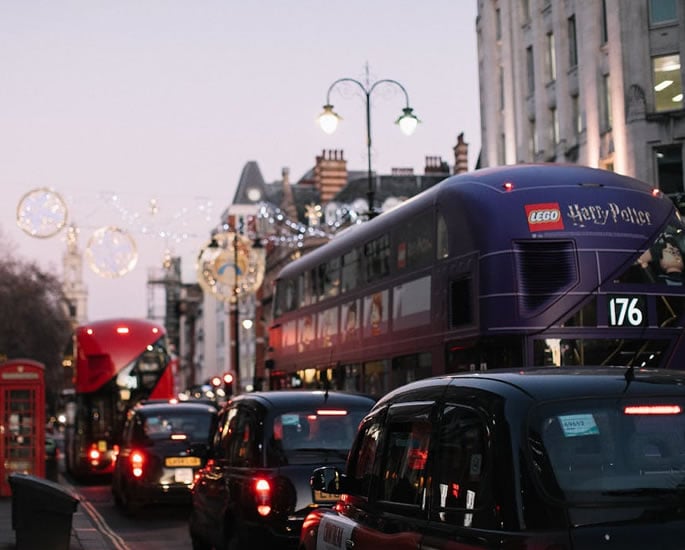
The rise of robotaxis has sparked fierce debate.
For some, it represents a bold step into the future. For others, it poses a direct threat to jobs and safety.
London’s black cab drivers are among those most concerned.
The Licensed Taxi Drivers’ Association remains highly sceptical. Its general secretary, Steve McNamara, dismissed the plan as “fantasy” and questioned whether the technology could cope with the city’s streets.
He said:
“We’re probably going to have flying taxis before we have autonomous ones.”
His remarks reflect the disconnect between tech ambitions and the lived realities of urban driving. Job loss is a pressing fear for many in the industry.
Supporters, on the other hand, point to safety as a key benefit.
Human error contributes to 88% of all road collisions. Autonomous vehicles, in theory, could reduce this dramatically.
Yet this opens up complex ethical dilemmas.
In an unavoidable crash, who should the car prioritise? These life-and-death decisions must be encoded by developers, a task with enormous moral weight.
The government’s projection of 38,000 new jobs is also under scrutiny. These roles would centre on engineering, maintenance, and oversight.
But many fear they won’t compensate for the driving jobs at risk.
London on Trial

The 2026 trial is more than a test of technology; it’s a test of London itself.
The city’s infrastructure, regulators, and public will all play a defining role. Whether the capital is truly ready for this shift remains a complex and layered question.
Uber and Wayve plan to work with Transport for London to meet the city’s specific standards. The approval process for permits will be detailed and demanding.
To start, the trial will be limited in scale. This controlled rollout allows for focused data collection and close monitoring. The presence of safety drivers from the outset will be critical in building public trust.
Winning over the public may prove the greatest challenge.
Will Londoners feel comfortable riding in a driverless car? Will pedestrians believe the vehicles can reliably detect and respond to them?
The technology must perform to an exceptionally high standard to earn that trust.
London’s dense, unpredictable environment makes it the ultimate proving ground.
If driverless cars can thrive here, they could succeed anywhere. The insights gained will shape how driverless systems are deployed around the world.
The arrival of driverless Ubers in 2026 is a certainty.
It marks a defining moment for the UK, driven by homegrown innovation and strong government backing. The project holds out the promise of safer roads and significant economic gains.
But the road ahead is far from straightforward.
The technology must prove it can operate safely and consistently, especially on some of the world’s most challenging streets.
A strong regulatory framework is essential.
It must strike a balance, protecting the public while still allowing innovation to flourish.
Most crucially, public trust must be earned. That will require transparency, rigorous testing, and reliability at every step.
This trial is the start of a much larger conversation about the shape of our cities, the role of machines in public life, and what kind of future we want to build.
All eyes will be on London to see how it responds.