

















































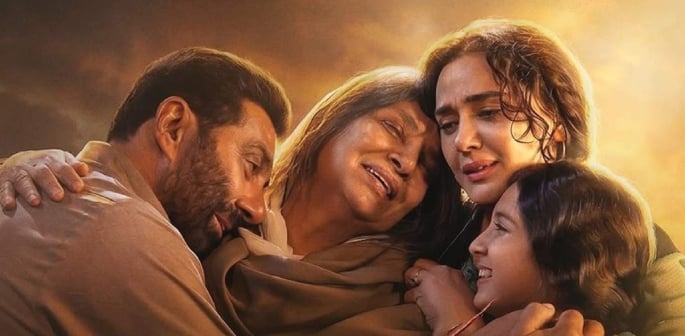
You are sure to leave the cinema feeling uplifted.
Batwara 1947 is a film centred on the Partition of India, and it has courage and motherhood at the core of its beating heart.
Directed by Rajkumar Santoshi, the movie is based on the play, Jis Lahore Nai Vekhya, O Jamya E Nai, by Asghar Wajahat.
Produced by Aamir Khan, it stars Shabana Azmi, Sunny Deol, Preity G Zinta, Karan Deol, and Abhimanyu Singh in key roles.
Batwara 1947 was released on August 14, 2026, coinciding with Independence Day.
The film has dramatic and powerful themes, including bravery, equality and familial ties.
It depicts the harsh challenges the Partition presented, such as leaving one’s homeland in search of another.
The film includes the brutal realities of people killed during the Partition and the tragic breakdowns of relationships and love.
But is this enough for you to invest over two hours of your time?
DESIblitz is here to help you decide if you should watch Batwara 1947 or not.
An Emotionally Compelling Plot
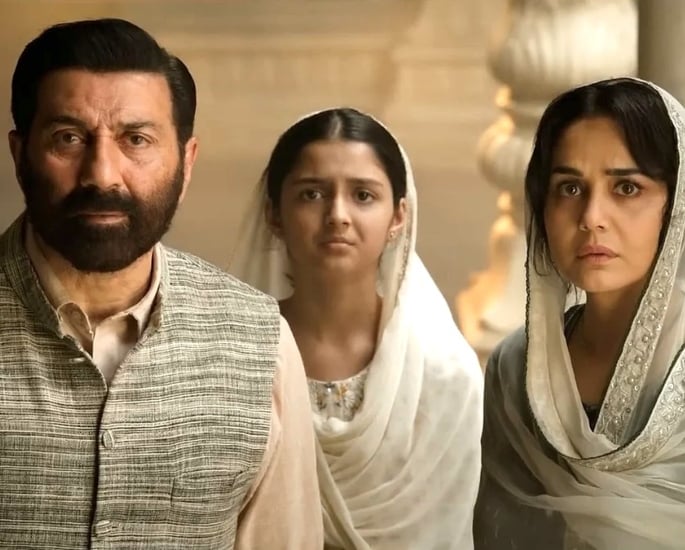 As Batwara 1947 begins, we are introduced to Sikandar Mirza (Sunny Deol), who lives in pre-Partition India with his loving family.
This includes his wife Hamida Mirza (Preity G Zinta), and children: a son named Javed Mirza (Karan Deol) and a young daughter, Tanvir ‘Tanno’ Mirza (Khushi Hajare).
When the Partition breaks out, Sikandar’s home is attacked and the family are forced to flee to Lahore, Pakistan.
They are betrayed by the silence of neighbours, suffer the brutal violence at the train platform, and the uncertainty of the relief camps in Lahore.
When Sikandar is finally allotted a house, the family are stunned to discover a Hindu woman still living there.
She is Durgavati ‘Mai’ Devi (Shabana Azmi) who awaits the return of her son, Ratan (Khalid Siddiqui).
Initially annoyed by Mai’s presence, a deep bond slowly forms between Sikandar and Mai.
In a powerful scene, Sikandar declares Mai to be the mother he never had.
All of this unfolds over a screenplay lasting nearly two-and-a-half hours.
Frankly, we could argue that we have seen such themes countless times before in previous films.
There have been many similar films that explore the ties between Pakistan and India.
However, what sets Batwara 1947 apart is the moving relationship between Mai and Sikandar’s family.
The film finds an antagonist in Abhimanyu Singh, who plays Yaqoob Shuja, determined to remove the Hindu Mai from Lahore.
Every time Sikandar stands up for religious equality and for Mai, you will get goosebumps in your seat.
Batwara 1947 is sure to remind you of the power of family and the importance of harmony.
Performances
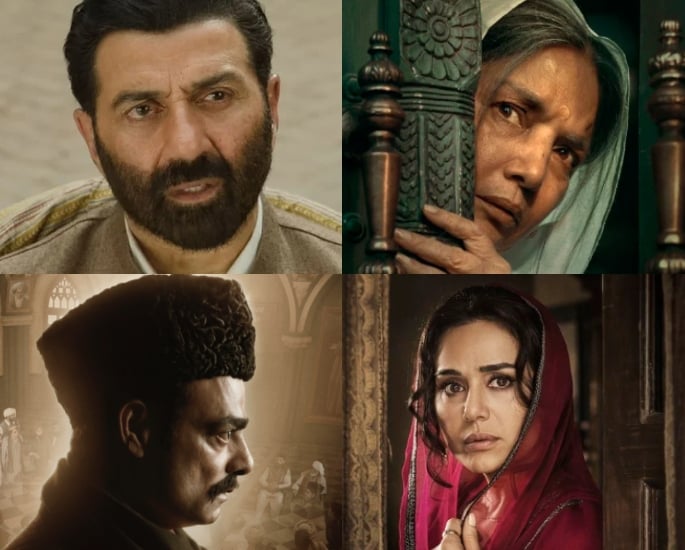 A key strength of Batwara 1947 are its performances.
The veteran actress, Shabana Azmi, has been thrilling the audience for over five decades.
However, with Batwara 1947, she proves that she has not lost any of her talent and mettle.
She creates an exquisite balance of tenderness and vulnerability in Mai, developing a character who is sure to stay with you.
There is a particular scene towards the climax involving Yaqoob and Mai which is so haunting and gut-wrenching that Shabana will blow your mind.
Your heart really does swell every time she is up there.
Sunny Deol, riding high on the success of his previous few blockbusters, again shows that he is a pioneer of emotion and action.
In a Sunny Deol action sequence, the blows, the punches, and numbers are always exaggerated.
In Batwara 1947 too, you are expected to believe that Sunny can fend off an entire army of adversaries with one blow of his ‘dhai kilo ka haath‘.
However, Sunny’s emotional performance is so rousing that you forgive these liberties once you realise his tremendous acting range.
Preity G Zinta, making her acting comeback since Bhaiaji Superhit (2018), just slots right back into the big screen, making one feel like she never was away.
The audience will begin to regret the fact that she has cut down her workload.
Although her role is limited in terms of range, Preity’s act as Hamida perfectly encapsulates the anchoring role of women during the Partition within the family.
What doesn’t work as well is the portrayal of Yaqoob by Abhimanyu. He is a good actor but the character isn’t menacing or fierce enough for us to fear or connect with him.
There are several scenes where Yaqoob’s antagonism verges on unintentional comedy.
Karan Deol delivers an awkward performance. He just doesn’t seem to grasp the emotion and conflict required for his role.
Sharing the screen with his father Sunny for the first time, Karan is overshadowed and cannot hold his own against the veteran actors.
The real star of Batwara 1947 is undoubtedly Shabana Azmi, who succeeds at carrying this heavy movie on vulnerable shoulders.
Direction & Execution
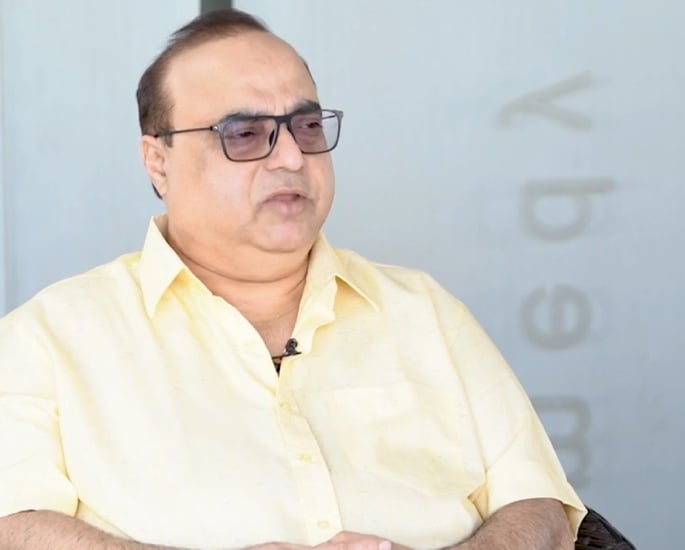 Rajkumar Santoshi reunites with Sunny Deol after blockbusters, including Ghayal (1990), Damini (1993), and Ghatak: Lethal (1996).
This winning actor-director duo doesn’t disappoint with Batwara 1947.
An extremely prolific and versatile director, Rajkumar clearly invests his soul into this new film.
The production design is skilfully crafted, giving the film an authentic feel of its era and location.
The screenplay does feel predictable at times, particularly regarding angles involving Javed and Yaqoob.
Sikandar’s speeches and proclamations also seem routine and typical.
However, what makes Batwara 1947 succeed is its sincerity to its sensitive subject matter.
You may get flashbacks to Gadar: Ek Prem Katha (2001), and Karan Arjun (1995), but at its core, Batwara 1947 is an honest attempt at a moving family drama.
The music by AR Rahman is a disappointment.
The soundtrack doesn’t have the same impact that some of the maestro’s previous work has achieved, although the number, ‘Kahaan Chale Gaye Ho Ram‘ is a tear-jerker.
In their first professional collaboration, Sunny Deol and Aamir Khan succeed. It surely would be amazing to watch these two passionate filmmakers onscreen together.
The themes of Batwara 1947 ring true even today. Equality and family are more important now than ever before.
For that, Batwara 1947 should be given a chance. You are sure to leave the cinema feeling uplifted and thoughtful.
You can watch an exclusive interview DESIblitz conducted with Sunny Deol about Batwara 1947 here.