

















































"Garfield made it possible for me to pursue the claim"
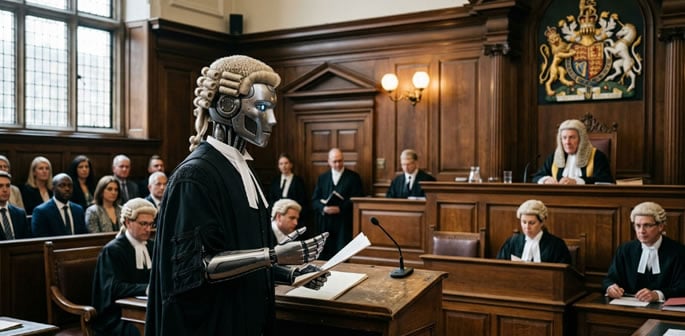
An artificial intelligence law firm won a case in an English court, in what is believed to be the first time a trial has been won using an AI lawyer.
Garfield AI successfully helped secure a victory for a client in a debt recovery dispute at Wandsworth County Court.
Freelance HR consultant Tamires Camal Taquidir instructed Garfield AI to recover an unpaid debt of £7,000.
She paid approximately £400 for the firm’s services, which included sending a legal letter and issuing court proceedings.
Garfield AI, which was authorised by the Solicitors Regulation Authority in April 2025, can be used for claims ranging from £30 to £10,000.
The platform completed all of the legal work leading up to the trial before instructing a human barrister to represent the client in court.
The case became more complex after the defendant, who had engaged solicitors, filed a counterclaim.
Garfield AI subsequently prepared the legal documentation required for trial, including four witness statements and a bundle of evidence.
Following a three-hour hearing at Wandsworth County Court on May 14, the court ruled in favour of Taquidir and ordered that the outstanding money be paid.
Philip Young, co-founder of Garfield AI, said it was a “landmark moment” for access to justice and said many small businesses have historically been forced to write off unpaid debts because pursuing legal action costs more than the amount they stood to recover.
Taquidir said: “I was owed money for work I had done, but it felt like the process of recovering it could be too stressful, expensive and time-consuming.
“Garfield made it possible for me to pursue the claim and keep going.
“When the counterclaim was brought, it was intended to intimidate me, but I knew I had accessible, cost-effective and competent support. I’m delighted by the result.”
However, Garfield AI’s success still relied on human expertise at a crucial stage of the proceedings.
Barrister Dominic Li, who represented Taquidir during the hearing, emphasised the continued importance of legal advocacy.
He said Garfield presented the client’s case “clearly and efficiently”, but added:
“The advocacy at trial remained essential and a fundamentally human exercise.”
The ruling comes at a time when the use of artificial intelligence in the legal profession remains under intense scrutiny.
Several high-profile incidents have raised concerns about the reliability of AI-generated legal work.
In June 2026, international law firm Pinsent Masons referred itself to the Solicitors Regulation Authority after misleading a court on two occasions using information generated by an internal AI system.
Despite concerns over AI accuracy and oversight, Garfield AI’s court victory is likely to fuel further debate over how artificial intelligence could reshape access to legal services, particularly for individuals and small businesses unable to afford traditional representation.