

























"And we have to be realistic"
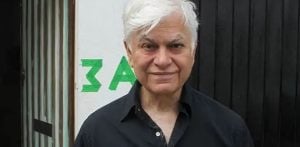
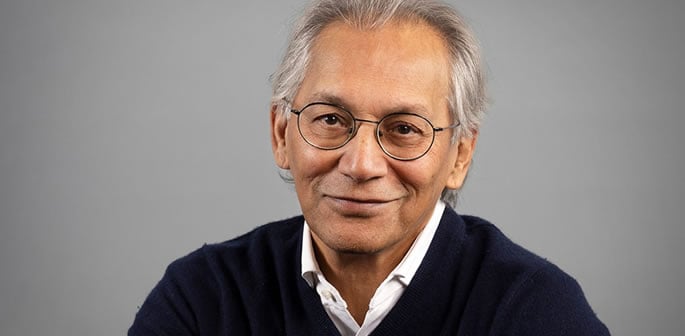
Dr Samir Shah will give his first speech since becoming BBC Chairman as he hinted at a potential overhaul to BBC TV’s licence fee.
Dr Shah was named Chairman in March 2024 after he was named the former Tory Government’s choice for the job.
Although he has only been the BBC’s Chair for eight months, the 72-year-old has previously held several BBC roles, including Head of Current Affairs.
Born in Aurangabad, India, Samir Shah has worked in TV for over 40 years.
He and his family moved to England in 1960 and was educated at West London’s Latymer Upper School.
Dr Shah studied Geography at the University of Hull before pursuing further studies in Anthropology and Geography at St Catherine’s College, Oxford, taking a doctorate of Philosophy.
His TV career began at London Weekend Television in 1979, working with two major figures – John Birt, who later became BBC’s Director-General, and then-Juniper TV owner Michael Wills.
Since then, Dr Shah has worked as the BBC’s Head of Television Current Affairs.
Dr Shah later went on to lead the corporation’s political journalism across radio and television.
In 2007, he was appointed as a non-executive director on the BBC Board.
Dr Shah’s half-brother is Mohit Bakaya, BBC Radio 4’s controller.
In 2002, he was elected a Fellow of the Royal Television Society.
He received an OBE “for services to equal opportunities in broadcasting” and in 2019, Dr Shah was promoted to CBE “for services to heritage and television”.
Dr Samir Shah is also the CEO and Creative Director of Juniper TV, having purchased the company from Michael Wills in 1998 when the latter was elected as an MP.
Juniper’s programmes have been broadcast on the BBC, Channel 4, National Geographic, Discovery, TLC and Netflix.
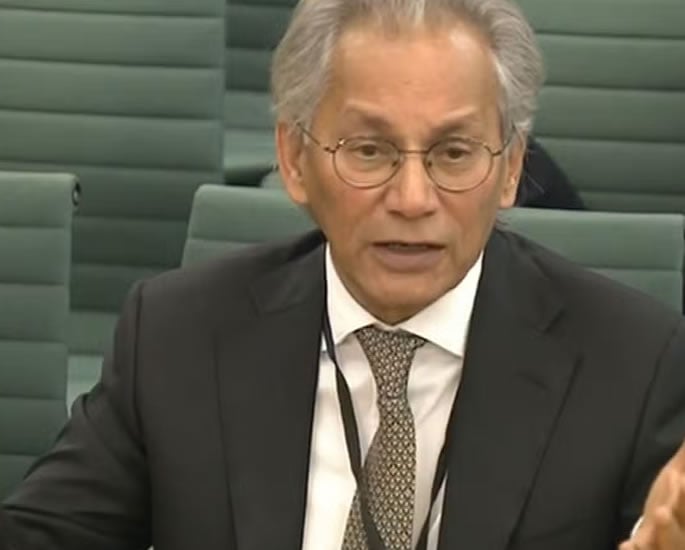
Meanwhile, there will be a major update on BBC TV’s licence fee.
Dr Samir Shah said that “reforming the licence fee, replacing it, or coming up with a whole new mechanism” are all possibilities under consideration.
In his first speech since becoming BBC Chairman, Dr Shah will speak to top media personalities and policymakers at Leeds Conservatoire on November 5 to deliberate on the governance and financing of the BBC.
The former Tory Government previously initiated a review of the BBC’s TV licence fee model to explore alternative funding methods after December 2027 when the current charter expires.
Dr Shah is expected to reiterate that options for “reforming the licence fee, replacing it, or coming up with a whole new mechanism” remain open for discussion.
The licence fee has been under scrutiny, especially when the Conservative Party were in power.
It imposed a two-year freeze at £159, followed by a slight increase to £169.50 in April 2024, contrary to the BBC’s expectations.
In his speech, Dr Shah is expected to express his opposition to subscription and advertising as potential future funding models, arguing that they need to prioritise profit over audience service.
He is expected to say: “If we want a universal public service BBC, that requires a universal funding model.
“And we have to be realistic that ideas like ad-funding or subscription do not pass that test when it comes to the BBC public service mission.
“Both introduce a commercial agenda, which means the priority becomes, not how you serve British audiences, but how you profit from them.
“It prioritises the needs of the better off, and leaves behind the poorer, the more marginalised or digitally disenfranchised.”
Amid the rise of streaming, Dr Shah will also warn:
“Action is needed now to future-proof public service broadcasters, otherwise our very British success story will be part of our halcyon past.”
The BBC chair will also say he doesn’t support subscription and advertising as possible future funding models because neither “pass the test” for a universal, public service BBC as they shift the priority from serving audiences to profiting from them.
ITV, Channel 4, Channel 5 and S4C are also classed as public service broadcasters.