














































Social commentary plays a key role in South Asian comedy.
Stand-up comedy has long been a space for social critique, personal storytelling, and cultural reflection.
For British South Asians, the journey in comedy has evolved from niche performances to mainstream success, reflecting both changing societal attitudes and the unique perspectives of diasporic experiences.
What began as scattered acts in local venues has transformed into sold-out stadiums, award-winning television shows, and digital-first success stories.
The evolution of South Asian comedy in Britain can be traced back to key moments in entertainment history, from groundbreaking television sketches to stand-up performances that brought cultural identity into the spotlight.
While early representation was often limited to side roles in mainstream British comedy, the increasing presence of South Asian comedians has shifted perceptions and broadened the scope of what comedy can explore.
A crucial part of this evolution has been the ability to balance cultural specificity with universal appeal.
Comedians have navigated the complexities of growing up with dual identities, addressing generational clashes, and tackling societal stereotypes, all while making audiences laugh.
The widespread influence of South Asian comedy has not only changed the landscape of British entertainment but also challenged the industry’s long-standing biases regarding representation.
As the genre continues to evolve, younger comedians face the challenge of moving beyond well-worn tropes and introducing new perspectives.
The rise of digital platforms and social media has played a key role in diversifying opportunities, giving upcoming talents more agency over their narratives.
From television to online spaces, British South Asian comedy has entered an era of global influence, proving that humour grounded in identity can still be innovative, engaging, and widely relatable.
Early Pioneers and Breakthroughs
 Before South Asian comedians became fixtures in the UK’s stand-up circuit, British-Asian humour largely found its footing through television sketch comedy.
One of the most pivotal breakthroughs came with Goodness Gracious Me (1998–2001), a BBC sketch show that satirised the British-Asian experience with intelligence and wit.
The series challenged cultural expectations, blending sharp observational comedy with universally relatable humour.
Sketches like ‘Going for an English’, which flipped the script on British curry-house culture, became instant classics, proving that South Asian-led comedy could resonate beyond its immediate community.
The success of Goodness Gracious Me set the stage for South Asian comedians to step into the stand-up world with greater confidence.
It provided a foundation upon which British-Asian performers could build careers without solely relying on stereotypical portrayals.
This early exposure helped pave the way for stand-up acts that explored similar themes of identity, assimilation, and generational differences.
Key Comedians and Contributions
 British South Asian comedians have since become a driving force in the stand-up industry, carving out space in both mainstream entertainment and digital platforms.
Romesh Ranganathan, a former maths teacher turned comedian, has gained widespread recognition for his deadpan humour and sharp critiques of his Sri Lankan Tamil upbringing, British life, and cultural contradictions.
His appearances on 8 Out of 10 Cats Does Countdown and his own show, The Ranganation, have solidified his mainstream appeal, proving that South Asian comedians can go beyond identity-focused humour and excel in broader British comedy spaces.
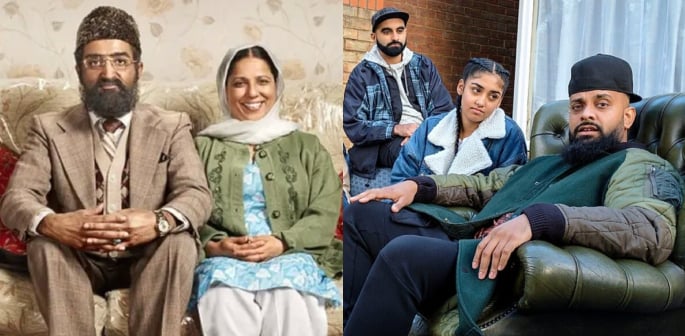
Another influential figure is Adil Ray, the creator and star of Citizen Khan (2012–2016), a sitcom that satirised a British-Pakistani family while challenging and celebrating community dynamics.
His work provided a mainstream audience with a new kind of representation, one that played on cultural stereotypes while offering nuanced portrayals of British-Asian life.
Shazia Mirza, known for her sharp and provocative routines, broke barriers with her 2002 show My Name’s Shazia Mirza, which fearlessly tackled post-9/11 tensions with dry wit and intelligence.
She paved the way for female British-Asian comedians, showing that stand-up can tackle sensitive topics with humour.
Tez Ilyas, with his blend of social commentary and absurdity, has brought a fresh approach to discussing British Muslim identity.
His stand-up shows, including TEZ Talks, cleverly dissect cultural assumptions, while his role in Man Like Mobeen (2017–present) has cemented his status as a voice for modern British-Asian youth.
Paul Chowdhry, another major force in the industry, made history with his 2019 special Live Innit, becoming the first British-Asian comedian to sell out Wembley Arena.
His observational humour, blending racial and social satire, has earned him a devoted following, proving the commercial viability of South Asian-led stand-up.
Themes and Cultural Resonance
 South Asian stand-up comedians in Britain often tackle themes that resonate across generations and cultures.
One of the most prevalent themes is the dual identity struggle, balancing Britishness with South Asian heritage.
Romesh Ranganathan’s self-deprecating jokes about being a “coconut” (brown on the outside, white on the inside) and Shazia Mirza’s critiques of cultural expectations exemplify this comedic tension.
Another recurring theme is the absurdity of everyday life, particularly in family dynamics.
Shows like Citizen Khan and stand-up routines exaggerate generational clashes, such as strict parents versus their more assimilated British-born children.
These portrayals are instantly recognisable to South Asian audiences yet remain accessible to wider viewers due to their universal relatability.
Social commentary also plays a key role in South Asian comedy.
Aatif Nawaz’s Muzlamic (BBC Three) uses satire to confront Islamophobia, while Guz Khan’s Man Like Mobeen intertwines sharp comedy with critiques of systemic inequality.
These narratives reflect how British-Asian comedians are using their platforms to challenge societal biases while entertaining audiences.
Platforms and Visibility
 The rise of British South Asian stand-up comedy has been closely tied to increased visibility on major platforms.
Traditional broadcasters like BBC and Channel 4 have provided exposure through programmes such as Live at the Apollo and Stand Up for the Week, allowing comedians to reach mainstream audiences.
The digital era has further expanded opportunities, with YouTube and streaming services like Amazon Prime playing a crucial role in globalising their reach.
Comedians now have more control over their content, bypassing traditional gatekeepers to build direct relationships with audiences.
The Ongoing Impact
 The evolution of British South Asian stand-up comedy is a testament to the power of storytelling and representation.
What began as a niche movement has flourished into a significant force in mainstream entertainment, reshaping the industry’s understanding of cultural humour.
Yet, challenges remain. The over-reliance on outdated tropes, such as exaggerated parental accents or stereotypical career expectations, has sparked conversations about the need for more innovative narratives.
Audiences are increasingly seeking fresh perspectives that reflect the complexities of modern British-Asian life beyond first-generation struggles.
Another critical factor is the underrepresentation of South Asians in other areas of British entertainment.
While stand-up comedians have gained traction, television and film still lag in proportionate representation.
This gap highlights the dual role comedians often play, not only as entertainers but also as cultural ambassadors tackling larger societal issues.
Looking forward, the future of South Asian stand-up in Britain will likely be shaped by digital expansion, a push for more nuanced storytelling, and a growing appetite for comedy that speaks to intersectional identities.
The rise of social media and streaming platforms has already diversified opportunities, allowing emerging comedians to experiment with formats and themes beyond traditional stage performances.
As a younger generation of British South Asians challenges outdated narratives, stand-up is set to continue evolving, reflecting an ever-changing cultural landscape.