

















































"it can be almost any experience that you experience as traumatic."
A doctor has revealed four signs that you may have post-traumatic stress disorder (PTSD).
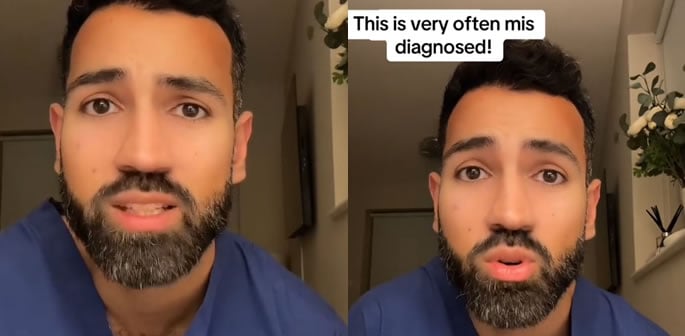
UK-based GP Dr Ahmed said he believes that the condition is often missed as it can be mistaken for other mental health conditions, including anxiety and depression.
On his TikTok, he said: “We need to diagnose [PTSD] better and treat better.
“Because one in three people who have had a traumatic experience will have this condition.”
Before outlining the signs and symptoms associated with PTSD, Dr Ahmed advised viewers who experiencing any of these should seek help.
Dr Ahmed explained: “Now, in PTSD, you relive an experience that was traumatic for you. Now that’s the key – a traumatic experience for you.
“We sometimes assume that an experience is not traumatic, but it varies from person to person.
“Yes, most cognitive trauma can be things such as assault, sexual abuse, childbirth, a serious illness.
“However, it can be almost any experience that you experience as traumatic.”
When it comes to PTSD, the doctor said that you “can experience the symptoms straight away, as soon as the event happens”.
However, in some cases “it can happen months or even years later”.
@dra_says This is very common but often gets mis diagnosed as depression or anxiety. Educational purposes only. #anxiety #depression #ptsd #ptsdawareness #ptsdsurvivor #doctor #privategp #privatedoctor #stress #flashbacks #nightmare #nightmares #insomnia #depressionanxiety #posttraumaticstressdisorder #trauma #traumaproblems #mentalhealth #mentalhealthmatters #hearingvoices #hallucination #hallucinations ? original sound – Dr Ahmed
Symptoms of PTSD can be “split broadly into four categories”.
Re-experiencing the Event
Dr Ahmed said: “Re-experiencing the event can include flashbacks, nightmares or sweating or experiencing pain again, physically that you experienced when you went through the trauma.”
Avoidance/Emotional Numbing
Explaining what this symptom is, Dr Ahmed said:
“The second set of symptoms is avoidance or emotional numbing.
“This is where you tend to ignore avoid situations or people that remind you of the event.”
He added that people with PTSD “may avoid talking around the subject or avoid people that remind them of their traumatic experience”.
Hyperarousal or Irritability
According to Dr Ahmed, the third set of symptoms is “hyperarousal or irritability”.
He said: “This can lead to angry outbursts, sleeping problems or difficulty concentrating.”
Anxiety, Depression or Self-Harm
According to the medic, he explained that it is the fourth set of symptoms that can make PTSD difficult to spot.
Dr Ahmed said: “[It is this] set of symptoms where I think we sometimes get confused because it can include things like anxiety, depression or self-harm.
“And because of this, I think sometimes PTSD gets diagnosed as anxiety or depression, and the treatment of anxiety and depression is different to that for PTSD.”