














































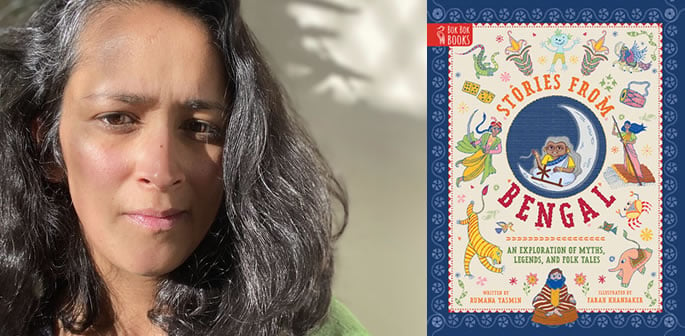
“Folklore is one of the best ways to give children two things at once"
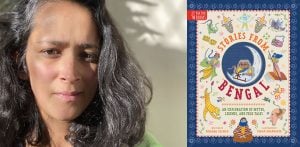
Rumana Yasmin brings Bengal’s myths, legends and folk tales to a new generation of young readers with Stories from Bengal.
Born in Bangladesh and now based in the UK, Yasmin’s connection to Bengali folklore began in childhood through the stories told by her mother, which later inspired her to gather and retell these traditions for children.
The book introduces readers to gods and goddesses, tricksters, mystical saints and magical creatures, with Chaader Buri, the magical grandmother on the moon, guiding them through the collection.
Illustrated by Farah Khandaker with artwork inspired by nakshi kantha, the book also reflects the visual traditions connected to Bengal’s storytelling heritage.
Rumana Yasmin talks to DESIblitz about how her book was inspired by childhood memories and a wider collaboration exploring Bengal’s diverse storytelling traditions.
Bringing Bengal’s Folklore to Young Readers
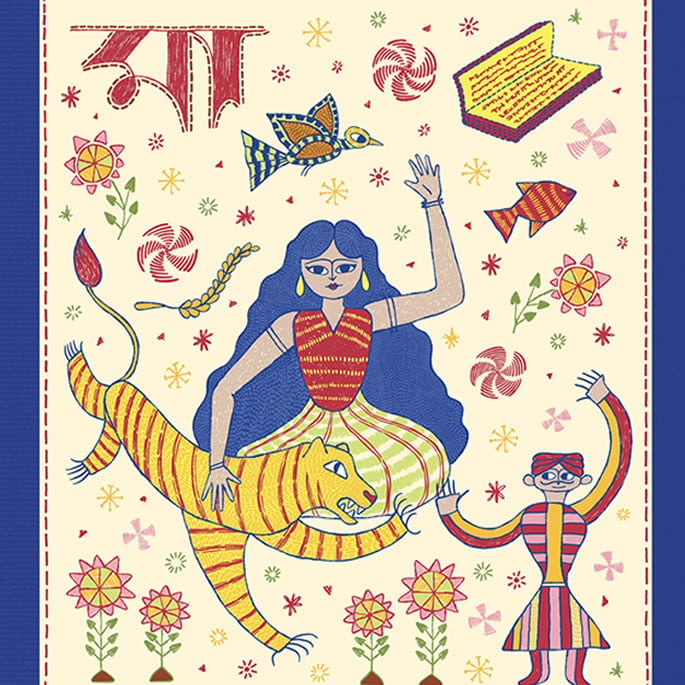
Rumana Yasmin wanted Bengal’s folklore to have a place in children’s literature that reflected both its cultural specificity and wider relevance.
She explains: “Folklore is one of the best ways to give children two things at once: an appreciation of specific, living traditions, and a sense of the experiences and values people everywhere share.
“I wanted Bengal’s tricksters, gods, ghosts and grandmothers on a child’s bookshelf for exactly that reason – carrying the richness of Bengali culture, and stories that speak to something universal.”
Stories from Bengal‘s foundations are both personal and collaborative, with some stories originating in Yasmin’s childhood. The wider project developed through Threads of Tales with HerStory Foundation in Bangladesh.
The author continues: “Some of it was personal, as many of the stories were ones my mother told me as a child.
“But the book itself grew out of Threads of Tales, a collaboration with HerStory Foundation in Bangladesh, funded by the British Council’s International Collaboration Grants.
“As part of that partnership, we were researching nakshi kantha embroidery to inform the book’s illustrations and that research kept leading us into more stories and storytelling traditions.
“The selection followed that trail as much as it followed memory.”
Stories across Communities
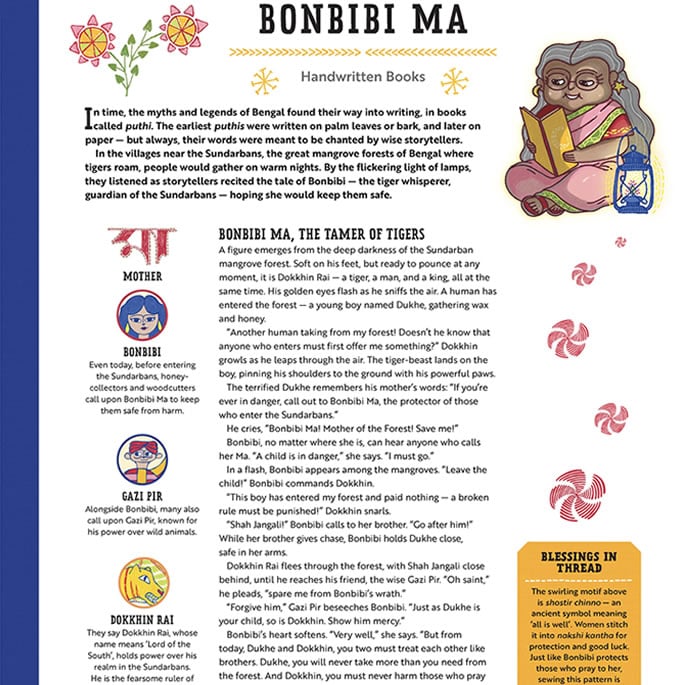
The book includes stories and practices that have developed across communities, alongside traditions from groups that receive less attention, as Yasmin says:
“Bengal has always been culturally diverse. There are practices that are genuinely shared.
“Bonbibi, protector of the Sundarban mangrove forest, is prayed to by Hindus and Muslims alike.
“Shotyo Norayon or Shotyo Pir can carry both a Hindu god’s name and a Muslim saint’s title, and both communities tell the same stories about him.
“At a time when media narratives push toward division, I wanted these shared stories to stand as proof that another way of existing is possible and has been, for a long time.
“It also opened the door to communities in the Bengal region whose stories are told far less often – Chakma, Khasi, Santal traditions among them.
“Including them was important, though I would say it’s just the start.”
For young readers, Rumana Yasmin wants the collection to offer a broader understanding of the region and its cultural heritage:
“That there’s more that connects us than divides us, and that Bengal is rich in stories, imagination, art and history.
“I want a child to close this book with a fuller picture of the region than the one often painted by the wider narrative of poverty and natural disasters.”
Guiding the Collection
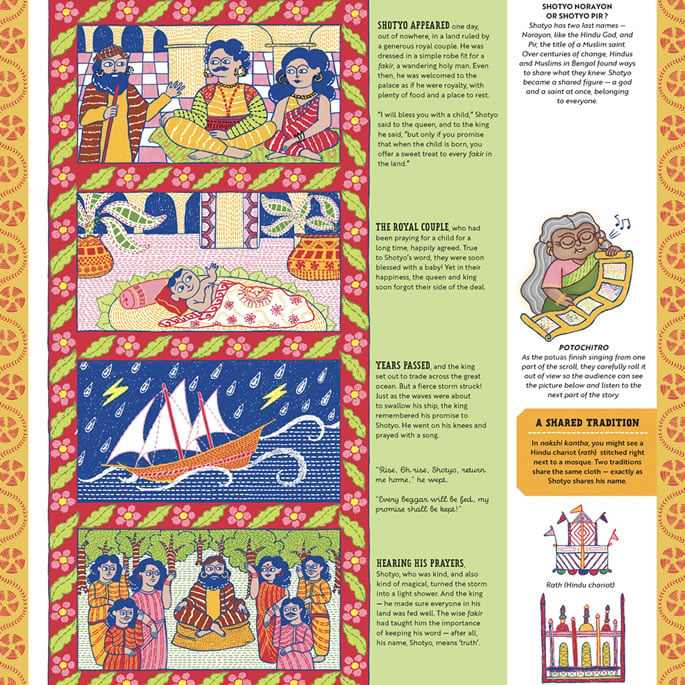
Stories from Bengal is framed around Chaader Buri, the magical grandmother on the moon who links the individual stories together.
Rumana Yasmin explains how her inclusion came to be:
“HerStory’s side of the Threads of Tales project is a hand-embroidered nakshi kantha story cloth and Chaader Buri is its central character.
“Their research into Chaader Buri is what led us to her. She’s the magical grandmother on the moon who weaves stories on her spinning wheel and sends them down to Earth as moonbeams.”
Chaader Buri’s role also presents a familiar figure to readers from Bengali backgrounds:
“She’s also a figure many of us have grown up with, which made her the natural guide. The book and the story cloth are, in a sense, telling the same story in two different threads.”
Adapting the tales for readers aged seven and above required changes to the original forms without taking away their storytelling qualities, which was a challenge, as Yasmin admits:
“That balance was difficult to get right.
“We had to think about the audience, but also make sure the book challenges them and helps them grow as readers.
“A picture book is a great way to hold that balance – it keeps children engaged while still giving the stories room to breathe.”
Longer stories were condensed where necessary. This included Bonbibi’s epic, which was reduced to its climax while retaining the rhythm of oral storytelling.
“Practically, that meant shortening epics like Bonbibi’s tale to the climax of the story, and keeping the rhythm of oral storytelling.
“I think children are naturally curious, and they want to learn. My hope is that this book opens up more conversation in families, and inspires them to do further research of their own.”
Preserving Stories through Illustration

The adaptations were also subject to checks designed to ensure the retellings remained true to the traditions and scholarship behind them.
Rumana Yasmin details: “This is a retelling, and adaptations were made – epic poems were shortened, some details were simplified, and for some stories only their dramatic core were presented.
“But every adaptation was checked. Folklore Expedition Bangladesh fact-checked the material against regional scholarship, and an external editor reviewed the final manuscript.
“So the accessible version a child reads has been tested against the more complex one it originates from.”
Farah Khandaker’s illustrations added another layer to that process.
Yasmin says: “Farah has done an incredible job translating the visual language of nakshi kantha embroidery into illustration for a children’s book.
“She’s drawn on nakshi kantha elements – protective borders, the Shostir Chinno (the South Asian swastika, an ancient symbol of good fortune) – and these recur through her spreads too, so a reader is learning to ‘read’ embroidery at the same time as they’re reading the story.
“Each chapter carries a small note pointing this out.”
The illustrations also draw on the historical relationship between Bengal’s embroidery and women’s storytelling.
“Nakshi kantha has historically been a way for Bengali women to stitch their own histories into cloth; Farah’s work carries that spirit into a new form.”
Rumana Yasmin says this combination of research, personal memory and collaboration is also relevant to how South Asian children’s literature can approach cultural representation:
“I hope it reads as a book about storytelling itself – how stories survive, why they are told, and the ways in which stories connect us.”
“I also hope it pushes back gently on the idea of ‘South Asian stories’ as one category, that there are a multitude of traditions that sit alongside one another.
“And I hope the process behind it- personal memory, HerStory’s research, Folklore Expedition’s scholarship, all under one collaboration – becomes something that can inform the publishing landscape.”
Stories from Bengal brings together folklore from across the region while introducing young readers to traditions that have been passed down through generations.
Its combination of retold stories, research and nakshi kantha-inspired illustrations gives children different ways to engage with Bengal’s cultural heritage.
For Rumana Yasmin, the book also provides an opportunity to broaden how South Asian stories are represented in children’s publishing.
Published by Bok Bok Books, Stories from Bengal will be released on September 30, 2026,