














































Islamabad will remain the festival's anchor city.
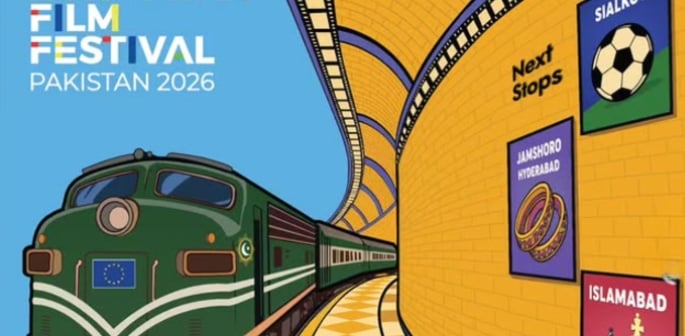
The European Film Festival is set to return to Pakistan for its fifth edition, expanding its reach to two brand new host cities.
EUFF 2026 will run from September 12 to 30, 2026, travelling across three cities, including Islamabad, Sialkot and Jamshoro/Hyderabad.
The Delegation of the European Union to Pakistan, which organises the annual festival, announced on Instagram ahead of this year’s edition.
The delegation described EUFF 2026 as a continuation of its “five-year journey across Pakistan,” underscoring the festival’s growing footprint nationwide.
Islamabad will remain the festival’s anchor city, having been part of every edition since EUFF launched in Pakistan back in the year 2021.
The Pakistan National Council of the Arts will once again serve as the host venue for the opening leg of the festival in the capital.
Screenings in Islamabad are scheduled for September 12 and 13, 2026, kicking off what promises to be an exciting and culturally rich programme.
Sialkot joins the festival for the very first time this year, marking a significant step in the event’s expansion beyond Pakistan’s major urban centres.
Screenings in Sialkot will take place at Government College Women University and The Grid by BLCK, a restaurant and event space in the city.
These screenings are scheduled for September 16 and 17, giving Sialkot audiences their first opportunity to experience European cinema.
The festival will then travel to Sindh for its final stop during the closing days of the month-long cultural celebration.
The Shaheed Allah Buksh Soomro University of Art, Design and Heritage in Jamshoro/Hyderabad will host the final screenings on September 29 and 30.
The inclusion of Jamshoro/Hyderabad extends the festival’s presence in Sindh beyond Karachi, which had previously been one of the key host cities.
The organisers have yet to announce the specific film lineup for this year’s edition.
The fourth edition of EUFF, held in November 2025 across Islamabad, Karachi and Lahore, offered a particularly rich and diverse programme for audiences.
That edition featured 19 feature films and 10 short films drawn from across the member states of the European Union.
The programme included Czech, Hungarian, Irish, Spanish, French, German and Portuguese films.
A dedicated children’s film slot was also offered at each stop, making the festival accessible and engaging for younger audiences.
Beyond the screenings themselves, the 2025 edition featured interactive installations, dramatic readings and the festival’s beloved signature social dances.
Curated food kiosks at each venue added a community-oriented and celebratory dimension to the cultural experience being offered to Pakistani audiences.
The festival was free and open to the public throughout its 2025 edition, with no registration or tickets required to attend any of the screenings.
It remains to be seen whether the 2026 edition will follow the same open access format that has made the festival so widely celebrated.