















































"So, after fire could come floods."
Prime Minister Andy Burnham has warned that flooding could follow the wildfires currently sweeping parts of the UK, as firefighters continue tackling blazes across the West Midlands.
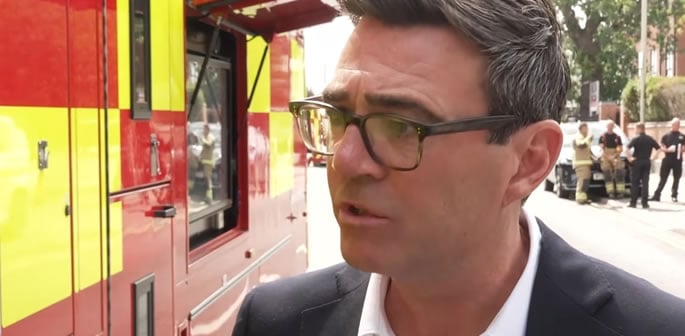
Speaking during a visit to Stourbridge, where residents were forced to evacuate, he said the country could face a sharp shift from prolonged dry conditions to heavy rainfall later this year.
A total of 54 people have been treated by paramedics, with 19 admitted to hospital, following wildfires across the region.
Paying tribute to firefighters and emergency services, Burnham said:
“We might be in for a wet autumn and winter straight after this, because of El Niño and some of the issues there, which was reported to Cobra. So, after fire could come floods.
“We have to face up to the changing climate. I think we need a different debate about that.
“There’s no point denying where we are. We need to face up to it. We need more clean energy. We need to see that transition accelerate. Those are all of the issues that, you know, are right now in discussion.
“But the Cobra meeting earlier this week, I think has enabled us to mobilise resources today to individuals, to communities, and to our fire and rescue services, and we’re very, very grateful to them.”
Burnham later said the Met Office expects the current dry spell to continue until the end of September, with some rainfall potentially arriving before wetter conditions develop.
He said: “Maybe some rainfall, but not as much as we need, and then we are heading straight into a very, very wet latter part of the year, where the risk of flooding will be maybe greater because of the dry ground conditions.
“At the moment, fire and rescue services are not set up for flooding properly, and again, these are questions that I have to take away, and you know I won’t shy away from them.”
Met Office climate spokesperson Grahame Madge said forecasting the weather several months ahead was a “tremendously tricky job”, with several climate drivers potentially influencing autumn and winter conditions.
Madge said: “But the Prime Minister is perfectly right in what he said, in terms of there is a known association between strong El Niño events and a wet autumn.
“It’s important to highlight that El Niño is a pattern of natural climate variability – it’s not linked to climate change per se.
“It can accentuate other climate signals, such as a warmer atmosphere; it can hold more moisture, all of that, but it’s not an artefact of climate change itself.”
He also highlighted the difficulty of making longer-term forecasts because of competing weather patterns:
“The challenge for forecasters is the fact that there are a number of competing drivers.”
“Another big driver of what happens in autumn in the North Atlantic is what’s happening in the tropical Atlantic with the hurricane season.”
“So, our forecasters have got an extremely difficult job of trying to tease out all those different drivers and work out which one will weigh out.”
The warning comes as concerns grow over the impact of prolonged dry weather on the UK’s water supplies and food production.
Alistair Carmichael, the Liberal Democrat MP who chairs the Commons environment committee, described the current drought as “desperately worrying”.
He also warned that flooding could create further problems for the UK’s food security, particularly if farmland is left underwater during the winter and early spring.