


















































“The aspiration is there. The opportunity is not.”
Finding a job in Britain can feel like a full-time job.
Applications can take hours, interviews can lead to silence, and hundreds of people can compete for the same vacancy.
The latest figures suggest the UK labour market has become increasingly difficult, particularly for young people starting their careers.
With fewer vacancies, cautious employers and changing expectations around skills, getting hired is becoming more complicated.
So, why is it so hard to get a job in Britain right now?
There Are Fewer Jobs to Compete For

One clear reason is that there are fewer vacancies available.
The Office for National Statistics estimated there were 702,000 vacancies between June and August 2026.
That was 8,000 fewer than the previous three-month period and 36,000 fewer than a year earlier.
It was also the lowest level recorded outside the coronavirus pandemic since 2014.
There were 2.5 unemployed people for every vacancy between May and July 2026.
The number of payrolled employees also fell by 101,000 between July 2025 and July 2026.
For jobseekers, the result is simple.
Fewer vacancies mean more people competing for each available position, making it harder for applications to stand out.
The slowdown also means employers can be more selective because they have a larger pool of candidates to choose from.
Young People are Being Hit Particularly Hard

Young workers are facing an especially difficult start to their careers.
The Institute for Fiscal Studies found that the share of 16 to 24-year-olds in payrolled employment fell by 4.3 percentage points between December 2022 and December 2025.
The government’s 2026 Young People and Work review found that some young people were applying for dozens or even hundreds of jobs.
Some reported receiving automated rejections, while others said they were lowering their expectations about the jobs they would accept.
The review said young people were “trying, repeatedly, and failing to gain entry.”
Its conclusion was stark: “The aspiration is there. The opportunity is not.”
This challenges the idea that young people simply do not want to work.
Many are actively searching for opportunities but are struggling to secure that first foothold in the labour market.
For someone leaving university or education, repeated rejection can also make it difficult to know whether the problem is their application, their experience, or simply the state of the market.
Experience Is Becoming a Catch-22
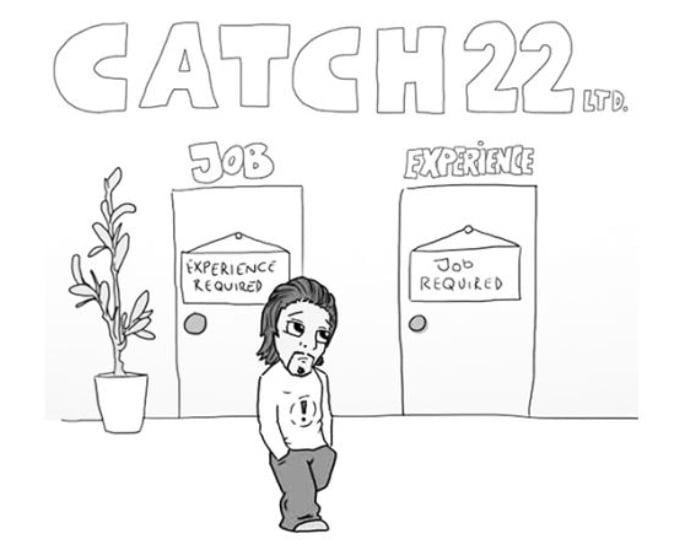
Previous experience is one of the biggest challenges facing jobseekers.
Employers increasingly want candidates to demonstrate workplace skills, even when recruiting for junior positions.
The government review found that too many young people have had “too little exposure to how workplaces operate before being expected to succeed in one.”
This creates a difficult cycle.
People need experience to get a job, but often need a job to gain meaningful experience.
Internships, volunteering and freelance work can help build a CV, but unpaid opportunities are not equally accessible to everyone.
Some young people also need paid work while studying, meaning they cannot afford to spend months gaining experience without an income.
Candidates can therefore have similar qualifications while entering the recruitment process with very different levels of practical experience.
What Are Employers Looking For?

Employers are increasingly looking beyond qualifications.
Skills England highlights communication, problem-solving, teamwork, digital literacy and adaptability as important transferable skills.
However, candidates may have developed these abilities through education, volunteering, part-time work or other experiences without knowing how to demonstrate them to employers.
A degree can show knowledge and commitment, but businesses may also want evidence that someone can apply those skills in a workplace.
Skills England has warned that valuable skills can be overlooked when recruiters focus heavily on formal qualifications and previous paid employment.
This creates another challenge for people trying to enter the workforce.
Applicants are expected to show that they are ready to work, while many are still looking for their first opportunity to develop those skills professionally.
AI Is Changing the Recruitment Process

Artificial intelligence is adding another layer to the job hunt.
Jobseekers are using AI to improve CVs, applications and interview preparation, while employers are using technology to process applications.
The government’s review describes recruitment as becoming increasingly “remote” and “automated.”
Applicants may now complete online forms, assessments and recorded interviews before speaking to a recruiter.
That can make recruitment more efficient, but it can also make the process feel less personal.
AI is also changing the skills businesses need.
Skills England says artificial intelligence is “reshaping the skills required across many jobs, sectors and regions of the economy.”
Communication, critical thinking and analytical skills are expected to remain important as technology develops.
For jobseekers, adapting to these changes could therefore become just as important as having traditional qualifications.
A Job Market That Is Changing

The difficulty of finding work in Britain cannot be explained by one issue.
There are fewer vacancies, youth employment has weakened, and employers are becoming more selective.
At the same time, technology is changing both recruitment and the skills needed in the workplace.
Yet the evidence challenges the idea that young people have simply stopped trying.
The government’s review found that young people continue to apply for jobs and adjust their expectations to find work.
Its message was clear: “Young people have not given up on work. We must not give up on them.”
The current labour market therefore raises questions for both employers and policymakers.
If candidates cannot gain experience without being given an opportunity, the responsibility cannot sit entirely with jobseekers.
For many people searching for work, the biggest challenge is no longer deciding what career they want.
It is getting the opportunity to begin.