


















































Fraudsters know when student finance payments are being made.
Students receiving their first maintenance loan are being warned about a scam that could allow criminals to steal their bank details and divert their money.
The Student Loans Company (SLC) says fraudsters are sending convincing texts, emails and phone calls claiming there is a problem with students’ accounts.
The messages often tell students that their bank details have been changed or that their payment is at risk, then direct them to a fake SLC website.
Anyone who enters their details could give criminals the information they need to access their genuine student finance account and change the bank account receiving their loan.
The warning comes as around £2.6 billion is being paid to 1.1 million students this month, making the start of the academic year a key period for this type of fraud.
How the Student Loan Scam Works
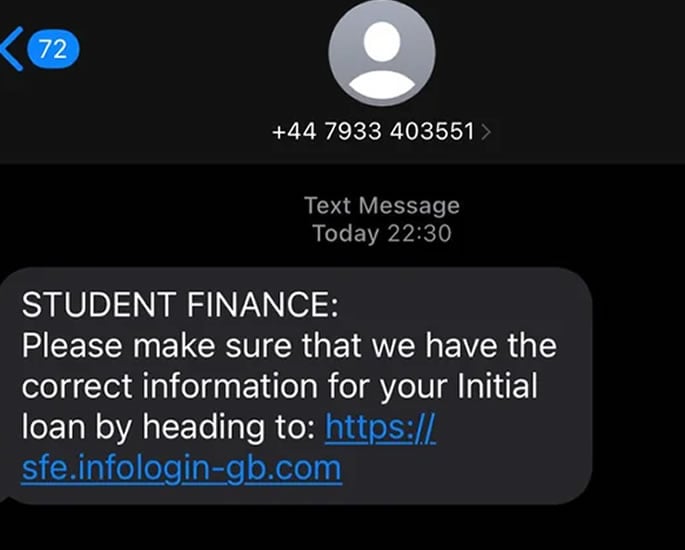
Student loan scams typically begin with an unexpected text message, email or phone call claiming there is a problem with a student’s finance account.
The message may read: “Our records indicate that your bank details on your student finance account were changed on Friday 16th. If you did not do this please contact us immediately.”
The student is then directed to a link, which leads to a fake website designed to look like the genuine SLC or student finance service.
The website may ask the student to enter their login details, personal information or bank account details. Although the student may believe they are securing their payment, they are actually handing information to criminals.
The criminals can then use the stolen information to access the student’s genuine account and change the bank details.
Alan Balanowski, the risk director at SLC, said:
“It’s a race against time because the criminals then use those details to log into our genuine site to change the bank account on the genuine student account to divert the maintenance loan payment before we spot it.”
Fraudsters know when student finance payments are being made.
For students in England and Wales, maintenance loan instalments are normally paid in three stages during the academic year. September, January and April are therefore periods when students should be especially alert to suspicious messages.
Students in Scotland and Northern Ireland have different student finance arrangements, with payments generally made monthly.
The scam relies heavily on urgency. A student who believes their loan is about to be cancelled or sent to the wrong account may be more likely to click a link without checking where it leads.
How to Tell if a Student Loan Message is Fake?
A message should immediately raise suspicion if it unexpectedly asks you to click a link, log in or provide personal or financial information.
Students should be particularly cautious about messages claiming their bank details have changed or that their payment will be stopped unless they act immediately.
SLC says it will not ask students to confirm personal or financial information through email, text or social media.
It also does not provide services through WhatsApp or initiate contact with students through social media.
The safest approach is therefore simple: do not use a link in an unexpected message to access your student finance account.
Instead, go directly to the official GOV.UK website and access your student finance account from there.
Students should also avoid posting details about when their loan payment is due on social media. Public information about payment dates could help criminals identify when someone is likely to receive a large payment.
What to do if You get a Scam Message
If you receive a suspicious message about your student loan, do not click the link or provide any information.
If you want to check your account, access it directly through GOV.UK rather than using a link provided in the message.
Students should also report suspicious communications.
Fraudulent emails can be forwarded to [email protected], while scam text messages can be forwarded to 7726.
What if you have Clicked the Link?

Clicking a suspicious link does not necessarily mean your student loan has been stolen.
However, if you entered your login details or other information, you should act quickly.
Change your password immediately and contact the Student Loans Company through its official contact details. You should also check your genuine student finance account to make sure your bank details and other information have not been changed.
Students who believe their account has been compromised should tell SLC as soon as possible.
The organisation says victims should be able to receive a replacement payment, meaning students should not ultimately suffer a financial loss if their maintenance loan is successfully diverted.
The warning is particularly important for students starting university who may be unfamiliar with how student finance communications work.
For many, their maintenance loan is essential for paying rent, food, travel and other costs during term time, making the prospect of a missed payment especially worrying.
The safest rule is to stop before clicking. If a message claims there is a problem with your student loan, do not follow its link or provide your details.
Instead, access your account directly through GOV.UK and check the information yourself.
A few extra seconds of caution could prevent criminals from getting access to thousands of pounds intended to support you through university.
If you do fall victim, support is available: