














































"Even our teacher bought drugs from him"
Pakistan faces numerous challenges, and drug abuse has emerged as one of the most significant issues affecting the younger generation.
The prevalence of drug usage in schools and colleges in Pakistan has reached concerning levels, raising alarms across the nation.
A 2020 survey by Ahmed et al suggests that 25 to 44% of Pakistani students report alcohol and/or illicit drug use so you can add that instead.
This categorises it as a pervasive social problem. Shockingly, a substantial number of these cases result in drug-related deaths among students.
Additionally, according to the International Journal of Surgery: Global Health, an estimated 700 to 1000 such fatalities relating to death abuse occur in Pakistan each year.
Factors that Contribute to Drug Abuse
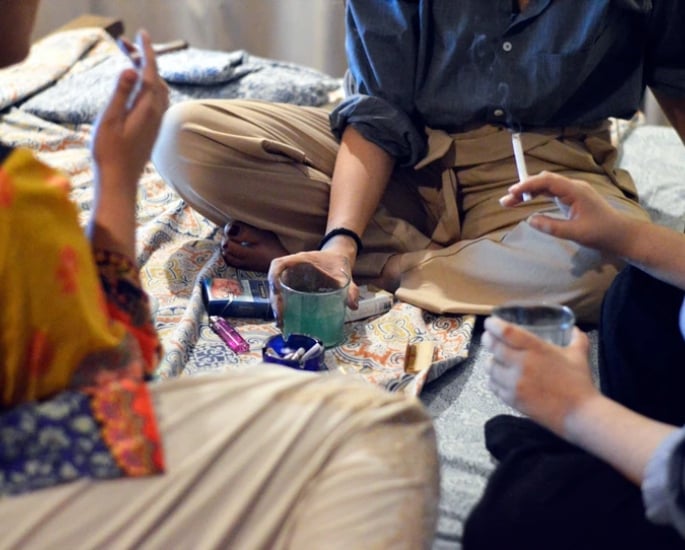
The root cause of widespread drug abuse among students is the desire to look ‘cool’.
It is often attributed to the perception that it symbolises social status.
Those involved in these activities are seen as belonging to an elite class. This fuels the desire to engage in drug use for many students.
The influence of social media has further contributed to the trend, with students sharing stories and posts glorifying drug use.
During interviews with students from prominent colleges like Lahore Grammar School College (LGS), we asked Hassan* and his friends about their reasons for using drugs.
Their responses were astonishing. Hassan stated:
“We are simply enjoying our lives. We believe we are not harming anyone, and drugs help us alleviate the stress of studying.”
A student from the National University of Science & Technology (NUST), Baqir* added:
“I love drugs. And many girls are attracted to me because I do them.
“They hang with me just to try my product.”
Fatima* from Quaid e Azam University (QAU), Islamabad, says:
“It was just something everyone was doing, you know? I didn’t want to feel left out.”
This perpetuates the notion that drug use is a desirable and acceptable behaviour.
Drug Dealing
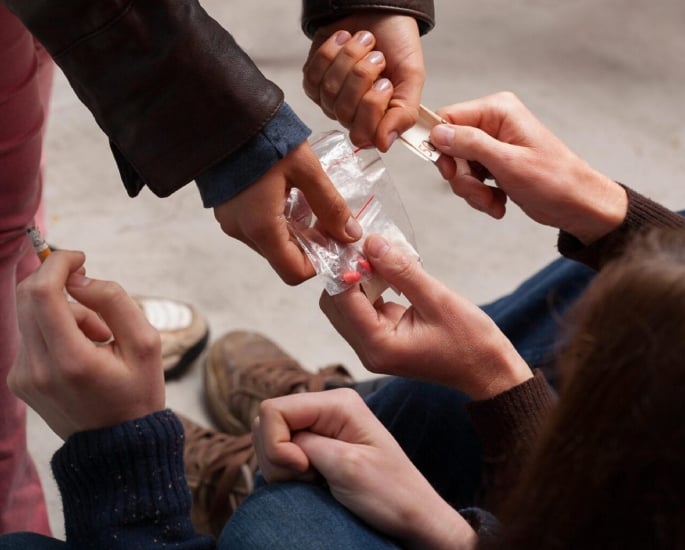
When inquiring about the availability of drugs within the college, Hassan explained:
“Obtaining drugs is as easy as buying ice cream. You just need to have money and know where to find the person selling them.
“Many students sell drugs within the college premises and earn substantial profits.
“They purchase their supplies from a dealer who collects money from them weekly.
“These students work in collaboration, and even some staff members like janitors and cleaners are involved, driven by financial incentives.”
Additionally, DESIblitz visited several universities and interviewed students who were willing to cooperate and answer our questions.
Uzair*, a student from the Shaheed Zulfikar Ali Bhutto Institute of Science and Technology (SZABIST), a renowned institute known for its party culture, provided insights.
He mentioned that nearly every student in the university is involved in drug use.
Uzair claims only newcomers initially attempt to distance themselves from such activities before eventually succumbing to them.
When asked about the reasons behind the widespread drug adoption, Uzair explained:
“Most of the new students who enter university are influenced by their popular seniors.
“They want to befriend more people and get invited to gatherings and parties, so they try drugs to integrate themselves into university life.
“The seniors, taking advantage of these new students, use them as customers to make money from drug transactions.”
Another student, Ghayaz*, related:
“One of my dealer friends told me that even our teacher bought drugs from him.
“This is very concerning that the institute is not doing checks before hiring.”
Furthermore, Zain tells us:
“Back in the day, we would mix different drugs together in the restroom on the fourth floor of our school.
“Since that floor was usually unattended, we never got caught.”
To gain a further understanding of the situation among female students, we approached Iqra, a student from Bahria University.
When asked about drug usage among female students, she revealed a distressing account.
Iqra herself was coerced into trying opium by her seniors when she first arrived at the hostel.
Desiring acceptance and integration, she soon became friends with these senior boys and girls.
They would frequently skip classes to smoke weed and engage in other drug-related activities. Iqra mentioned:
“Initially, many of my friends were hesitant, but eventually, they too became involved in drug use in some capacity.”
She recounted instances where she was mistreated and assaulted by her seniors, and her addiction compelled her to repeatedly seek drugs, depleting her financial resources.
When asked why she didn’t inform her parents, and teachers, or take legal action against the students, Iqra expressed fear and explained that it was her first time away from home:
“I didn’t want to betray my parents’ trust.
“However, I am still making efforts to raise awareness among incoming students about the dangers associated with drugs and the fact that the friendships forged through drugs are never genuine.”
Consequences

Hassan acknowledged the existence of problems, stating that a significant number of students are heavily addicted to drugs.
These individuals resort to stealing money, both from their homes and their friends, and frequently skip classes.
In extreme cases, these issues are resolved through expulsion or by involving the students’ parents.
Moreover, students have also noticed the side effects of drug abuse. We inquired about the occurrence of serious drug-related issues among students.
Malik* told us:
“In the beginning, I noticed that it took me a long time to answer when a teacher asked me something or made a comment in school.
“I would just stare at them without saying anything.”
“As time went on, I also started having trouble speaking properly. I couldn’t say a sentence without stuttering or pausing in the middle.”
Moreover, the situation of girls involved in drug abuse cases is particularly distressing. They often face severe abuse from their group members.
These girls are treated as objects for the personal amusement of boys, leading to devastating consequences such as suicidal tendencies.
Unfortunately, many of these cases go unnoticed or are overlooked by authorities and educational institutions.
This is due to the fear of tarnishing their public image. The parents of the victims are left without answers regarding the death of their children.
These accounts shed light on the alarming prevalence of drug abuse among students, necessitating immediate attention.
They demand concerted efforts from educational institutions, parents, and authorities to address the issue effectively.
It is crucial to provide support, counselling, and education to prevent further harm and protect the well-being of students.
In the coming years, more and more such cases are expected to surface. The majority of these cases are a result of drugs and toxic friendships.
The involved individuals exploit vulnerable victims for their pleasure and entertainment.
The government has made efforts to control drug usage by cracking down on drug circuits in Pakistan.
Several organisations, such as the Edhi Foundation, are working to make a difference by conducting campaigns.
These campaigns educate parents about identifying signs of drug involvement in their children and how to address the issue. However, much more needs to be done.
The Way Forward
We asked a few people what could be done to minimise drug abuse in students.
Fatima* suggests:
“Parents and teachers must play an active role in not just monitoring students, but also establishing a friendly rapport.
“They should encourage open communication.
“Parents should also keep an eye on their children’s social media activities to stay informed about their actions.”
Huzaifa* says:
“PEMRA (the regulatory authority for media in Pakistan) should establish rules regarding the content allowed on social media platforms.
“It should make significant changes to guide the youth in the right direction, rather than allowing them to destroy their future.
“Lawmakers should enact stringent regulations against drug production and distribution to effectively combat this issue.”
Mujtaba* says:
“Proper rehabs for drug addicts should be established.”
“I feel like drug abuse in students is something that’s not talked about enough.
“As a result, there isn’t much focus on establishing any such centres. They are an absolute need.”
Many surveys have shown that students wanted to quit but they couldn’t. With the proper help and care, they would have overcome their addiction.
A lot of universities have started checking students’ bags at university gates before they enter. Faris* shared his thoughts on this:
“As if that’s going to work. These people have come to sell. And they definitely won’t be stopped with a bag check. Do better!”
Creating awareness among the younger generation about the detrimental effects of drugs is crucial.
Educational institutions, including colleges, schools, and universities, should organise drug awareness campaigns to help students.
They should make them understand that drugs only lead to the loss of their youth and eventually their lives.
Efforts should be made to eliminate the availability of drugs within educational institutions.
Students who promote such activities should be apprehended, bringing them to justice.
Parents and teachers should work together to create a healthier and more productive environment.
There is a dire need to raise awareness among students, helping them understand that drugs will ruin their lives.
They will be destroying their mental and physical health.
By taking decisive action, we can protect the future generations of Pakistan from the devastating consequences of drug addiction. We can create a healthier and more promising society.