

















































"we will do everything in our power to remove them."
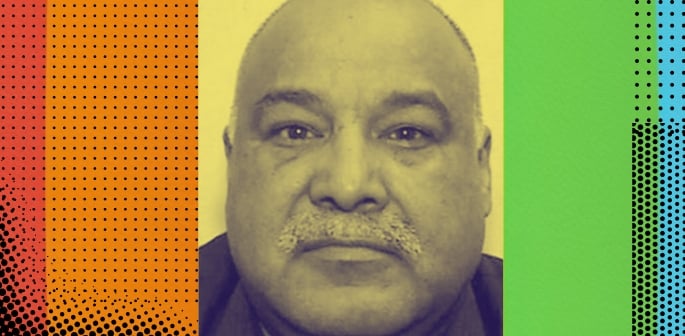
The UK government is in talks with Pakistan over the possible deportation of Shabir Ahmed, the convicted ringleader of the Rochdale grooming gang.
Ahmed, who served 14 years for multiple rape and sexual offences against young girls, was released on July 2, 2026, under strict licence conditions, including electronic GPS monitoring, supervised accommodation and exclusion zones preventing him from entering parts of Rochdale.
Although he was stripped of his British citizenship following his conviction and now only holds Pakistani nationality, a legal provision dating back to the Immigration Act 1971 currently prevents his deportation.
The case has prompted renewed political and public scrutiny, with Prime Minister Sir Keir Starmer asking the Home Secretary to examine whether legislative changes could allow Ahmed’s removal from the UK.
Government officials have also opened discussions with Pakistani authorities, although diplomatic and legal barriers remain.
A Downing Street spokesperson said: “We have raised this issue with our counterparts in Islamabad and we are committed to doing everything possible to deport foreign national offenders, and we’re clear that they should have no place in this country.
“We’re absolutely clear that where foreign nationals commit offences in the UK, we will do everything in our power to remove them.
“And that is why in this particular awful case, the Prime Minister has asked the Home Secretary to consider what can be done to remove this individual from the UK.”
They added that the case is “complex” and has “implications beyond this specific incident”, but the government is “working across Government to explore all possible options.”
Some of Ahmed’s victims said they felt “frightened” and “unsafe” by his release.
Ahmed’s Role in the Rochdale Grooming Gang
Shabir Ahmed was one of nine men convicted in 2012 as part of one of the UK’s most high-profile child sexual exploitation cases.
At Liverpool Crown Court, he was found guilty of multiple counts of rape and sexual offences against vulnerable teenage girls.
Known to some victims as “Daddy”, Ahmed was initially sentenced to 19 years in prison before later serving 14 years behind bars.
Prosecutors said he played a central role in the abuse network, which targeted girls who were often experiencing difficult home lives and social vulnerabilities.
Police investigations found that as many as 50 girls may have been exploited by the Rochdale grooming gang.
Many of the victims came from what investigators described as chaotic or disadvantaged backgrounds.
During sentencing, Judge Gerald Clifton said the girls had been treated “as though they were worthless and beyond any respect” because they were not part of the offenders’ community or religion.
Greater Manchester Police later stated there was no evidence that the offences were motivated by “racial or cultural” factors.
However, the case triggered a national debate about institutional responses to child sexual exploitation and whether concerns about race and community tensions affected decision-making.
Following Ahmed’s release, he has been placed in 24-hour staffed accommodation and remains subject to strict licence conditions.
The Home Office has stated that any breach of those conditions would result in his immediate return to prison.
He is also banned from returning to his last known address on Windsor Avenue in Oldham and remains subject to geographical restrictions preventing him from entering certain areas of Rochdale.
Deportation Challenges and Institutional Failures
Although Ahmed was stripped of his British citizenship after his conviction, his removal from the UK has been complicated by provisions within the Immigration Act 1971.
Under current legislation, certain Commonwealth citizens who arrived in the UK before 1973 and lived in the country for at least five years are protected from deportation.
Ahmed, who arrived in Britain in the late 1960s and held dual British-Pakistani citizenship at the time of his conviction, falls within this category.
The government is reportedly considering whether the law could be amended through the Immigration and Asylum Bill currently progressing through Parliament.
However, even if legislative changes were introduced, the UK would still require Pakistan’s agreement to accept Ahmed’s deportation.
That diplomatic hurdle has previously prevented the removal of other Rochdale grooming gang members.
Two of Ahmed’s co-defendants, Qari Abdul Rauf and Adil Khan, were stripped of their British citizenship in 2018 but could not be deported after Pakistan declined to accept their return.
Additional reports have suggested Pakistan may also reject Ahmed because he previously renounced his Pakistani citizenship, adding another layer of complexity to the government’s efforts.
Political pressure on ministers has intensified.
The Conservatives have announced plans to amend the government’s Immigration and Asylum Bill to close the legal loophole preventing Ahmed’s removal, while Conservative leader Kemi Badenoch has called on ministers to support the proposal.
Shadow Home Secretary Chris Philp has suggested the government should consider stronger diplomatic measures if Pakistan refuses to accept Ahmed.
He said: “If a British citizen commits a criminal offence somewhere else or is in another country illegally, of course, we take back our own citizens.
“So we expect other countries, like Pakistan, to do the same when the boot is on the other foot.”
The renewed focus on Ahmed’s case has also revived scrutiny of the institutional failures surrounding the original Rochdale investigation.
A subsequent review found police and local authorities had failed to act despite repeated warnings and identified “serious multiple failures” in their response to the abuse.
More than a decade after the convictions, the case continues to raise difficult questions about child protection, accountability and whether existing immigration laws can adequately respond to offenders who have committed some of the UK’s most serious crimes.