








































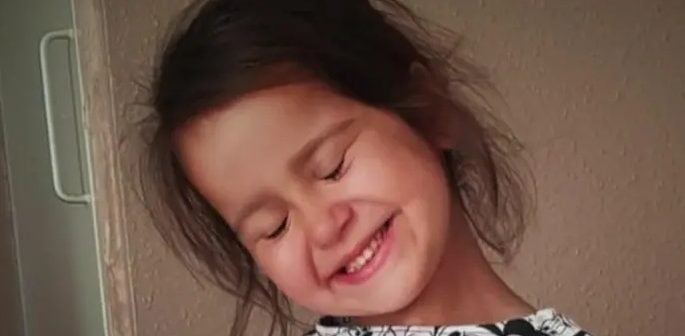
Sara suffered a “campaign of torture”
The woman who murdered her stepdaughter Sara Sharif has asked for the inquest into her death to be held in front of a jury.
Beinash Batool, who was jailed for life in 2024 for Sara’s murder, has asked for a jury to take part in the upcoming inquest.
Sara was found dead at her family home in Woking, Surrey, in August 2023.
Her father, Urfan Sharif, and Batool were convicted after the court heard Sara suffered a “campaign of torture” over two years.
A post-mortem examination found dozens of injuries, including bite marks, an iron burn and scalding from hot water.
The eight-week inquest will examine what agencies knew about Sara’s safety before her death.
It will also consider whether authorities missed opportunities to protect the young girl before she was killed.
Batool’s lawyer, Dr Anton van Dellen, argued that a jury could provide a wider perspective on the circumstances surrounding Sara’s death.
He said a diverse local jury could help examine whether concerns were ignored because people feared being accused of racism.
A safeguarding review previously found that agencies in Surrey failed to properly investigate concerns about Sara wearing a hijab.
The review said the head covering may have hidden injuries, but professionals were concerned about offending.
Neighbours also claimed they worried about being labelled racist if they reported their concerns.
The findings have raised questions about whether cultural sensitivities affected decisions made by authorities.
The inquest will focus on the actions of state agencies and whether more could have been done to safeguard Sara.
Surrey County Council previously apologised and said it had taken action following earlier reviews.
Senior coroner for Surrey, Richard Travers, said he would consider whether the inquest should include a jury.
A decision is expected at the next hearing.
The inquest is not scheduled to begin until April 2027.
Sara’s father, Urfan Sharif, and stepmother, Batool, were both jailed for life after being found guilty of her murder.
Her uncle, Faisal Malik, was convicted of causing or allowing Sara’s death. He was sentenced to 16 years in prison.
During the hearing, the coroner reminded Sara’s father that the inquest was not a retrial.
He explained that the criminal court’s findings would not be reconsidered.
Sara’s case has prompted national discussions about child protection and the role of public services.
The inquest will examine whether warning signs were missed before her tragic death.
It will also explore how professionals responded to concerns raised about Sara’s wellbeing.
The proceedings aim to provide answers about what happened and whether lessons can be learned.
A jury decision could influence how the circumstances surrounding Sara’s death are examined when the inquest begins.