












































The JAAC has claimed over 60 civilians have been killed
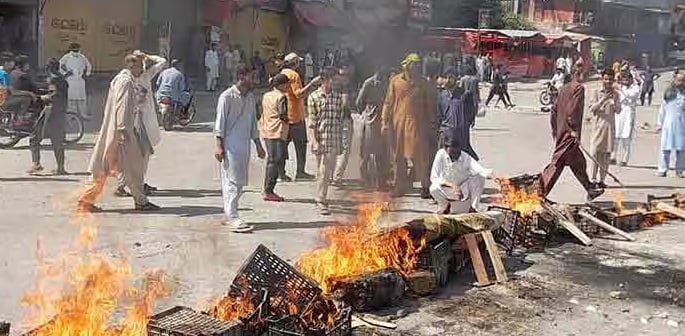
In Pakistan-administered Kashmir, the latest elections have unfolded against a backdrop of deadly protests, political unrest and widespread calls for a boycott
Rather than focusing on campaigning in Kashmir, many residents entered polling day after weeks of demonstrations, security crackdowns and growing public anger over governance and political representation.
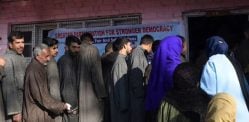
Polling stations opened across the Muzaffarabad division on August 2, 2026, under heavy security after authorities divided the election into three phases because of ongoing instability.
The prolonged unrest has transformed what should have been a routine election into one of the region’s most contested votes in recent years.
The current crisis began on June 5 after authorities banned the Jammu Kashmir Joint Awami Action Committee (JAAC).
The grassroots pressure group had organised demonstrations over rising living costs, governance concerns and political accountability.
Its campaign later expanded to demand the removal of 12 Legislative Assembly seats reserved for displaced Kashmiris living elsewhere in Pakistan.
As demonstrations intensified, authorities launched a crackdown against JAAC leaders while negotiations repeatedly failed to ease tensions.
The Election Commission subsequently split the elections into three phases to help manage security concerns.
Mirpur voted first on July 27, while Muzaffarabad and the refugee constituencies followed on August 2.
Poonch, regarded as the JAAC’s strongest support base, is scheduled to vote on August 10.
Muzaffarabad witnessed extensive security measures throughout polling day.
Police and paramilitary personnel were deployed across the city after days of shutdowns, with markets, banks, petrol stations and public transport largely remaining closed.
Residents and human rights groups claim more than 50 people have died since the unrest began, including several police officers.
The JAAC has claimed over 60 civilians have been killed during the demonstrations.
Government authorities have not released an official death toll.
Many residents said they refused to vote because they believed political leaders had failed to respond to the violence.
Several first-time voters also chose to boycott the election, arguing that recent events had destroyed their confidence in the political process.
Others accused authorities of suppressing peaceful protests through force.
Police officials rejected claims that security forces deliberately targeted civilians during the demonstrations.
Inspector General Liaqat Ali Malik said seven police officers had died while more than 200 officers suffered injuries during weeks of unrest.
He also alleged that some JAAC supporters attempted to disrupt polling by interfering with election materials.
Election officials reported turnout at nearly 50 percent despite the boycott campaign.
Although higher than the first phase, participation remained below turnout recorded during previous regional elections.
Early results showed the Pakistan Muslim League-Nawaz (PMLN) winning most declared seats, while the Pakistan People’s Party (PPP) secured the remaining victories.
The PPP has alleged electoral rigging, although election officials rejected those claims.
Attention now shifts to the final phase in Poonch, where further demonstrations are expected before voting takes place on August 10.
With protests continuing and political tensions unresolved, the region faces an uncertain period following one of its most turbulent elections in recent years.