


















































"people are continuing to ignore the law"
AI road safety cameras detected nearly 19,000 offences during a two-week trial in the West Midlands, raising concerns about dangerous driving across the region.
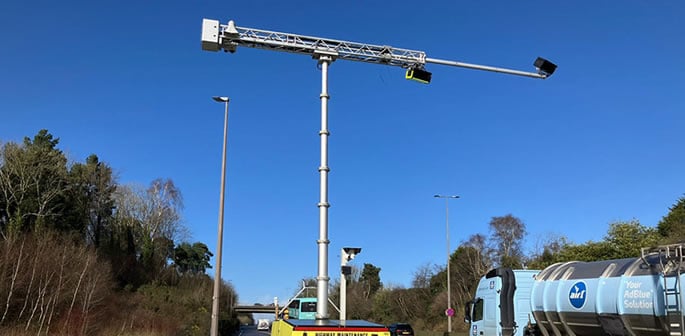
Transport for West Midlands (TfWM) carried out the trial in March using technology from road safety company Acusensus, with cameras installed outside fire stations in Birmingham and Wolverhampton.
At Ladywood fire station, the cameras identified 11,045 potential seatbelt offences and 1,163 potential mobile phone offences.
A further 6,030 potential seatbelt offences and 757 potential mobile phone offences were flagged at Fallings Park fire station.
The trial was designed to measure the potential scale of offending rather than issue penalties, meaning no enforcement action was taken. Thousands of detections were validated by UK-based human reviewers.
Images released by authorities show the potentially devastating consequences of such behaviour.
One photograph shows a front-seat passenger carrying a small child on their lap without a seatbelt, while another captures a driver holding a mobile phone with both hands and looking at the screen.
Geoff Collins, UK general manager of Acusensus, said: “Trial after trial tells the same story: people are continuing to ignore the law on using mobile phones at the wheel and wearing seatbelts.
“These results provide yet more evidence that this is a real road safety problem which demands serious attention. Every one of these behaviours has the potential to turn an ordinary journey into a tragedy.”
Mr Collins described the images involving children as “particularly distressing”, adding that ensuring young passengers are properly restrained “should be one of the most basic responsibilities before any journey begins”.
The West Midlands Combined Authority funded the trial in collaboration with police and fire services, with authorities now evaluating the findings to determine how AI road safety cameras could support future enforcement.
@richardparker4wm19,000 potential offences in just two weeks. Truly shocking. We trialled the use of AI cameras in Birmingham and Wolverhampton with our police and fire services to find out what’s really happening on our roads. People using phones behind the wheel. Not wearing seatbelts. Children travelling on laps without proper restraints. It’s frightening to see. As we review the results, I’ll use every resource available, including technology like this, to make our roads safer for everyone.? original sound – Richard Parker
West Midlands Mayor Richard Parker called the findings “truly shocking”.
He has pledged to use available resources, including new technology, to improve road safety across the region.
Police and Crime Commissioner Simon Foster said the technology could help police identify potential offences “at a scale that would be impractical through conventional patrols alone”, although human review remains an essential part of the process.
He added:
“But detecting the problem is only the beginning.”
“We need to use that knowledge to support education and effective enforcement, so that putting the phone away and fastening a seatbelt become habits on every journey.”
The findings also carry implications for fleet operators, whose drivers could face greater scrutiny if AI road safety cameras move from trials to routine enforcement.
Holding a mobile phone while driving is illegal, and drivers are required to wear seatbelts. Failure to comply can result in penalty points and fines, while businesses could also face reputational damage if their drivers are caught breaking the law.
Employers have a duty of care to their drivers and other road users, making clear policies on phone use and seatbelt compliance an important starting point.
Regular driver training, discussions about risky behaviour and consistent reminders can help reinforce those policies.
Many fleet operators already use telematics to monitor driving behaviour, while roadside AI technology could introduce an additional layer of scrutiny.
Although the trial covered just two locations over two weeks, it produced almost 19,000 potential offence detections, highlighting the scale of the road safety challenge.