










































"there was a clear public interest in protecting the safe space"
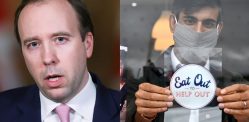
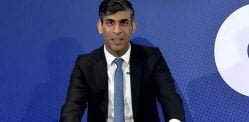
It has been revealed that Rishi Sunak ordered several taxpayer-funded focus groups and polls to craft the messaging of his planned ‘eat out to help out’ scheme in July 2020.
This was despite keeping the UK’s top medical and scientific advisers in the dark about the scheme.
The Treasury negotiated five public opinion contracts worth over £2 million from June 2020 throughout the Covid-19 pandemic, while Mr Sunak was chancellor, including those to establish how best to “sell” the hospitality scheme to voters.
The Whitehall department has resisted efforts to obtain details of the focus groups and polls but was ordered by the information commissioner to publish nearly six weeks’ worth of internal emails.
According to the documents, it was only the day after Mr Sunak’s announcement that anyone at the Treasury suggested asking the public if they were worried about how “eat out to help out” would affect the spread of Covid.
Mr Sunak has denied that the £850 million scheme drove a second wave of Covid infections.
That is despite research showing it caused a rise of between 8% and 17% while the economic benefits of the scheme were short-lived.
The Covid inquiry heard that senior scientific advisers were not consulted before Mr Sunak launched ‘eat out to help out’.
This led some government figures to privately refer to the PM as ‘Dr Death’ and the Treasury as the ‘pro-death squad’.
For the first four contracts, at least 184 individual focus groups were carried out, with voters in the East Midlands and West Midlands, followed by the northeast, the most frequently targeted.
The Guardian reported that polling for the Treasury in June 2020 found that only 13% agreed the government should create incentives for people to spend on eating out so they could start to return to normal life, while 39% thought it should not be a priority.
A week later, Rishi Sunak’s team discussed how to make the scheme more saleable to the public.
The Treasury’s director of communications, Olaf Henricson-Bell, asked colleagues:
“Can we test if people are more supportive of the hospitality stuff if it’s framed as about jobs?”
Cass Horowitz responded: “If it helps, Allegra [Stratton, director of strategic communications at the Treasury from April until October 2020] has a nice phrase on this. ‘Eat out, help out’ frames it as supporting the sector/jobs rather than just having a nice time.”
It was only on the day after the scheme’s announcement that a Treasury official suggested asking the public if they were concerned about its health impact.
An unnamed civil servant emailed Sunak’s team to say:
“We should test what people think about health risks of encouraging people to restaurants with EOtHO, eg which of these statements most closely reflects your view?
“(1) it’s irresponsible for the government to encourage people to go out to restaurants and risk increasing the spread of coronavirus or (2) too many people’s jobs are at risk – the government is right to encourage people to go out safely.”
On the eve of its launch, an unnamed aide suggested polling to ask whether people felt it was “irresponsible” for the government to encourage people to go out to restaurants or if, after months of lockdown and with people’s jobs at risk, it was right to do so.
The government’s handling of the pandemic is likely to be in the spotlight again in May 2024.
This will be when the inquiry hears from the current cabinet secretary, Simon Case, who said in private WhatsApp messages in July 2020 that he had “never seen a bunch of people less well-equipped to run a country” than those in No 10 at the time.
The Treasury’s opinion testing has always been justified by ministers as essential expenditure to shape policy responses to the pandemic.
However, the majority of questions discussed in the released material related to the messaging of government announcements.
In her ruling, the information commissioner said: “There is an extremely strong public interest in knowing more about how the government was using polling to inform policy development around its handling of the Covid-19 pandemic.
“For obvious reasons, it was a fast-moving area of policy development and there was a clear public interest in protecting the safe space in which that policy development occurred at the time.
“That time has now passed.”
Labour’s Angela Rayner accused Rishi Sunak of using the research to “polish his own image” during the pandemic.
She said: “Now we know why the Treasury fought so ferociously and so long against the publication of this material.
“Rishi Sunak did not see fit to ask the nation’s top medical advisers what they thought of eat out to help out, but he did conduct weeks of focus groups and polls at taxpayers’ expense to ask how the scheme should be presented.
“That proves what we have always feared – Rishi Sunak cared passionately about how its introduction would affect his own political standing, but could not have cared less what it would do to Covid infection rates.”
The Treasury has claimed an internal report in the months after the scheme suggested that there was little evidence it led directly to a spike in infections.
However, this has not been made public.