
High Proportion of BAME Pharmacists struck off GPhC Register

Data has shown that almost half of pharmacists suspended or removed from the GPhC register were from an ethnic minority background.
The chair of the General Pharmaceutical Council (GPhC) has admitted that he is concerned over the proportion of BAME pharmacists that are suspended or removed from the register, compared to white pharmacists.
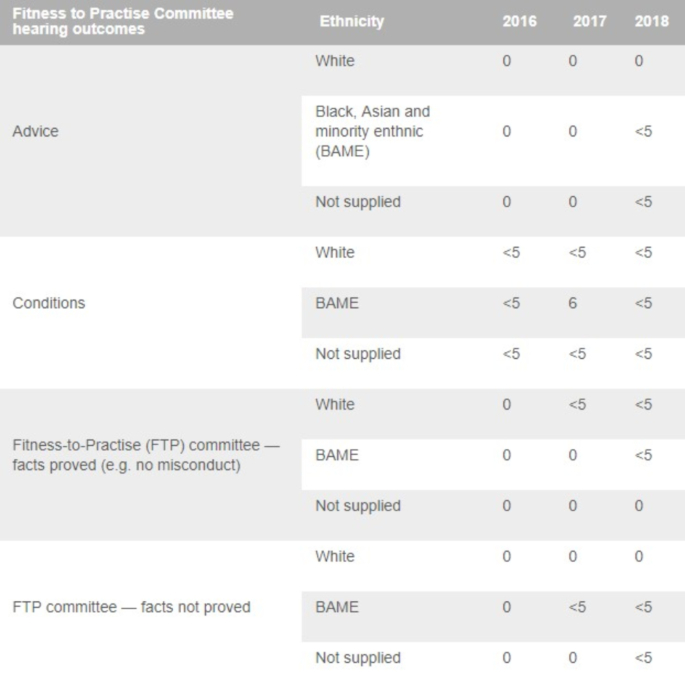
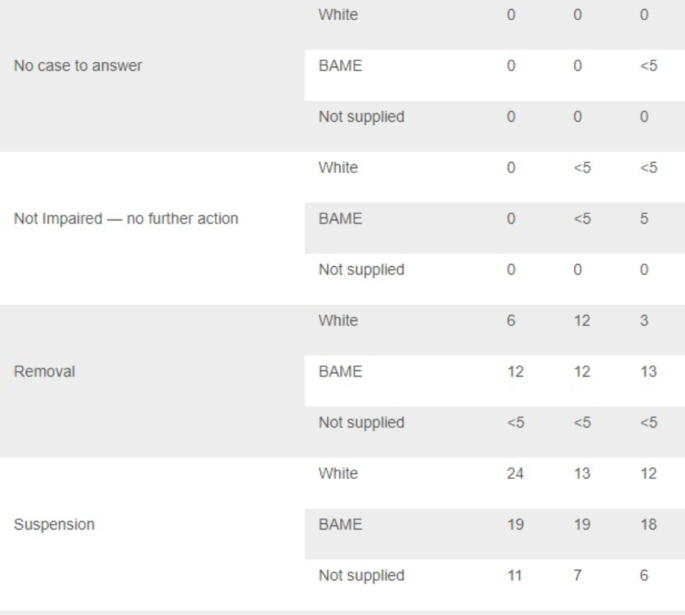
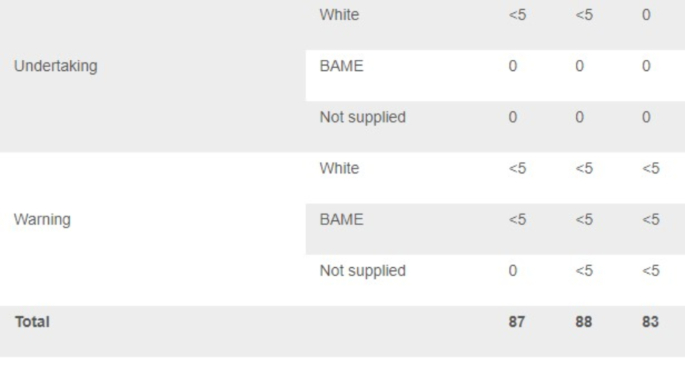
The Pharmaceutical Journal obtained data which show up to 199 pharmacists were suspended or removed from the register after a fitness-to-practice (FTP) hearing over a period of three years.
Of those, approximately 47% were BAME, 35% were white and 18% did not provide their ethnicity.
This compares with 45% of pharmacists on the GPhC register identifying as BAME, 45% as white and 10% with no ethnicity provided.
The differences are even greater if those with no ethnicity given are removed from the analysis.
Fifty-seven per cent of pharmacists removed or suspended are identified as BAME, compared with 43% who identified as being of white ethnicity.
Nigel Clarke, chair of the GPhC, said the numbers of pharmacists going through the FTP process were small and so it was not possible to identify any trends, but said that they were “worrying”. He said:
“It is difficult to draw conclusions safely, but the numbers are worrying enough to cause us concern about how we’re working.
“We might exclude 20 people from the register in a year; when you’ve got around 260 concerns being raised every month that is relatively small, but if it is disproportionate then we need to understand what’s going on.”
The comments came after the regulator released data in September 2018 that showed BAME pharmacists were overrepresented in the FTP concerns raised.
At the time, the regulator promised a “proactive enquiry” to ensure that the GPhC’s FTP procedures met its legal requirements to ensure equality and diversity.
Clarke admitted that the GPhC is backing other healthcare regulators in looking at discrimination in pharmacy.
In a statement, GPhC chief executive Duncan Ruskin stated that the regulator would be carrying out an “equality impact assessment” of its FTP processes during 2019.
He said: “In our FTP processes, we already use a variety of mechanisms to assure good decision making, including eliminating discrimination from decisions.
“This includes unconscious bias training for decision-makers and using decision-making guidance at each stage of the process for both our investigative staff and independent panels.
“We also quality assure our decisions, both during the investigation and after the final decision.
“We are continuously working to make sure that our processes are free from discrimination.”
Pharmacy leaders and other experts have called for an independent review of GPhC FTP processes.
Ash Soni, president of the Royal Pharmaceutical Society (RPS), agreed that more work needs to be done to identify and understand the potential reasons for the differences found in the GPhC data.
He said: “The figures are concerning, however, it is important to determine the factors which are contributing to the number of minority ethnic pharmacists being suspended or removed from the register.
“The RPS supports the efforts of the GPhC to investigate the matter further and looks forward to reading the outcomes of the independent review.”
Aneez Esmail is a professor of general practice at the University of Manchester. He is recognised for his research on discrimination in the medical profession.
Mr Esmail stated that the data should be investigated. He said:
“It would be completely unacceptable for a regulator like the GPhC to ignore the emerging weight of evidence which suggests that pharmacists from ethnic minority groups are more likely to be brought before their professional conduct committee.”
According to Esmail, the GPhC need to investigate their processes and reassure the profession that discrimination is not associated with the observed differentials, or the decision to bring certain individuals before FTP committee hearings.
Mahendra Patel, a professor at the University of Bradford urged caution as BAME pharmacists are categorised together.
He added: “Even if those who did not supply their ethnic origin were supposedly white, a stark differential would still exist.
“In contrast, if some of these (if not all) supposedly fell into the BAME group the figures would be further amplified and consequently even more worrying in real terms.”
He suggested that the GPhC provided a more detailed breakdown of the BAME figures. He added:
“This would allow for the appropriate support systems to be implemented and directed towards individual groups who are most in need of it.”
The data provided by the GPhC was listed in the Table.
The GPhC initially stated that there was a risk of “misleading the public” if the figures were published. They argued that the numbers were too small.
They agreed to supply some data after The Pharmaceutical Journal made an appeal to the Information Commissioner.